
Distinguishing Work Conflicts from Personal Conflicts
Compare three evidence-informed approaches to tell whether a conflict is about work tasks or personal issues.
The question
How do I tell if a conflict is about work or personal issues?
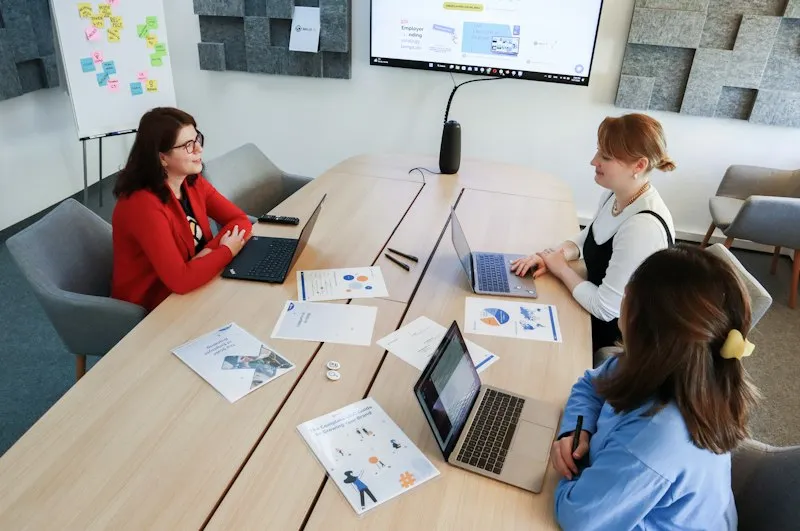
Overview
To tell whether a conflict is about work or personal issues, you can examine what the disagreement focuses on, how it feels emotionally, and how your team tries to resolve it. Task conflicts center on work ideas and resources, while relationship conflicts involve personal critiques and dislikes. The approaches below-each grounded in research on teams-offer distinct lenses for making this distinction.
No single approach fits every situation or person. The evidence describes patterns from studies of teams, not a guaranteed way to label every disagreement. You might find that combining elements of these practices works best for your context.
Check the Focus: Task Ideas vs. Personal Critiques

One way to tell a work conflict from a personal one is to notice what the disagreement is about. If the discussion focuses on the actual problem-like critiques of resources, deadlines, or ideas-it's likely a task conflict. If the focus shifts to who the people are, with personal critiques and dislikes, it's probably relationship conflict. This distinction helps you see whether the conflict belongs to the work or to personal issues.
Research on teams defines task conflict as disagreement over work-related ideas and opinions, and relationship conflict as personal disagreements. When you recognize that the focus is the problem, not the person, you can address the conflict more functionally. Keep in mind that conflicts can start as task disagreements but turn personal if emotions rise.
Assess Issue Importance and Emotional Reactions

Pay attention to how important the issue feels and what emotions come up. When a conflict involves an important work issue, fewer negative emotions are stirred, making it less likely that you'll perceive the disagreement as a personal attack. Conversely, if the issue feels trivial but the conflict still feels emotionally heated, it may be a sign that the conflict has crossed over into relationship territory.
Studies have found that negative emotionality mediates the link between task conflict and relationship conflict. When teams debate important task issues, the absence of strong negative emotions helps them interpret the conflict as task-related rather than personal. This suggests that if you notice intense negative feelings over a small issue, it might be worth checking whether a personal dimension has crept in.
Use Structured Discussion Rules
If you're unsure whether a conflict is about work or personal issues, you can impose rules on how you discuss it. For example, take turns speaking, let each person finish before responding, and focus on exchanging facts and pros and cons. Voting is used only as a last resort when time is tight. These rules help keep the conversation on the task content and prevent it from sliding into personal attacks.
Research on team conflict resolution describes how structured discussion rules can help teams resolve task conflicts while preventing escalation into relationship conflicts. By creating a framework where everyone's contributions are heard without interruption, you reduce the chance that disagreements will be misattributed as personal. Keep in mind that this approach may require some practice to feel natural.
Take it further
Your situation
When you think about a recent conflict you're unsure about, what small clues could help you tell whether it's about the work or about the person involved?
Talk it out
Starting a conversation
If a colleague said they felt a conflict was personal, what would you ask them to understand their perspective?
References
Sources & evidence
4 research papers informed this article. The numbers beside each section link here, and each DOI opens the original paper.
Source 1:The Influence of Conflict Issue Importance on the Co‐occurrence of Task and Relationship Conflict in Teams
Rispens, Sonja (2011). The Influence of Conflict Issue Importance on the Co‐occurrence of Task and Relationship Conflict in Teams. DOI 10.1111/j.1464-0597.2011.00473.x
Source 2:Conflict and Performance in Global Virtual Teams
Kankanhalli, Atreyi, Tan, Bernard C.Y., Wei, Kwok-Kee (2006). Conflict and Performance in Global Virtual Teams. DOI 10.2753/mis0742-1222230309
Source 3:The Role of Conflict Resolution in Teams - An Empirical Study
Mukherjee, Sanjukta (2012). The Role of Conflict Resolution in Teams - An Empirical Study. DOI 10.2139/ssrn.2191886
DOI 10.2139/ssrn.2191886articleSource 4:Individual Perceptions of Task Conflict and Relationship Conflict
Solansky, Stephanie T., Singh, Barjinder, Huang, Shengsheng (2014). Individual Perceptions of Task Conflict and Relationship Conflict. DOI 10.1111/ncmr.12027
DOI 10.1111/ncmr.12027article
Next read
Keep reading
 MomentsIs this team fight about the work or about us?Learn to tell whether a team disagreement is about the task or about personal issues, and how to redirect conflict toward better outcomes.3 min read
 DecisionHow to Tell If a Team Debate Is About a Task or a Personal IssueThree strategies to judge whether a team debate is about the task or a personal issue, compared by immediate effort and trade-offs.1 min read
 ExplainerTask vs Relationship ConflictLearn the difference between task and relationship conflict in teams, how they interact, and what affects their outcomes.5 min read
 How-toHow to Tell If a Conflict Is About the Work or About Personal IssuesLearn how to distinguish task conflict from relationship conflict in teams by examining the importance of the issue and your emotional reactions.3 min read
- DecisionHow to Argue About Ideas Without Hurting the RelationshipThree strategies for debating ideas while preserving your relationship. Compare low, moderate, and high effort options based on conflict research.3 min read
 ExplainerRecognizing Relationship Conflict in TeamsLearn to recognize relationship conflict by its markers: negative emotion, perceived low resolution potential, and its harmful effect on team performance.5 min read