
How to Tell If a Team Debate Is About a Task or a Personal Issue
Three strategies to judge whether a team debate is about the task or a personal issue, compared by immediate effort and trade-offs.
The question underneath
How can I tell if a team debate is about a task or a personal issue?
Sound familiar?
You're in the middle of a team disagreement and you're not sure if it's really about the work or if personal tensions are driving it, and you have to decide how to read it before it escalates or stall
First, get oriented
Before you choose

Being in a team debate and not knowing whether it is about the task or something personal is a common and frustrating ambiguity, and the uncertainty itself can make the moment harder to handle.
There is no universally right answer here, only trade-offs: each way of reading the situation demands something different from you right now, and the constraint is that you need to decide in the moment, before the argument escalates or stalls progress. The three strategies below differ mainly in how much immediate effort they require, so choose deliberately based on the capacity you actually have.
Find your starting point
What feels closest to your situation right now?
Choose the situation closest to yours. We’ll take you to that path so you can weigh it without committing to anything.
- See this pathPathI can step back mentally and weigh how important the debated issue really is.
- See this pathPathI have room to propose a different way of talking about this, such as moving to text.
- See this pathPathI have the energy to actively guide the conversation with formal rules.
Still unsure? Ask yourself:
Before choosing, what matters most to you here: reading the conflict quickly, lowering the emotional heat, or keeping the team on task?
Compare your paths
Three ways forward, different trade-offs
There is no perfect choice. Skim the trade-offs, then read the path that fits what you can manage today.
Path
Strategy 1: Assess the Issue's Importance
You pause and ask yourself whether the topic of this debate is one that truly matters for the team's performance or a relatively minor point. If the issue seems trivial, for example the order of a routine meeting agenda, you note that the conflict may be more about personal friction than the work itself. This requires only mental effort: you observe the content of the debate and rate its importance, with no message to send and no change to the meeting.
Research shows that when task conflicts are about important issues, teams are less likely to misinterpret them as relationship conflicts. However, this approach relies on your subjective judgment, since what feels important to you may not feel important to others, and it does not resolve any underlying tension. The trade-off you accept is gaining clarity quickly at low immediate effort while leaving the disagreement itself untouched, so you may need a follow-up step if the debate continues.
Path
Strategy 2: Switch to Leaner Communication
If the debate is happening in a rich medium like face to face or video, you propose moving the discussion to a text based channel such as a shared document or chat, for example by saying, "Let's write down our points so we can think through them carefully." This takes moderate effort because it requires suggesting and then executing a change in how the team communicates.
Evidence indicates that leaner media can prevent task conflict from escalating into relationship conflict, especially in early stage teams, because they reduce the emotional cues and interruptions that fuel misattribution. The trade-off is that this works best when the team is open to adjusting its communication style, and in groups already invested in face to face debate the suggestion might be resisted or feel artificial. You also cannot fully eliminate the risk that a task conflict was already personal, though the switch can help refocus the conversation.
Path
Strategy 3: Enforce Structured Debate Rules
You explicitly impose a discussion structure: each person speaks in turn without interruption, presents facts rather than opinions, and a note taker captures points separately from personal remarks. You might say, "Let's go around and each share one piece of evidence for our view, then we'll talk about what we agree on." This requires high effort because it involves coordinating the group and potentially managing resistance in the moment.
In some teams, using structured debate and discussion rules has been shown to improve satisfaction and learning by keeping the focus on task content and reducing the chance that personal tensions take over. However, the same evidence notes that if the process is used merely to convince each other without a coherent resolution, satisfaction can decrease. The trade-off is that this approach needs significant engagement and buy in from the team and may feel formal or confrontational, especially if the group is not accustomed to such rules.
Help in 2 minutes
Check Your Situation
Considering your current energy and the team's openness, which approach seems most realistic to try first?
Talk through my situation with the AI mentorQuick start in chat
Talk It Over
In a recent team debate, what signals made you wonder whether it was about the task or something personal?
Describe my situation (free)Next read
Keep reading
Nearby guides picked by the editors of this article.
 MomentsHow do I stop disagreements at work from becoming personal?When a work disagreement starts to feel like a personal attack, see why trust matters and try one separating statement to reset the conversation.3 min read
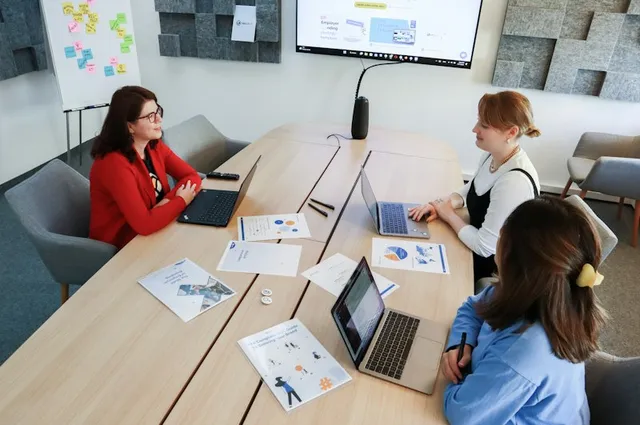 TechniquesDistinguishing Work Conflicts from Personal ConflictsCompare three evidence-informed approaches to tell whether a conflict is about work tasks or personal issues.3 min read
 How-toHow to Tell If a Conflict Is About the Work or About Personal IssuesLearn how to distinguish task conflict from relationship conflict in teams by examining the importance of the issue and your emotional reactions.3 min read
 ExplainerTask vs. Relationship Conflict: Key DifferencesLearn how task conflict focuses on work issues while relationship conflict involves personal clashes, and how each affects team performance and resolution.5 min read
 TechniquesHow to Tell if a Conflict Is About Tasks or About UsThree practices to distinguish task conflicts from relationship conflicts: noticing issue importance, tracking remarks, and initiating quick team check-ins.3 min read
 DecisionWhy Does My Group Feel Less Trusting After a Disagreement?When a disagreement leaves your group less trusting, you can choose a low, moderate, or high-effort strategy. Each option has real trade-offs.3 min read
References
Sources & evidence
4 research papers informed this article. The numbers beside each section link here, and each DOI opens the original paper.
Source 1:The Influence of Conflict Issue Importance on the Co‐occurrence of Task and Relationship Conflict in Teams
Rispens, Sonja (2011). The Influence of Conflict Issue Importance on the Co‐occurrence of Task and Relationship Conflict in Teams. DOI 10.1111/j.1464-0597.2011.00473.x
Source 2:The Role of Conflict Resolution in Teams - An Empirical Study
Mukherjee, Sanjukta (2012). The Role of Conflict Resolution in Teams - An Empirical Study. DOI 10.2139/ssrn.2191886
articleSource 3:Virtual communicating, conflicts and performance in teams
de Jong, Remco, Schalk, René, Curşeu, Petru L. (2008). Virtual communicating, conflicts and performance in teams. DOI 10.1108/13527590810912331
Source 4:Investigating face-to-face and virtual teamwork over time: When does early task conflict trigger relationship conflict?
Martínez-Moreno, Edurne, Zornoza, Ana, González-Navarro, Pilar, Thompson, Lori Foster (2012). Investigating face-to-face and virtual teamwork over time: When does early task conflict trigger relationship conflict?. DOI 10.1037/a0029569
article