
How to Argue About Ideas Without Hurting the Relationship
Three strategies for debating ideas while preserving your relationship. Compare low, moderate, and high effort options based on conflict research.
The question underneath
How do I argue about ideas without hurting the relationship?
Sound familiar?
You're in the middle of a disagreement over a work idea, and you're worried the heat of the debate might damage your personal connection with the other person.
First, get oriented
Before you choose
When you care about both the idea and the relationship, a debate can feel like you have to choose one. Staying in the argument might strain the connection, but pulling away can leave the problem unresolved. [sourceRef: 1] There isn't a single right move-just trade-offs between the effort you put in now, the emotional risk you take, and how easy it is to reverse course.
Research on team conflict identifies two distinct types: task conflict (disagreement about the work itself) and relationship conflict (personal friction). [sourceRef: 2] How you handle that distinction affects both the outcome and the relationship. [sourceRef: 3] The three strategies below offer competing paths, from stepping back to diving deeper into the idea. Your choice depends on how much immediate effort you can invest and what you're willing to risk.
Find your starting point
What feels closest to your situation right now?
Choose the situation closest to yours. We’ll take you to that path so you can weigh it without committing to anything.
- See this pathPathI need to de-escalate and step back from the argument for now.
- See this pathPathI can keep talking about the idea as long as we stay on the work itself.
- See this pathPathI'm ready to talk directly about the personal tension between us.
Still unsure? Ask yourself:
Which of these three approaches feels most doable for you in this moment-and what makes it feel that way?
Compare your paths
Three ways forward, different trade-offs
There is no perfect choice. Skim the trade-offs, then read the path that fits what you can manage today.
Path
Strategy 1: Step Away from the Task Conflict
You stop the exchange of competing ideas and shift focus away from the disagreement. This means setting the topic aside for now, acknowledging each other's contributions without pushing your own point, and returning to collaborative work. [sourceRef: 7] The immediate requirement is low: you simply resist the urge to keep debating and redirect the conversation.
Evidence suggests that avoiding task conflict does not yield beneficial outcomes in virtual teams [sourceRef: 4], and it may leave the underlying issue unaddressed. However, this approach can prevent task conflict from escalating into relationship conflict, which is consistently detrimental to team performance and satisfaction. [sourceRef: 6] The trade-off is that you sacrifice progress on the idea in exchange for preserving harmony in the moment, with the option to revisit the topic later when emotions are cooler.
Path
Strategy 2: Focus on the Task, Not the Person
You deliberately center the discussion on the task-related content of each person's ideas rather than on personal styles or perceived slights. This involves using phrases like 'I see your point about the data' and 'Let's look at what the numbers say,' while ignoring any negative behavior that might surface. [sourceRef: 7] The immediate effort is moderate: it requires active self-monitoring to keep the conversation on task and avoid getting pulled into personal territory.
High-performing, high-satisfaction teams use this technique to resolve relationship conflicts by staying focused on the work itself. [sourceRef: 7] Task conflict-disagreement over ideas-is distinct from relationship conflict and can be beneficial when managed integratively, meaning you collaborate to find a solution that incorporates the best of both views. [sourceRef: 4][sourceRef: 6] The trade-off is that you invest mental energy to keep the debate productive, and you may still need to address any underlying personal friction separately.
Path
Strategy 3: Address the Relationship Conflict Head-On
You pause the task debate and directly address any personal tension or hurt feelings that have emerged. This means acknowledging the relationship conflict aloud, inviting all viewpoints about how the disagreement feels, and working toward an integrative resolution that respects everyone's needs without scrutinizing every idea's merit. [sourceRef: 1][sourceRef: 4] The immediate requirement is high: you must be willing to sit with discomfort, listen to criticism, and possibly compromise your original position to preserve the relationship.
Research recommends that relationship conflicts be resolved integratively-through collaborative problem-solving-to avoid harmful effects on team performance. [sourceRef: 4] Some teams that prioritize relationships over task analysis incorporate all members' ideas without careful scrutiny and assign work based on preferences, which can increase satisfaction but may reduce performance. [sourceRef: 1] The trade-off is that this approach demands the most emotional effort and is harder to reverse if the conversation becomes more personal. However, when successful, it can strengthen the relationship and clear the way for future task conflict.
Help in 2 minutes
Your Current Capacity
Given what else is happening today, how much energy do you have to invest in how this disagreement unfolds?
Talk through my situation with the AI mentorQuick start in chat
Talk It Over
When a work debate starts to feel personal, what usually helps you two get back on track?
Describe my situation (free)Next read
Keep reading
Nearby guides picked by the editors of this article.
 MomentsIs this team fight about the work or about us?Learn to tell whether a team disagreement is about the task or about personal issues, and how to redirect conflict toward better outcomes.3 min read
- TechniquesHow to Tell If Your Argument Is About the Task or About YouLearn to distinguish task conflict from relationship conflict using three evidence-based practices: check the focus of the disagreement, assess the emotional3 min read
 How-toWhy do we keep arguing about the wrong things in our team?Understand common patterns that shift team arguments from tasks to personal issues, and learn strategies to refocus conflict on what matters.6 min read
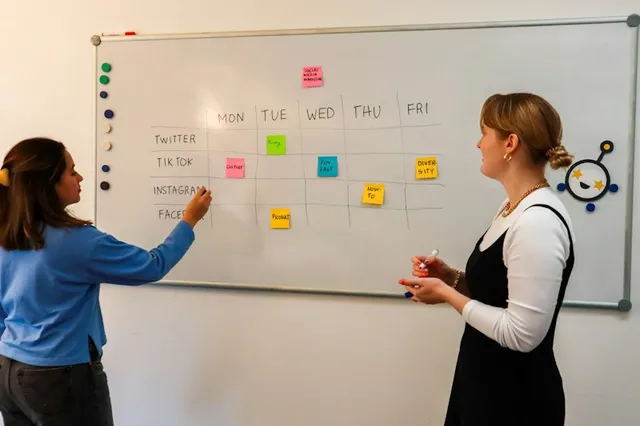 ExplainerTask Conflict vs. Relationship ConflictTask conflict centers on work disagreements; relationship conflict involves personal clashes. Learn their differences, effects, and resolution approaches.6 min read
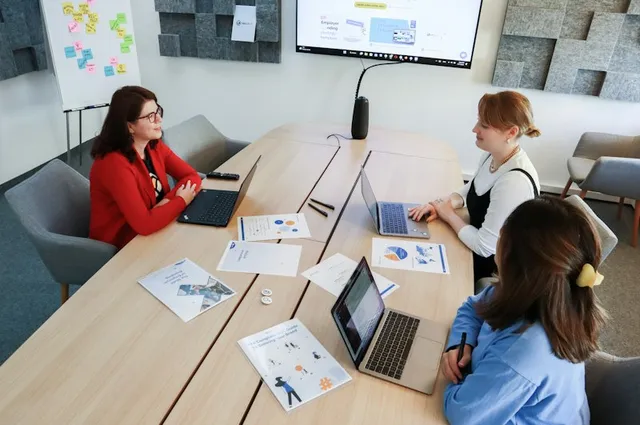 TechniquesDistinguishing Work Conflicts from Personal ConflictsCompare three evidence-informed approaches to tell whether a conflict is about work tasks or personal issues.3 min read
 DecisionWhy Does My Group Feel Less Trusting After a Disagreement?When a disagreement leaves your group less trusting, you can choose a low, moderate, or high-effort strategy. Each option has real trade-offs.3 min read
References
Sources & evidence
4 research papers informed this article. The numbers beside each section link here, and each DOI opens the original paper.
Source 1:The Role of Conflict Resolution in Teams - An Empirical Study
Mukherjee, Sanjukta (2012). The Role of Conflict Resolution in Teams - An Empirical Study. DOI 10.2139/ssrn.2191886
articleSource 2:Conflict and Performance in Global Virtual Teams
Kankanhalli, Atreyi, Tan, Bernard C.Y., Wei, Kwok-Kee (2006). Conflict and Performance in Global Virtual Teams. DOI 10.2753/mis0742-1222230309
Source 3:A Qualitative Analysis of Conflict Types and Dimensions in Organizational Groups
Jehn, Karen A. (1997). A Qualitative Analysis of Conflict Types and Dimensions in Organizational Groups. DOI 10.2307/2393737
articleSource 4:Individual Perceptions of Task Conflict and Relationship Conflict
Solansky, Stephanie T., Singh, Barjinder, Huang, Shengsheng (2014). Individual Perceptions of Task Conflict and Relationship Conflict. DOI 10.1111/ncmr.12027
article