
Why Disagreements Become Personal Conflicts in Teams
Discover why task disagreements escalate into personal conflicts and learn practices to prevent misattribution, such as building trust and strengthening team
The question
Why do disagreements in my team turn into personal conflicts?

Overview
Disagreements about work tasks sometimes turn into personal conflicts when team members misinterpret the intent behind a differing opinion. Instead of seeing a colleague's challenge as focused on the task, they may perceive it as a personal attack, triggering a cycle of frustration and hostility.
Research points to several factors that influence this transformation, including the level of trust within the team, how strongly members identify with the group, and whether disagreements come from someone seen as an outsider. Below are three practices-grounded in studies-that can help you understand and address this dynamic, though no single approach fits every situation. Each practice card describes what trying it involves, what the evidence says, and one important limitation, so you can compare them based on your team's context.
Build Intragroup Trust

When team members trust each other, task disagreements are less likely to be misinterpreted as personal attacks. To try this, you might focus on reliability and openness in daily interactions-for example, following through on commitments and acknowledging when you don't have an answer. Creating a safe space for expressing doubts can also help, but this practice requires consistent effort from everyone over time.
Evidence from a study on intragroup trust found that trust moderates the spillover of task conflict into relationship conflict: under low trust, task conflict is more closely and positively related to relationship conflict, while high trust reduces misattribution. A key limit is that trust cannot be built quickly or demanded-it develops through repeated positive exchanges, and the research does not specify how much trust is enough to prevent escalation. If your team already has a moderate level
Strengthen Team Identity

When team members identify strongly with the whole team rather than a subgroup, disagreements from any member are more likely to be seen as constructive rather than personal. To try this, you could create opportunities for shared experiences outside of task discussions-such as team rituals, joint problem‑solving sessions, or celebrating collective wins. The key is to make the team's common identity visible and meaningful to everyone.
Research based on social identity theory shows that under high subgroup perception (clear divisions), task conflict positively correlates with relationship conflict; when team identity is strong (low subgroup perception), this link is not significant. One limitation is that this finding comes from a specific empirical study, and the effect may depend on the team's size, history, or whether members have pre‑existing loyalties to outside groups. This practice may be less effortful if your team alr
Label Disagreements Explicitly
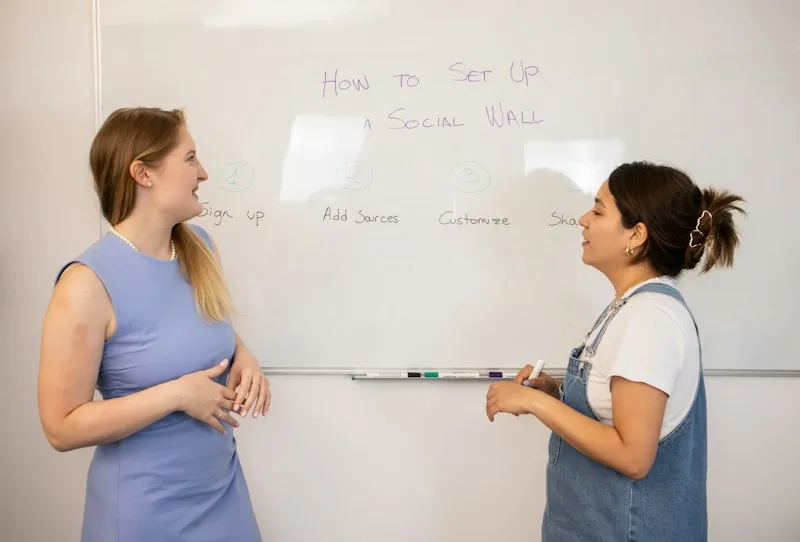
When a task disagreement arises, you can explicitly label it as task‑related-for example, saying, 'I see this as a disagreement about the timeline, not about your judgment.' This practice helps reduce the chance that a colleague misinterprets your intent as personal. Over time, encouraging the entire team to use similar language can make the distinction between task and relationship conflict part of your group's norm.
The concept of conflict transformation suggests that misattribution often happens automatically, and making the distinction explicit may prevent escalation. However, the research does not provide a controlled study of this specific labeling technique; it is instead derived from the observation that trust and shared identity reduce misattribution. A limit is that labeling alone may not suffice if underlying trust is very low or if the team is deeply divided-it works best as a complement to trust‑
Take it further
Your Team Context
Which of these practices feels most relevant to the dynamics you notice in your team, and what might be one small step you could take to explore it further?
Talk it out
Talk It Over
When you think about a recent disagreement that turned personal, what was the key moment that shifted the conversation?
References
Sources & evidence
4 research papers informed this article. The numbers beside each section link here, and each DOI opens the original paper.
Source 1:The influence of intra‐team conflict on work teams' affective climate: A longitudinal study
Gamero, Nuria, González‐Romá, Vicente, Peiró, José M. (2008). The influence of intra‐team conflict on work teams' affective climate: A longitudinal study. DOI 10.1348/096317907x180441
DOI 10.1348/096317907x180441articleSource 2:Competing hypotheses analyses of the associations between group task conflict and group relationship conflict
Choi, Kyoosang, Cho, Bongsoon (2010). Competing hypotheses analyses of the associations between group task conflict and group relationship conflict. DOI 10.1002/job.733
DOI 10.1002/job.733articleSource 3:Task conflict and relationship conflict in top management teams: The pivotal role of intragroup trust.
Simons, Tony L., Peterson, Randall S. (2000). Task conflict and relationship conflict in top management teams: The pivotal role of intragroup trust.. DOI 10.1037/0021-9010.85.1.102
Source 4:When business becomes personal: The catalyst implication of subgroup perception underlying the co-occurrence of task and relationship conflict.
Xie, Xiao-Yun, Luan, Kun (2014). When business becomes personal: The catalyst implication of subgroup perception underlying the co-occurrence of task and relationship conflict.. DOI 10.1037/a0035689
DOI 10.1037/a0035689article
Next read
Keep reading
 MomentsWhy do some team fights feel personal and others about the work?Understand why a task disagreement can feel like a personal attack and learn a quick technique to keep team conflict focused on the work.3 min read
 DecisionWhy Is There So Much Tension and Arguing Within Our Team?Explore three strategies to address team tension and arguing, from low to high effort, with clear trade-offs based on your current capacity.3 min read
 ExplainerAssessing Intragroup ConflictIntragroup conflict is assessed by distinguishing task vs. relationship conflict, considering trust, origins, and evolution over time.6 min read
 How-toWhy Disagreements with Teammates Turn PersonalTask disagreements can feel personal when they trigger relationship conflict. Learn what causes this shift and how to keep discussions focused on the work.4 min read
 ExplainerIntragroup ConflictLearn about intragroup conflict, its types (task and relationship), how trust moderates spillover, and key outcomes for teams.7 min read
 ExplainerWhat Is Relationship Conflict?Relationship conflict is interpersonal incompatibility causing friction and reduced team performance.5 min read