

Relationship conflict refers to interpersonal incompatibility, animosity, and friction among team members. It arises from personal issues rather than disagreements about the work itself, and it is characterized by hostility, personal remarks, and disturbed harmony.
Unlike task conflict, which centers on divergent views about the task, relationship conflict is consistently found to be detrimental to team performance and member satisfaction across different team types. It damages performance by triggering dysfunctional, sabotage, or antagonistic behaviors that constrain improvement.
How Relationship Conflict Is Studied

Researchers distinguish relationship conflict from task conflict and process conflict as the three main types of intra-team conflict. Relationship conflict is measured by assessing perceptions of interpersonal frictions, tension, and personal animosity among team members. Studies often examine how these perceptions relate to outcomes such as performance, satisfaction, and emotional well-being.
One common research approach involves surveying teams in specific work settings-for example, hotel and restaurant employees-to rate the level of relationship conflict they experience. Researchers then analyze statistical associations between those ratings and other variables, such as collective emotional exhaustion or team performance ratings. Meta-analyses have pooled data from many such studies to conclude that relationship conflict is invariably harmful for group performance, regardless of the type of team.
Take it further
Talk About It
Have you ever been in a team where a simple disagreement about the work turned into personal tension, and how did that affect the team's ability to get things done?
Reflect in Mneno
Outcomes of Relationship Conflict
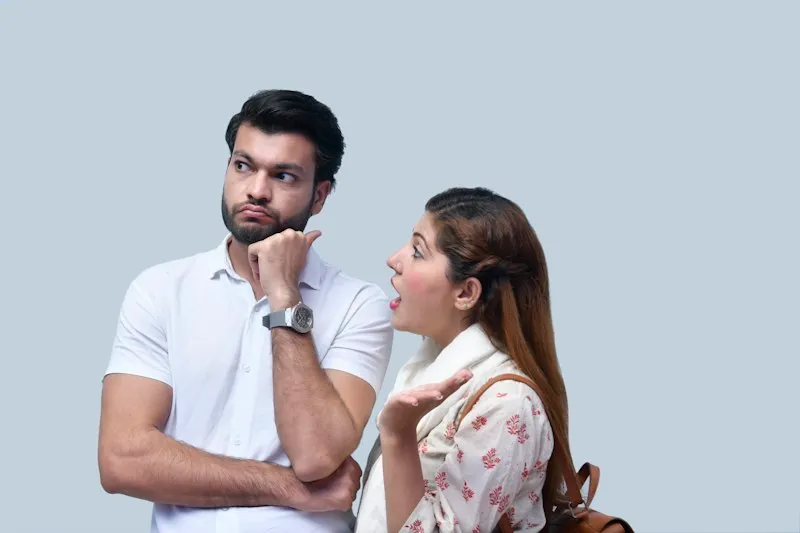
Relationship conflict has been linked to several negative outcomes for teams. The most consistently documented effect is reduced team performance: interpersonal friction and personal attacks impair coordination, trust, and the ability to work together effectively. A meta-analysis found that relationship conflict always decreases group performance, irrespective of team type. It also lowers member satisfaction and increases turnover intentions.
Beyond performance, relationship conflict contributes to emotional exhaustion at the team level. In studies of work teams (e.g., hotel and restaurant employees), higher levels of relationship conflict were associated with higher collective emotional exhaustion. The tension, frustration, and anxiety created by ongoing interpersonal disagreements create a stressful team climate that depletes members' emotional resources. Shared perceptions of interpersonal problems amplify collective stress and anxiety, further increasing exhaustion.
How Relationship Conflict Connects to Task Conflict

Relationship conflict and task conflict can influence each other. Task conflict-disagreement about the work itself-may escalate into relationship conflict when emotionally harsh language is used during debates, or when disagreement is perceived as a personal rejection. Group members whose ideas are challenged may feel their competence is being questioned and interpret the argument as a personal attack, turning a task disagreement into interpersonal animosity.
Conversely, relationship conflict can spill over into task conflict. When team members dislike each other, a negative halo effect can bias their perceptions of each other's contributions. Negative attitudes toward disliked members may be translated into ongoing disputes over tasks, even when the tasks themselves are not the actual source of disagreement. This two-way dynamic means that unresolved interpersonal tensions can fuel more frequent or more intense task disagreements, creating a cycle that further harms team functioning.
Moderating Factors and Possible Responses

The negative impact of relationship conflict on team performance is not uniform across all settings. One important moderator is team virtuality: teams that rely heavily on virtual communication tools experience a stronger negative effect of relationship conflict on perceived performance. Virtual channels lack the non-verbal cues needed to build trust and reduce conflict, making it harder to manage interpersonal tensions when they arise.
Research has also examined factors that may reduce relationship conflict. Collective empathy among team members appears to play a protective role: empathy substantially alleviates relationship conflict, and this reduction in conflict then indirectly improves team performance. In other words, empathy's benefit for performance works largely through lessening relationship conflict. Additionally, team identity-the sense of belonging and shared purpose-can enhance performance, while relationship conflict acts as a full mediator that reduces the positive effects of other team characteristics, such as collective empathy.
FAQ
Common questions
Each answer is linked to its research.
Why is relationship conflict always harmful for teams?
Unlike task conflict, which can sometimes stimulate creativity, relationship conflict consistently damages team performance and member satisfaction. Meta-analytic evidence shows it is always detrimental, regardless of team type. The interpersonal friction, hostility, and personal attacks create a stressful climate that reduces coordination, trust, and effectiveness. Even if a team resolves the immediate disagreement, the residual negative emotions and damaged relationships can persist and impair future collaboration.
SourcesS1S3All sources
What is the difference between relationship conflict and task conflict?
Relationship conflict involves interpersonal incompatibility, animosity, and friction about personal issues, while task conflict concerns disagreements about the work itself-such as different opinions about how to complete a task. Researchers distinguish three types of intra-team conflict: relationship conflict, task conflict, and process conflict (disagreements about how to achieve the task). Relationship conflict is consistently harmful, whereas task conflict can sometimes be constructive under the right conditions.
SourcesS12All sources
Can relationship conflict lead to emotional exhaustion in a team?
Yes, studies of work teams (e.g., hotel and restaurant employees) found that higher levels of relationship conflict are positively associated with collective emotional exhaustion. The tension, frustration, and anxiety from interpersonal disagreements create a stressful and anxious climate that depletes members' emotional resources. When perceptions of interpersonal problems are shared across the team, collective stress increases, making the entire team more prone to emotional exhaustion.
SourcesS4S10S11All sources
Next read
Keep reading
Nearby guides picked by the editors of this article.
 MomentsSigns a team has relationship conflictNoticing tension, annoyance, or personal friction in your team that isn't about the work itself. Here's how to recognize it.2 min read
 DecisionSigns That Team Conflict Has Become PersonalLearn the signs that team conflict has shifted from task-focused to personal and how to respond based on your team's current capacity.4 min read
 TechniquesRelationship Conflict and Why It Drains YouRelationship conflict creates emotional exhaustion and stress. Compare three ways to understand and address its draining effects.2 min read
 TechniquesHow to Tell When a Team Conflict Has Become PersonalCompare three practices for recognizing when a team disagreement shifts from task-focused to personal conflict.3 min read
 ExplainerRecognizing Relationship Conflict in TeamsLearn to recognize relationship conflict by its markers: negative emotion, perceived low resolution potential, and its harmful effect on team performance.5 min read
 TechniquesHow to Tell If a Conflict Is Improving Your Work or Harming ItCompare three practices to assess whether conflict in your team is productive or damaging, based on research about conflict resolution and team performance.3 min read
References
Sources & evidence
4 research papers informed this article. The numbers beside each section link here, and each DOI opens the original paper.
Source 1:Modeling Team Performance
Lin, Chieh-Peng, Chen, Yi-Fan (2015). Modeling Team Performance. DOI 10.1177/1548051815616252
articleSource 2:Competing hypotheses analyses of the associations between group task conflict and group relationship conflict
Choi, Kyoosang, Cho, Bongsoon (2010). Competing hypotheses analyses of the associations between group task conflict and group relationship conflict. DOI 10.1002/job.733
articleSource 3:Virtual communicating, conflicts and performance in teams
de Jong, Remco, Schalk, René, Curşeu, Petru L. (2008). Virtual communicating, conflicts and performance in teams. DOI 10.1108/13527590810912331
Source 4:Buffering relationship conflict consequences in teams working in real organizations
Benitez, Miriam, Medina, Francisco J., Munduate, Lourdes (2018). Buffering relationship conflict consequences in teams working in real organizations. DOI 10.1108/ijcma-11-2017-0131