
Relationship Conflict and Why It Drains You
Relationship conflict creates emotional exhaustion and stress. Compare three ways to understand and address its draining effects.
The question
What is relationship conflict and why is it so draining?

Overview
Relationship conflict-interpersonal tensions involving perceived threats, mistrust, and uneasiness-drains you because it triggers stress, anxiety, and shared emotional exhaustion within a team. The evidence below compares three perspectives to help you understand this draining dynamic without claiming one fits everyone.
While research shows links between relationship conflict and collective exhaustion, it does not establish which approach works best for your situation. The practices described are drawn from studies of work teams and conceptual models of intragroup conflict.
Recognize Shared Emotional Exhaustion

Pay attention to whether your team's tension feels like a collective drain. Relationship conflict can increase stress, anxiety, and emotional exhaustion across the whole team, not just individually. Recognizing this shared toll can help you name the pattern without trying to fix it alone right away.
In studies of hotel and restaurant teams, higher relationship conflict was positively linked to collective emotional exhaustion measured via the Maslach Burnout Inventory. This suggests the draining effect is real and shared, but the research does not show that simply recognizing it reduces exhaustion.
Shift Toward Task Conflict

Consider steering disagreements toward task-related issues while keeping personal tensions separate. In teams that maintain a "task-conflict-dominant" profile, where conflict stays focused on work tasks, burnout is lowest. This involves intentionally avoiding spillover into relationship or process disputes.
Research on conflict profiles found that unhealthy profiles (high relationship and process conflict) led to chronic stress and burnout, while task-dominant profiles were associated with lower burnout and higher learning. However, this pattern comes from team-level analysis, not a step-by-step technique you can apply directly.
Pause to Reduce Emotional Valence
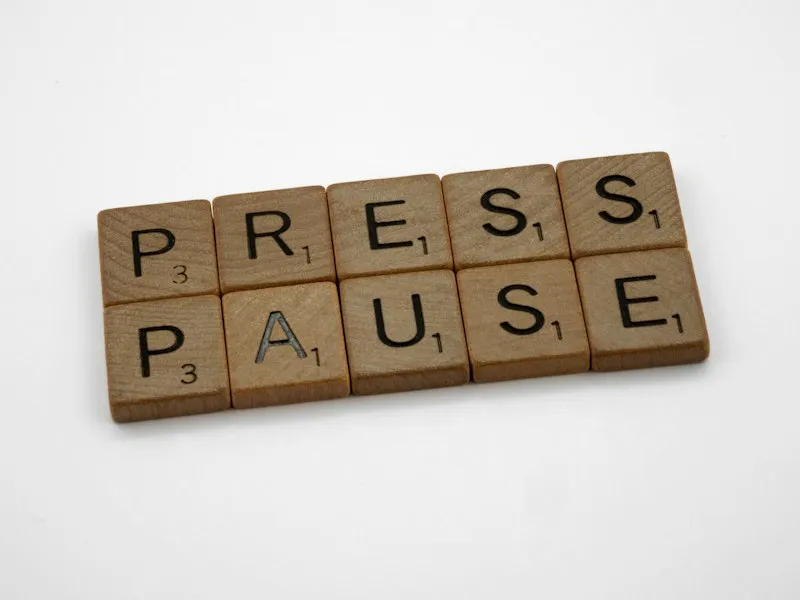
When you notice tension, briefly step back to reduce the negative emotional charge in the interaction. Emotional Relationship (ER) conflict is defined by its negative emotional valence, and its draining effects are largely due to the emotions it elicits. A short pause or a reset request-"Can we take a breather?"-can lower that emotional intensity.
Research frames ER conflict as having a "negative emotional valence" that undermines performance and satisfaction primarily through the negative feelings it creates. Pausing doesn't fix the underlying issue, but it may help prevent emotions from deepening the exhaustion loop. The evidence does not test this specific pause as a technique.
Take it further
Consider Your Experience
What patterns of tension in your team feel most draining, and what might help you name them without needing to act immediately?
Talk it out
Open a Conversation
Have you noticed times when team tension seems to drain everyone's energy, even when the disagreement isn't about the work itself?
References
Sources & evidence
4 research papers informed this article. The numbers beside each section link here, and each DOI opens the original paper.
Source 1:Buffering relationship conflict consequences in teams working in real organizations
Benitez, Miriam, Medina, Francisco J., Munduate, Lourdes (2018). Buffering relationship conflict consequences in teams working in real organizations. DOI 10.1108/ijcma-11-2017-0131
Source 2:The multilevel nomological net of team conflict profiles
O’Neill, Thomas A., McLarnon, Matthew J.W., Hoffart, Genevieve, Onen, Denis, et., al. (2017). The multilevel nomological net of team conflict profiles. DOI 10.1108/ijcma-05-2016-0038
Source 3:Self-efficacy, procrastination, and burnout in post-secondary faculty: An international longitudinal analysis
Hall, Nathan C., Lee, So Yeon, Rahimi, Sonia (2019). Self-efficacy, procrastination, and burnout in post-secondary faculty: An international longitudinal analysis. DOI 10.1371/journal.pone.0226716
Source 4:Burning hearts in conflict
Hjerto, Kjell B., Kuvaas, Bård (2017). Burning hearts in conflict. DOI 10.1108/ijcma-02-2016-0009
Next read
Keep reading
 MomentsSigns a team has relationship conflictNoticing tension, annoyance, or personal friction in your team that isn't about the work itself. Here's how to recognize it.2 min read
 DecisionSigns That Team Conflict Has Become PersonalLearn the signs that team conflict has shifted from task-focused to personal and how to respond based on your team's current capacity.4 min read
 ExplainerWhat Is Relationship Conflict?Relationship conflict is interpersonal incompatibility causing friction and reduced team performance.5 min read
 ExplainerRecognizing Relationship Conflict in TeamsLearn to recognize relationship conflict by its markers: negative emotion, perceived low resolution potential, and its harmful effect on team performance.5 min read
 TechniquesHow to Tell When a Team Conflict Has Become PersonalCompare three practices for recognizing when a team disagreement shifts from task-focused to personal conflict.3 min read
 How-toHow to disagree with a coworker without damaging your relationshipLearn practical steps to handle workplace disagreements constructively, drawing on team conflict and emotional intelligence research.4 min read