

Intragroup conflict refers to disagreements and tensions that arise among members within the same group or team. It is commonly classified into two distinct types: task conflict, which involves disagreements about the content and procedures of the work itself, and relationship conflict (also called affective conflict), which involves interpersonal clashes, personality differences, and emotional friction.
Understanding the nature of these conflicts is important because they can affect team outcomes such as performance and member satisfaction-but not always in straightforward ways. For instance, task conflict may sometimes boost performance, but under certain conditions it can also lead to frustration and relationship damage. How a group interprets and manages disagreements, especially the role of trust among members, plays a key part in shaping whether conflict becomes constructive or destructive.
The Two Main Types of Intragroup Conflict
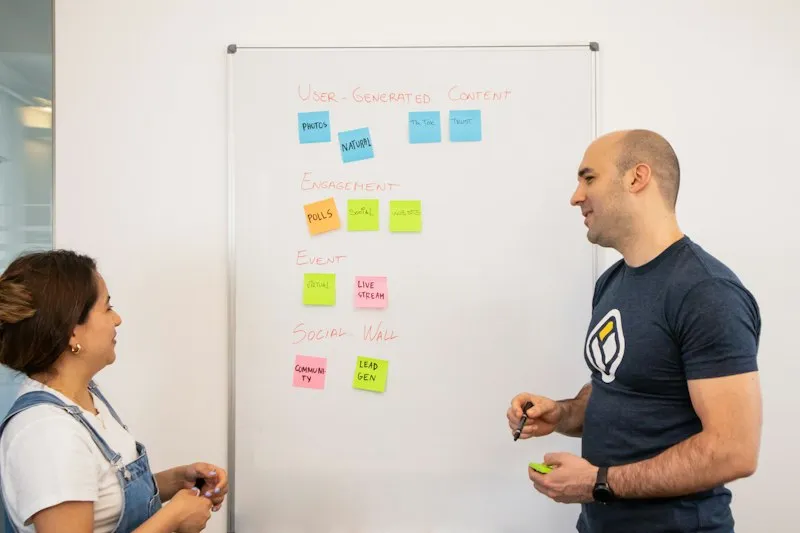
Intragroup conflict is not a single, uniform experience. Researchers differentiate between task conflict and relationship conflict based on what the disagreement is about. Task conflict arises when group members differ in their views, opinions, and interpretations regarding the tasks being performed-disagreements about procedures, policies, resource distribution, or how to approach a problem. It is considered cognitive in nature, focused on the work itself.
In contrast, relationship conflict centers on personal incompatibilities. It involves perceived tension, frustration, and clashes over interpersonal style, attitudes, values, and personality. This type of conflict has a strong affective (emotional) element, exemplified by friction over mannerisms or personal preferences. For example, two team members might disagree on a project approach (task conflict), but that could escalate into personal animosity if they start attributing bad motives to each other (relationship conflict).
Take it further
Opening the Conversation
How does your team usually handle disagreements about work tasks, and have you ever seen those turn into personal conflicts?
Reflect in Mneno
How Task Conflict Affects Team Performance and Satisfaction

The effects of task conflict on team outcomes are not uniform. On one hand, task conflict can improve group performance when it brings diverse perspectives to light and encourages critical evaluation of ideas. However, research indicates that extremely high levels of task conflict may reduce member satisfaction and commitment to the team. The duration of the conflict also matters: task conflict has been associated with effective performance in fast decision-making teams, but linked to low performance when decisions are slow.
When team members have high opportunity to voice their opinions and a dissenting member substantially delays decisions, task conflict can lead to frustration. This suggests that the context-such as time pressure and decision speed-moderates whether task conflict is beneficial or harmful. A hypothetical example: in a startup team that needs to make a quick product launch decision, a heated debate about features (task conflict) could sharpen the plan, but if the debate drags on and delays the launch, the same conflict might hurt both the outcome and team morale.
SourcesS4
The Spillover Between Task and Relationship Conflict: The Role of Trust

One of the key dynamics in intragroup conflict is that task disagreements can spill over into relationship conflict when group members misinterpret task-related debates as personal attacks. This misattribution is a central mechanism linking the two types of conflict. For example, if a team member criticizes a proposed plan, another member with low trust in that person might view the critique as a personal insult rather than a work-related comment.
Intragroup trust plays a crucial moderating role in this spillover. Research shows that when group members trust each other, task conflict is less likely to be misattributed as personal in nature, reducing the risk of relationship conflict. Statistical findings indicate that intragroup trust significantly moderated the effect of task conflict on later relationship conflict (interaction β=-0.55, p<0.05). High trust reduced the positive association between task conflict and subsequent relationship conflict. Conversely, when trust is low, the association between task conflict and relationship conflict is much stronger.
Practical Strategies for Managing Intragroup Conflict
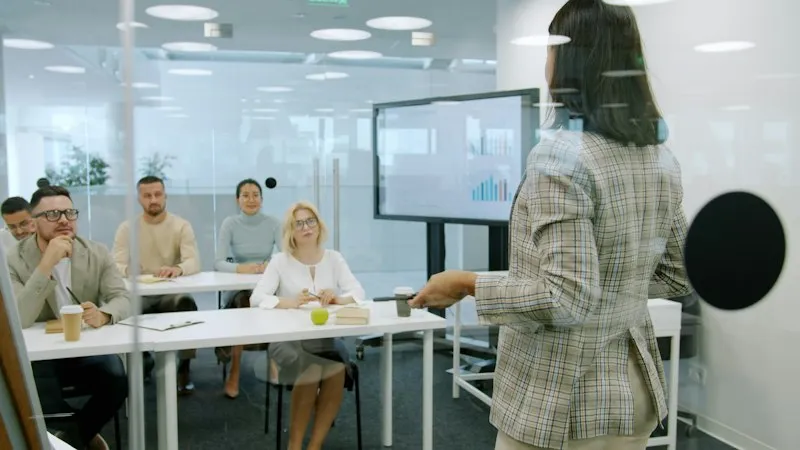
Given the risks of task conflict turning into relationship conflict, researchers have examined practical approaches to manage disagreements constructively. One evidence-backed technique is teaching groups collaborative communication techniques during task disagreements. The aim is to frame conflicts as challenges to the whole group rather than as individual failures or personal attacks. For example, using statements like 'We will be working together for a while. It's important that we both feel comfortable with a solution' fosters a group orientation that can reduce personalization of conflict.
This collaborative framing works in tandem with building intragroup trust. When team members trust each other, they are more likely to accept stated disagreements at face value and less likely to assume hidden agendas. The same communication approach may be less effective in low-trust settings, where misinterpretation is more common. Therefore, combining trust-building efforts with skills training in collaborative communication could be a powerful strategy.
FAQ
Common questions
Each answer is linked to its research.
Can relationship conflict ever be beneficial?
The provided evidence focuses on relationship conflict as a generally negative phenomenon involving personal tension, frustration, and friction over interpersonal style, attitudes, and personality. It does not report any benefits of relationship conflict for teams. Instead, the research emphasizes that relationship conflict can arise from task conflict when trust is low, and that it can further trigger additional task conflict. The overall implication is that relationship conflict is typically harmful and worth preventing through trust and collaborative communication.
SourcesS8S2S5S9All sources
How is intragroup conflict studied in research?
Studies on intragroup conflict often use designs that measure both task and relationship conflict separately to understand their distinct effects and interactions. A key strength noted in one piece of research was a multilevel design that allowed analysis of conflict effects at both the team level (such as team performance) and the individual level (such as member satisfaction). Researchers also examine moderating factors like intragroup trust, using statistical tests (e.g., interaction coefficients) to see how trust affects the link between task conflict and later relationship conflict. The field has called for more longitudinal studies and case studies to capture the dynamic, evolving nature of conflict over time.
SourcesS11S12S6All sources
What is the 'misattribution' mechanism in intragroup conflict?
Misattribution is a psychological process where task disagreements are incorrectly interpreted as personal attacks or evidence of hidden agendas. For instance, when a team member criticizes a proposal, a colleague with low trust might think the critic is just being difficult or dislikes them personally, rather than engaging with the idea. This misinterpretation is a key mechanism that transforms task conflict into relationship conflict. Intragroup trust reduces the likelihood of misattribution: when trust is high, members take comments at face value and focus on the task, so even heated debates are less likely to damage personal relationships.
SourcesS5S10All sources
Next read
Keep reading
Nearby guides picked by the editors of this article.
 MomentsWhy do some team fights feel personal and others about the work?Understand why a task disagreement can feel like a personal attack and learn a quick technique to keep team conflict focused on the work.3 min read
 DecisionWhy Is There So Much Tension and Arguing Within Our Team?Explore three strategies to address team tension and arguing, from low to high effort, with clear trade-offs based on your current capacity.3 min read
 How-toWhy Disagreements with Teammates Turn PersonalTask disagreements can feel personal when they trigger relationship conflict. Learn what causes this shift and how to keep discussions focused on the work.4 min read
 TechniquesConflict Hurts Team Work: Practices That HelpCompare practices to reduce harmful conflict. Learn how trust, how you disagree, and understanding your conflict types can protect your team's performance.3 min read
 TechniquesTechniques to Prevent Task Conflicts from Turning PersonalCompare ways to keep task disagreements from becoming personal: building trust, improving communication, and clarifying intentions.3 min read
 TechniquesHow to Tell When a Team Conflict Has Become PersonalCompare three practices for recognizing when a team disagreement shifts from task-focused to personal conflict.3 min read
References
Sources & evidence
4 research papers informed this article. The numbers beside each section link here, and each DOI opens the original paper.
Source 1:Competing hypotheses analyses of the associations between group task conflict and group relationship conflict
Choi, Kyoosang, Cho, Bongsoon (2010). Competing hypotheses analyses of the associations between group task conflict and group relationship conflict. DOI 10.1002/job.733
articleSource 2:Intragroup Conflict and Conflict Management Approaches as Determinants of Team Performance and Satisfaction: Two Field Studies
Dimas, Isabel Dórdio, Lourenço, Paulo Renato (2015). Intragroup Conflict and Conflict Management Approaches as Determinants of Team Performance and Satisfaction: Two Field Studies. DOI 10.1111/ncmr.12054
articleSource 3:Task conflict and relationship conflict in top management teams: The pivotal role of intragroup trust.
Simons, Tony L., Peterson, Randall S. (2000). Task conflict and relationship conflict in top management teams: The pivotal role of intragroup trust.. DOI 10.1037/0021-9010.85.1.102
Source 4:Decoupling task and relationship conflict: the role of intragroup emotional processing
Yang, Jixia, Mossholder, Kevin W. (2004). Decoupling task and relationship conflict: the role of intragroup emotional processing. DOI 10.1002/job.258
article