
How to Disagree with a Colleague Without Hurting Your Relationship
Learn three evidence-based techniques for disagreeing at work while keeping relationships intact: keep it task-focused, recognize when conflict shifts, and
The question
How do I disagree with a colleague without hurting our relationship?

Overview
Disagreeing with a colleague doesn't have to damage your working relationship. Research on workplace conflict distinguishes between task conflict-disagreements about work ideas and opinions-and relationship conflict, which involves personal friction, tension, and personality clashes. The key is to keep the disagreement focused on the task and to recognize when it starts to shift into personal territory.
This article compares three practices drawn from studies of workplace conflict: focusing the disagreement on the task, watching for signs of relationship conflict creeping in, and valuing the relationship itself as a foundation for healthy disagreement. The evidence does not establish which approach works best for everyone, but each offers a concrete starting point.
Keep the Disagreement Task-Focused

When you disagree, stick to work-related ideas and opinions-not the person. In a study, task conflict was created by having colleagues disagree about a solution using different information, without personal attacks. You can try this by expressing your differing view on the task itself and inviting others to share their reasoning. Frame your disagreement as a question or alternative approach, not as a criticism of the other person's character.
The same study found that groups experiencing task conflict alone made better decisions-46.8% correct solutions compared to 26.9% in no-conflict groups. However, this was a controlled lab experiment with scripted disagreements, not a real workplace. The effect may differ depending on your team's norms or the emotional history between you and the colleague.
Watch for Signs of Relationship Conflict

Notice when the disagreement starts to feel personal. Relationship conflict involves friction, tension, personality clashes, or cynical comments-like bringing up a colleague's personal habits rather than the work itself. If you sense irritation, sarcasm, or grudges, pause and redirect to the task. You might say, 'Let's step back and focus on what's best for this project' to reset the conversation.
Research shows that when task conflict is perceived as relationship conflict, it harms decision-making. In a study of 82 participants, each one-point increase in perceived relationship conflict made people 3.56 times more likely to stick with a wrong solution. The evidence suggests that catching the shift early can prevent the disagreement from derailing both the work and the relationship.
Value the Relationship Itself
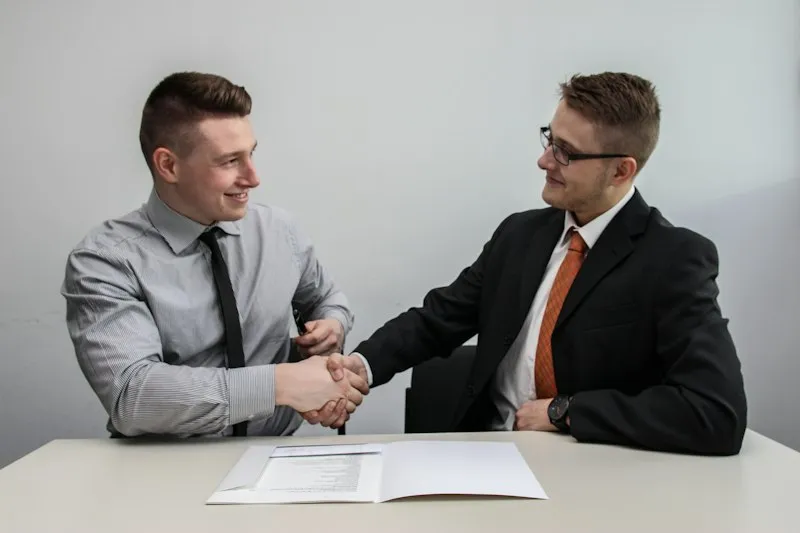
Before or during a disagreement, remind yourself that the working relationship matters for your growth and the team's success. You can signal this by acknowledging the other person's perspective, expressing appreciation for their input, or noting that you value working together. This doesn't mean avoiding disagreement-it means framing it as part of a collaborative effort rather than a battle.
Research suggests that people who believe workplace relationships are worthwhile for personal and professional development are more open to mentoring and influence from others. While this study focused on mentoring, it points to a broader principle: when you see the relationship as valuable, you may approach disagreements more constructively. The caveat is that valuing a relationship doesn't automatically resolve the conflict-it sets a foundation for working through it.
Take it further
Your Work Relationships
When you think about your next disagreement with a particular colleague, what one aspect of the conversation would you most like to handle differently?
Talk it out
Talk It Out
What helps you stay constructive when you disagree with someone at work?
References
Sources & evidence
4 research papers informed this article. The numbers beside each section link here, and each DOI opens the original paper.
Source 1:AN INVESTIGATION OF THE DETERMINANTS OF SUCCESSFUL ASSIGNED MENTORING RELATIONSHIPS
NOE, RAYMOND A. (1988). AN INVESTIGATION OF THE DETERMINANTS OF SUCCESSFUL ASSIGNED MENTORING RELATIONSHIPS. DOI 10.1111/j.1744-6570.1988.tb00638.x
Source 2:Task conflict, information processing, and decision-making: The damaging effect of relationship conflict
de Wit, Frank R.C., Jehn, Karen A., Scheepers, Daan (2013). Task conflict, information processing, and decision-making: The damaging effect of relationship conflict. DOI 10.1016/j.obhdp.2013.07.002
Source 3:Individual Perceptions of Task Conflict and Relationship Conflict
Solansky, Stephanie T., Singh, Barjinder, Huang, Shengsheng (2014). Individual Perceptions of Task Conflict and Relationship Conflict. DOI 10.1111/ncmr.12027
DOI 10.1111/ncmr.12027articleSource 4:A Multimethod Examination of the Benefits and Detriments of Intragroup Conflict
Jehn, Karen A. (1995). A Multimethod Examination of the Benefits and Detriments of Intragroup Conflict. DOI 10.2307/2393638
DOI 10.2307/2393638article
Next read
Keep reading
 MomentsHow do I stop disagreements at work from becoming personal?When a work disagreement starts to feel like a personal attack, see why trust matters and try one separating statement to reset the conversation.3 min read
 DecisionHow to Tell If a Team Debate Is About a Task or a Personal IssueThree strategies to judge whether a team debate is about the task or a personal issue, compared by immediate effort and trade-offs.1 min read
 ExplainerDecoupling Task and Relationship ConflictLearn how teams can separate task disagreements from personal friction, the role of emotional regulation, and the impact on performance.6 min read
 How-toWhy Does My Team Argue About Priorities Instead of Solving the Real Problem?Understand why team arguments about priorities may signal low trust, turning helpful task debate into personal conflict. Learn how to address the real issue.4 min read
- DecisionHow to Argue About Ideas Without Hurting the RelationshipThree strategies for debating ideas while preserving your relationship. Compare low, moderate, and high effort options based on conflict research.3 min read
 ExplainerWhat Is Relationship Conflict?Relationship conflict is interpersonal incompatibility causing friction and reduced team performance.5 min read