

Task conflict facilitation is the practice of encouraging constructive disagreements about the work itself-such as differing views on procedures, resource allocation, or how to solve a problem-in order to improve team outcomes. Rather than letting conflict fester or shutting it down, facilitation aims to channel task-related disagreements into productive discussion.
Research shows that when team members engage in task conflict, they share knowledge, consider opposing viewpoints, and integrate diverse perspectives, which can lead to better decisions and higher performance. However, the benefits depend on context, such as whether the team communicates face-to-face or virtually. Facilitation involves structuring discussions and managing conflict so that task disagreements stay constructive rather than turning into personal conflict.
What Task Conflict Facilitation Looks Like
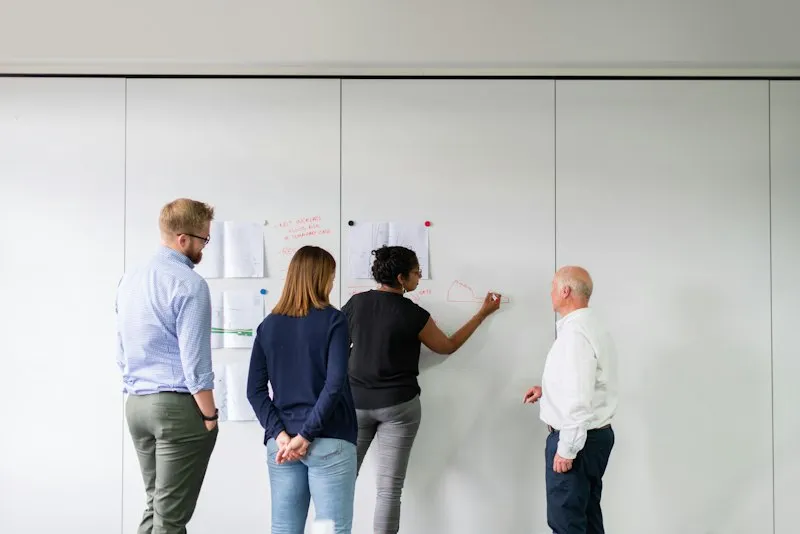
Task conflict facilitation involves actively structuring team interactions to promote open debate about the work. For example, a project leader might allocate time during meetings for team members to voice differing opinions on a project plan, ensuring that everyone’s perspective is heard. In complex IT projects, where no single person holds all the knowledge, this dialectical exchange can improve understanding and decision quality. Leaders are advised to monitor task conflict and encourage it when it remains focused on the task.
Effective facilitation includes recognizing that conflicts have both task-related and interpersonal components. To keep discussions constructive, leaders can emphasize superordinate goals-shared objectives that outweigh individual disagreements-and intervene if personal tensions arise. The goal is not to eliminate conflict but to ensure it stays about the work and leads to better ideas rather than relationship damage.
Take it further
Share an Example
Can you think of a time when a disagreement at work actually helped your team make a better decision?
Reflect in Mneno
Outcomes of Task Conflict Facilitation

Facilitating task conflict has been linked to several positive outcomes. In face-to-face teams, task conflict can improve task understanding and decision quality, and it has been associated with higher individual job performance among those central to task conflict networks. Task conflict also positively affects knowledge sharing: when team members exchange ideas through disagreement, they learn from each other, which can enhance team performance.
However, the effects are not universally positive. Task conflict may lead to worse performance in some settings, such as virtual teams using lean communication media, where productive debate is harder. The type of conflict matters: relationship conflict (personal dislikes) and process conflict (disagreements about resources or roles) generally harm performance, though process conflict can sometimes help in early-stage face-to-face teams. Therefore, facilitation efforts must distinguish between conflict types.
The Role of Conflict Management Strategy

Task conflict facilitation is part of a broader conflict management strategy. Research suggests that project managers should actively minimize relationship conflict, monitor process conflict, and facilitate task conflict. Understanding the source of conflict helps tailor the response.. For example, creating positive goal interdependence-common goals that outweigh competing interests-can keep task conflict productive and reduce negative personal effects.
Task interdependency also plays a moderating role. In teams with high task interdependency, where members frequently interact face-to-face, the negative impact of relationship conflict on individual performance and satisfaction is reduced. This suggests that structuring work to require regular, constructive interaction can help teams handle conflict better. Effective facilitation therefore includes designing team workflows that encourage collaboration while managing how disagreements unfold.
How Task Conflict Facilitates Knowledge Sharing

One key mechanism behind task conflict facilitation is knowledge sharing. When team members disagree on task issues, they are prompted to explain their reasoning, present evidence, and consider alternatives. This dialectic exchange spreads knowledge across the team, especially valuable in projects where expertise is distributed. For instance, in an IT project, a developer and a tester might debate the best approach to integrating a new module, each contributing unique insights that improve the final solution.
Facilitation encourages this process by creating a safe environment for debate. Leaders can structure discussions to ensure diverse opinions are heard without escalation into personal attacks. The knowledge gained through task conflict can enhance decision quality and team performance, though careful monitoring is needed to prevent the conflict from becoming destructive.
FAQ
Common questions
Each answer is linked to its research.
What is the difference between task conflict and relationship conflict?
Task conflict involves disagreements about the work itself, such as differing views on procedures, resource allocation, or how to solve a problem. Relationship conflict, on the other hand, involves personal dislikes, personality clashes, or interpersonal tensions. While task conflict can be beneficial for team performance when facilitated properly, relationship conflict usually has negative effects, distracting team members from the task and reducing productivity. Effective facilitation aims to keep conflict focused on the task and prevent it from turning into relationship conflict, for example by emphasizing superordinate goals that unite the team.
SourcesS3S6S7S8All sources
Can task conflict be negative?
Yes, task conflict can have negative effects in some situations. Research indicates that its effects are context-dependent. For example, in virtual teams that use lean communication media (e.g., email or chat without video), task conflict may not produce the same benefits as in face-to-face teams, and could even harm performance. Additionally, if task conflict is not managed well, it can escalate into relationship conflict or process conflict about resources and responsibilities, which generally have detrimental effects. Therefore, facilitation requires careful monitoring and appropriate intervention.
SourcesS7S8All sources
How do leaders facilitate task conflict without causing personal tension?
Leaders can facilitate task conflict by structuring discussions to focus on work-related issues and encourage diverse opinions. A recommended strategy is to help team members recognize that conflicts have both task and interpersonal components, and to emphasize superordinate goals-shared objectives that override lower-level disagreements. Leaders should also monitor for signs of relationship conflict and intervene early to prevent it from derailing productive debate. Ensuring frequent face-to-face communication or high task interdependency can also reduce the negative impact of personal conflicts.
SourcesS6S9S11S12All sources
Next read
Keep reading
Nearby guides picked by the editors of this article.
 MomentsHow do I stop disagreements at work from becoming personal?When a work disagreement starts to feel like a personal attack, see why trust matters and try one separating statement to reset the conversation.3 min read
 DecisionCan Arguing with Teammates Help Your Group? Weighing Three StrategiesWhen task disagreements turn personal, you have options. Compare three strategies: redirect to facts, lean into shared goals, or pause to protect cooperation.3 min read
 How-toHow to Turn Disagreements Into Productive DiscussionsUse evidence-based steps to turn team disagreements into discussions that improve work.3 min read
 TechniquesIs This About the Task or About Us?Compare practices to tell whether an argument is about the work or the relationship, including shifting focus, medium choice, and open communication.3 min read
 TechniquesCommon Workplace Conflicts and How to Handle ThemWorkplace conflicts fall into task, relationship, and process types. Learn how each differs and get straightforward approaches to handle them.3 min read
 TechniquesPractices to Improve Team Task AlignmentCompare three evidence-based practices to reduce misalignment on tasks: aligning task conflict with workflows, building team-oriented mental models, and3 min read
References
Sources & evidence
4 research papers informed this article. The numbers beside each section link here, and each DOI opens the original paper.
Source 1:The influence of conflict centrality and task interdependency on individual performance and job satisfaction
Tsung Jen, Ching (2013). The influence of conflict centrality and task interdependency on individual performance and job satisfaction. DOI 10.1108/10444061311316762
Source 2:The Effect of Conflict and Knowledge Sharing on the Information Technology Project Team Performance
Hewitt, Barbara, Walz, Diane B., McLeod, Alexander (2020). The Effect of Conflict and Knowledge Sharing on the Information Technology Project Team Performance. DOI 10.4018/ijkm.2020010101
articleSource 3:How task and person conflict shape the role of positive interdependence in management teams
Janssen, O (1999). How task and person conflict shape the role of positive interdependence in management teams. DOI 10.1016/s0149-2063(99)80006-3
Source 4:Relationship, task and process conflicts on team performance
Martínez-Moreno, Edurne, González-Navarro, Pilar, Zornoza, Ana, Ripoll, Pilar (2009). Relationship, task and process conflicts on team performance. DOI 10.1108/10444060910974876