
How to Turn Disagreements Into Productive Discussions
Use evidence-based steps to turn team disagreements into discussions that improve work.
How can my team turn disagreements into productive discussions that improve our work?
- Task Conflict
- Virtual Teams
- Conflict Resolution
- Integrative Approach

Overview
To turn team disagreements into productive discussions, focus on the content of the disagreement rather than how it was delivered, discuss the reasons behind your decisions, and assign work based on expertise. These evidence-backed strategies are drawn from research on global virtual teams-temporary, culturally diverse, geographically dispersed groups that rely heavily on electronic communication.
The research contrasts integrative approaches (open discussion and consensus) with distributive ones (rapid, one-sided resolution) and shows that the context of virtuality shapes how task conflict affects performance. Not every approach works equally in all settings, so the following steps target specific, supported actions you can take with your team.
1. Address discontent as early as noticed

When you perceive discontent in a virtual team interaction, address it as early as possible. Unchecked emotions can escalate into a sequence of negative comments that become harder to resolve asynchronously. Sending your concerns directly to the involved individual rather than to the entire team can prevent widespread tension.
Early intervention is especially important in virtual environments, where delayed responses can compound misunderstandings. This direct, private approach helps clarify issues before they turn into entrenched conflict.
2. Focus on content, not delivery style

Teams that improve over time share the tendency to focus on the substance of interpersonal interactions rather than on the style or tone of delivery. In practice, this means when you disagree with a teammate's idea, comment on the evidence or reasoning behind it without criticizing how it was presented. This keeps the conversation constructive and centered on the work.
This approach separates task conflict (disagreement about the work itself) from relationship conflict (personal friction). Research on global virtual teams found that an integrative approach-openly expressing disagreement and seeking consensus-is linked to higher performance, while a distributive approach can worsen relationship conflict.
3. Explicitly discuss reasons behind decisions and agreements
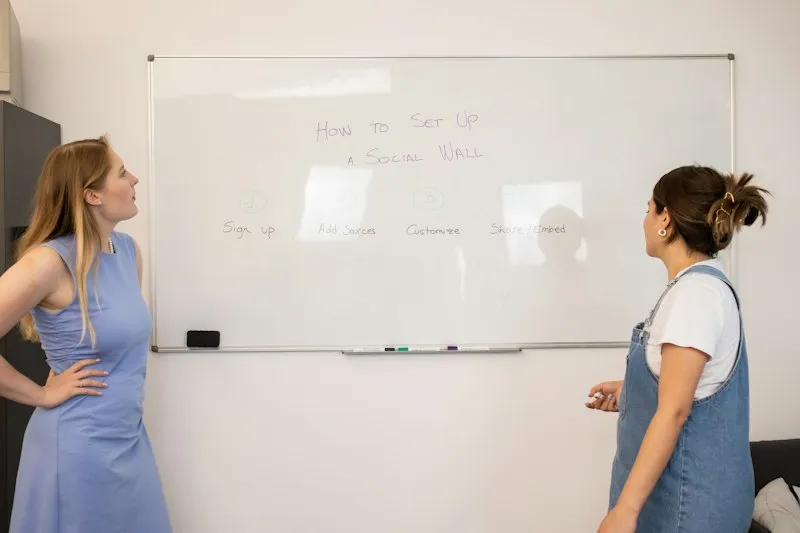
When accepting and distributing work assignments, discuss the reasons behind any decisions or agreements reached. Teams that improve over time regularly surface the rationale for their choices rather than leaving implicit assumptions unexamined. This transparency prevents future misunderstandings and builds shared understanding.
Making reasoning explicit is especially valuable in virtual teams because it compensates for the lack of nonverbal cues and real-time clarification. It also aligns with the finding that virtual communication can enhance transparency of work processes and help prevent conflict situations.
4. Assign work to the most relevant expertise

Rather than assigning tasks by convenience or rotation, assign them to members who have the relevant task expertise. This tendency is one of three conflict-resolution patterns observed in teams that improve over time. When each person works on what they know best, disagreements about how to approach a task are less likely and, when they do occur, can be resolved with more confidence.
This step does not guarantee conflict will disappear, but it reduces a common source of task conflict. In virtual teams where coordination is already challenging, aligning roles with expertise can keep the focus on productive discussion rather than role ambiguity.
Where the evidence stops
Limits
These steps come from research on global virtual teams, which are temporary and heavily rely on electronic communication. If your team works in person or uses minimal technology, some practices-especially early detection of discontent through private messages-may need adjustment. Additionally, the studies do not compare these strategies to other approaches, so results may vary based on team culture, task complexity, and trust levels.
Take it further
Your Team's Patterns
Which of these approaches-addressing early, focusing on content, discussing reasons, or assigning by expertise-does your team already do, and where might there be room for change?
Talk it out
Opening the Discussion
What helps a disagreement feel productive to you, and what tends to make it more difficult?
Keep reading
 MomentsIs this team fight about the work or about us?Learn to tell whether a team disagreement is about the task or about personal issues, and how to redirect conflict toward better outcomes.3 min read
 DecisionWhy Disagreements About Work Methods Slow Us DownTask conflict can stall teams, but how you resolve it matters. Compare three evidence-based approaches to decide what fits your situation.3 min read
 ExplainerTask Conflict RecognitionTask conflict recognition means identifying disagreements among team members about the content of tasks, including differing views, ideas, and opinions on how5 min read
 TechniquesArguing About Work Without Hurting Team SpiritCompare practices for work-related arguments that protect team spirit: focus on content, discuss reasons, use virtual communication.3 min read
 DecisionHow to Use Disagreements in Your Team for Better Decisions Without Ruining RelationshipsChoose among three strategies to turn task disagreements into better decisions while preserving team relationships, based on research on conflict resolution in4 min read
 TechniquesPractices to Improve Team Task AlignmentCompare three evidence-based practices to reduce misalignment on tasks: aligning task conflict with workflows, building team-oriented mental models, and3 min read
References
Sources & evidence
4 research papers informed this article. The numbers beside each section link here, and each DOI opens the original paper.
Source 1:Conflict and Performance in Global Virtual Teams
Kankanhalli, Atreyi, Tan, Bernard C.Y., Wei, Kwok-Kee (2006). Conflict and Performance in Global Virtual Teams. DOI 10.2753/mis0742-1222230309
Source 2:Communication and Trust in Global Virtual Teams
Sirkka L. Järvenpää, Dorothy E. Leidner (1999). Communication and Trust in Global Virtual Teams. DOI 10.1287/orsc.10.6.791
articleSource 3:The Role of Conflict Resolution in Teams - An Empirical Study
Mukherjee, Sanjukta (2012). The Role of Conflict Resolution in Teams - An Empirical Study. DOI 10.2139/ssrn.2191886
articleSource 4:Virtual communicating, conflicts and performance in teams
de Jong, Remco, Schalk, René, Curşeu, Petru L. (2008). Virtual communicating, conflicts and performance in teams. DOI 10.1108/13527590810912331
A place to begin
Make room for your next step.
You do not need to have it all figured out. Bring one real moment to Mneno, notice what matters, and choose one step to try.
Name the moment
Describe what happened in your own words.
Notice what matters
Explore the needs and reactions beneath it.
Choose one step
Find a small action you can try next.
Start at your own pace