
Why Disagreements About Work Methods Slow Us Down
Task conflict can stall teams, but how you resolve it matters. Compare three evidence-based approaches to decide what fits your situation.
The question underneath
Why do disagreements about work methods slow our team down?
Sound familiar?
Your team is caught in a cycle of unproductive debates about how to do the work, and it's grinding progress to a halt.
First, get oriented
Before you choose
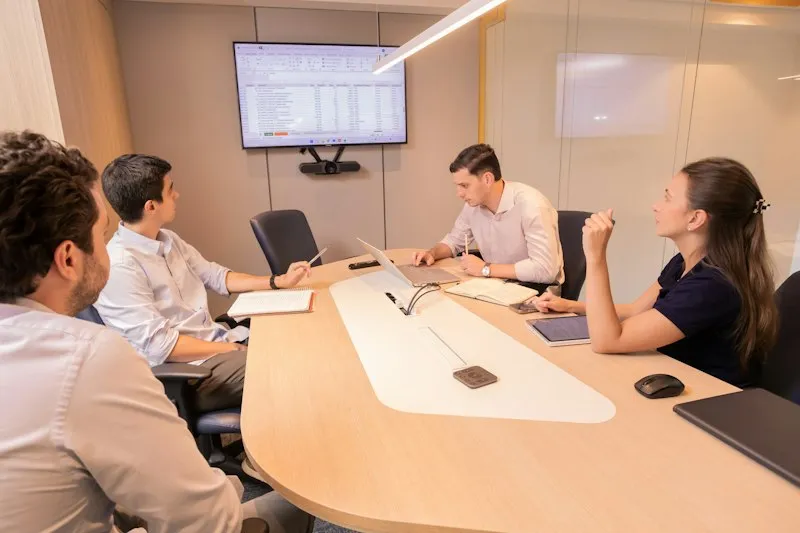
When your team gets bogged down arguing over work methods, you feel the frustration firsthand. There is no single right way to handle these disagreements, only trade-offs that depend on your team's immediate capacity and context.
The choice you face now is how to approach these task conflicts. Each option affects your time, emotional energy, and relationships differently. Here we compare three evidence-backed strategies so you can deliberately pick one based on what you can do right now.
Find your starting point
What feels closest to your situation right now?
Choose the situation closest to yours. We’ll take you to that path so you can weigh it without committing to anything.
- See this pathPathI can pause the argument and schedule a short follow-up
- See this pathPathI have the energy for a facilitated open discussion today
- See this pathPathI need a formal process or outside help to break the deadlock
Still unsure? Ask yourself:
Which trade-off-time, effort, or risk of escalation-feels most manageable right now?
Compare your paths
Three ways forward, different trade-offs
There is no perfect choice. Skim the trade-offs, then read the path that fits what you can manage today.
Path
Strategy 1: Decouple and Defer
You would explicitly separate task disagreements from personal dynamics. Acknowledge each person's contribution, then postpone the method debate and set a brief, time-boxed follow-up meeting dedicated solely to discussing the work itself without criticizing delivery style [sourceRef: 1]. This requires you to send a short message (e.g., 'Let's table how we do this for now and meet tomorrow for 15 minutes on the task content') and resist the urge to fix the disagreement immediately.
In research on high-performing teams, focusing on the content of interactions rather than delivery style is a key conflict-resolution tendency [sourceRef: 1]. Another study found that in videoconference teams, early task conflict can harm initial performance, and structured follow-up support may help without escalating conflict [sourceRef: 2]. The trade-off is that deferral does not resolve the underlying method disagreement; you delay the discussion and risk it resurfacing if trust is low. This approach works best when you can trust that a brief pause will not compound the problem.
Path
Strategy 2: Integrative Consensus Building
You would actively facilitate an open discussion where everyone expresses disagreement and works toward a consensus on the work method. This means scheduling a 30-minute meeting, inviting all members to speak, and explicitly discussing the reasons behind any agreement or distribution of tasks [sourceRef: 1]. You will need to guide the conversation to focus on task content and avoid letting it drift into personal criticism.
In a study of global virtual teams, an integrative (collaborative) conflict resolution approach was the dominant style in the team that earned the highest project grade [sourceRef: 3]. The same research indicates that task conflict should be resolved integratively rather than avoided to achieve beneficial outcomes [sourceRef: 4]. The trade-off is that this approach requires more immediate time and emotional effort. It works best when team members are willing to engage openly and trust that the process will lead to a fair outcome.
Path
Strategy 3: Structured Remediation with Support
You would implement a formal conflict-resolution process: call a dedicated meeting, assign roles (e.g., a facilitator who monitors for personal attacks), and use a structured agenda that separates task analysis from relational issues [sourceRef: 1]. This may involve bringing in a neutral third party, such as a manager or facilitator, to ensure that task conflict does not escalate into relationship conflict [sourceRef: 5]. You will need to invest significant time upfront-likely an hour or more-and follow up with clear action items.
Research shows that managers should monitor early task disagreements in virtual settings and consider providing structured conflict resolution or additional support [sourceRef: 2]. Another study emphasizes that relationship conflict inhibits collaboration, so converting it into task-focused disagreement through a structured process can reduce harm [sourceRef: 5]. The trade-off is high immediate effort and the need for buy-in from the whole team or an external facilitator. This approach is most viable when the team is stuck and a dedicated intervention is the only way forward.
Help in 2 minutes
Pause and Consider
What might your team need most in this moment, and which option could help you offer that?
Talk through my situation with the AI mentorQuick start in chat
Talk It Over
How has your team handled work-method disagreements in the past, and what worked or didn't?
Describe my situation (free)Next read
Keep reading
Nearby guides picked by the editors of this article.
 MomentsIs this team fight about the work or about us?Learn to tell whether a team disagreement is about the task or about personal issues, and how to redirect conflict toward better outcomes.3 min read
 TechniquesArguing About Work Without Hurting Team SpiritCompare practices for work-related arguments that protect team spirit: focus on content, discuss reasons, use virtual communication.3 min read
 How-toHow to Recognize Constructive Task Conflict at WorkLearn to distinguish constructive task conflict from harmful disagreements by focusing on topic, resolution style, and team trust.3 min read
 ExplainerTypes of Intragroup ConflictLearn about task and relationship conflict, their effects on team performance, and strategies for managing disagreements.6 min read
 ExplainerTask Conflict RecognitionTask conflict recognition means identifying disagreements among team members about the content of tasks, including differing views, ideas, and opinions on how5 min read
 DecisionWhy Does My Group Feel Less Trusting After a Disagreement?When a disagreement leaves your group less trusting, you can choose a low, moderate, or high-effort strategy. Each option has real trade-offs.3 min read
References
Sources & evidence
4 research papers informed this article. The numbers beside each section link here, and each DOI opens the original paper.
Source 1:The Role of Conflict Resolution in Teams - An Empirical Study
Mukherjee, Sanjukta (2012). The Role of Conflict Resolution in Teams - An Empirical Study. DOI 10.2139/ssrn.2191886
articleSource 2:Conflict and Performance in Global Virtual Teams
Kankanhalli, Atreyi, Tan, Bernard C.Y., Wei, Kwok-Kee (2006). Conflict and Performance in Global Virtual Teams. DOI 10.2753/mis0742-1222230309
Source 3:To collaborate or not? The moderating effects of team conflict on performance‐prove goal orientation, collaboration, and team performance
E. Downes, Patrick, Gonzalez‐Mulé, Erik, Seong, Jee Young, Park, Won‐Woo (2021). To collaborate or not? The moderating effects of team conflict on performance‐prove goal orientation, collaboration, and team performance. DOI 10.1111/joop.12360
articleSource 4:Relationship, task and process conflicts on team performance
Martínez-Moreno, Edurne, González-Navarro, Pilar, Zornoza, Ana, Ripoll, Pilar (2009). Relationship, task and process conflicts on team performance. DOI 10.1108/10444060910974876