
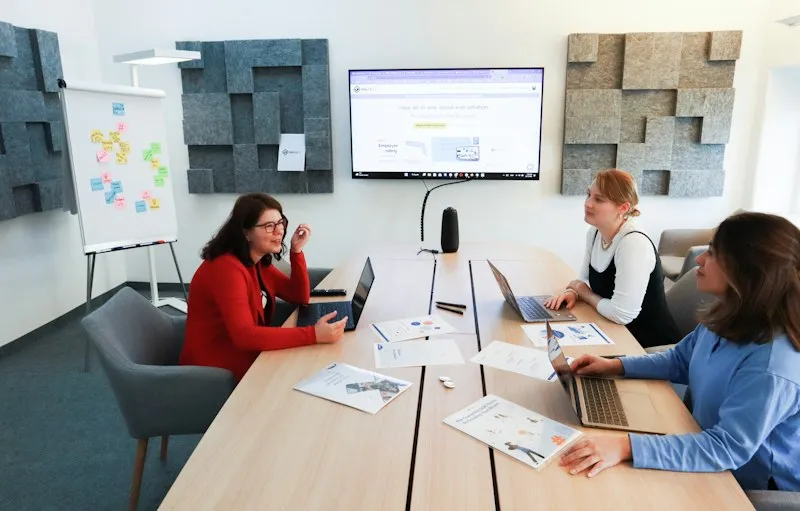
Task conflict assessment means evaluating disagreements about work content, ideas, and task-related decisions, rather than personal clashes. It involves understanding the emotional intensity, importance, and perceived resolvability of these disagreements, because those dimensions shape how the conflict affects team performance and how it should be managed.
Assessing task conflict is not just about spotting that a disagreement exists, but about gauging its characteristics-how emotional it is, how crucial the issue is to the group, and how resolvable it seems. These qualities determine whether the task conflict helps or hinders the team, and what kind of conflict resolution approach might work best.
What Task Conflict Looks Like in Teams
Task conflict involves disagreements about the substance of the work: what tasks to prioritize, how to allocate responsibilities, which approach is best, or how to interpret information. In practice, this could mean a team debating the merits of a marketing strategy or arguing over deadlines. These disagreements are distinct from relationship conflicts, which center on personal animosity, and process conflicts, which concern logistics and coordination.
A key insight from research is that task conflict is not always detached or cool. The emotionality, importance, and resolution potential of a conflict apply to task conflicts just as they do to relationship and process conflicts. A task conflict can become highly emotional and be perceived as difficult to resolve, especially if the team views the issue as critically important. When task conflict becomes very emotional and important but seems to have little chance of quick resolution, it can be a recipe for disaster if not managed carefully.
Take it further
Thinking About Team Conflicts
What kind of disagreements about work tasks have you seen in teams you've been part of?
Reflect in Mneno
How Task Conflict Is Studied and Measured
Researchers assess task conflict using both perceptual measures (team members' self-reports of disagreement) and behavioral observations (e.g., coding the content of discussions). One study examined both behavioral displays and perceptual conflict to understand links with performance, finding that organizational members experience task conflicts that can be highly emotional, with little potential for quick resolution, and be very important to the group.
The dimensions of emotionality, importance, acceptability, and resolution potential are used to assess all three conflict types, including task conflict. This kind of assessment goes beyond simply asking whether a disagreement exists; it captures the context and emotional charge, which are critical for predicting outcomes and choosing resolution strategies.
Outcomes of Task Conflict: Performance and Context
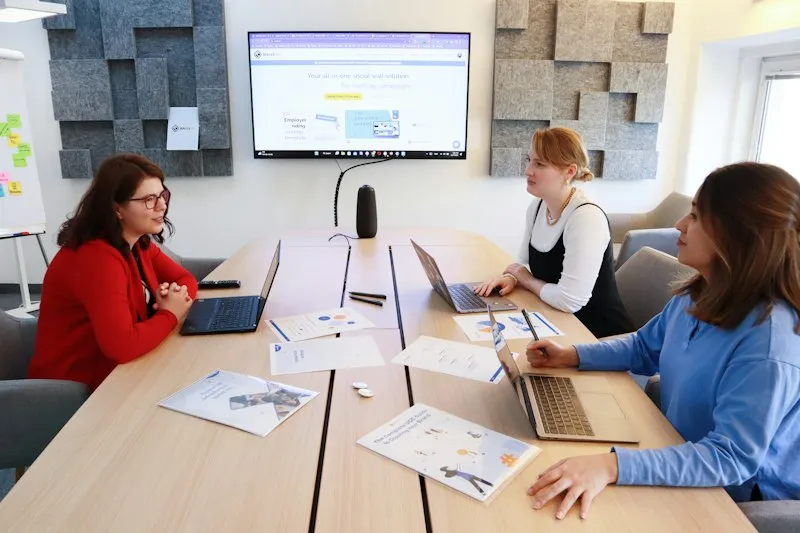
The effect of task conflict on performance depends heavily on the context. In a laboratory experiment comparing face-to-face, videoconference, and computer-mediated communication teams over a month, task conflict actually improved face-to-face team performance. However, in videoconference teams, task conflict diminished performance during the first stage of teamwork. This suggests that the communication medium changes how task disagreements affect the group.
In global virtual teams, the relationship between task conflict and team performance is contingent upon task complexity and the conflict resolution approach. Simply put, whether task conflict helps or hurts depends on how complex the work is and how the team decides to resolve the disagreement. These mixed findings show that task conflict assessment must account for team context and resolution strategies.
Conflict Resolution Approaches for Task Conflict

How teams resolve task conflict matters greatly. One conflict resolution approach, called distributive resolution, can actually alleviate task conflict in global virtual teams. This approach involves a competitive, win-lose style (e.g., imposing a decision). While it can rapidly deal with task conflict to meet deadlines when integrative resolution is not possible, it may aggravate relationship conflict in the same team.
Teams that improve over time tend to share certain conflict-resolution tendencies: they focus on the content of interactions, not delivery style; they explicitly discuss reasons behind agreements and work assignments; and they assign work based on task expertise rather than convenience. In videoconference teams, managers may need to facilitate structured conflict resolution during early teamwork stages to help teams navigate initial task disagreements without harming performance.
FAQ
Common questions
Each answer is linked to its research.
How does task conflict differ from relationship and process conflict?
Task conflict refers to disagreements about the content and substance of the work (what to do, how to approach a problem), while relationship conflict involves personal animosity or personality clashes, and process conflict concerns logistics and how work is coordinated (who does what, when). Research shows that all three types can be assessed using the same dimensions of emotionality, importance, acceptability, and resolution potential-a task conflict can become just as emotional as a relationship conflict.
SourcesS9All sources
Can task conflict ever be beneficial?
Yes, but it depends on the context. In a laboratory experiment, task conflict actually improved face-to-face team performance. However, in videoconference teams, task conflict reduced performance during the early stage of teamwork. The effect also depends on task complexity and how the team resolves the conflict. So task conflict can be beneficial or harmful, and assessment must consider the communication medium, team experience, and resolution approach.
SourcesS6S7All sources
What strategies do teams use to resolve task conflict?
Research has identified seven clusters of conflict resolution strategies: Voting, Compromise/Consensus, Discuss/Debate, Open Communication, Idiosyncratic Solutions (such as rules, threats, or mediator), Avoided/Ignored, and Rotating Responsibilities. Teams that improve over time tend to focus on content rather than delivery style, explicitly discuss reasons behind decisions, and assign work based on task expertise rather than convenience.
SourcesS1S2S3All sources
Next read
Keep reading
Nearby guides picked by the editors of this article.
 MomentsIs this team fight about the work or about us?Learn to tell whether a team disagreement is about the task or about personal issues, and how to redirect conflict toward better outcomes.3 min read
 DecisionWhy Disagreements About Work Methods Slow Us DownTask conflict can stall teams, but how you resolve it matters. Compare three evidence-based approaches to decide what fits your situation.3 min read
 How-toHow to Recognize Constructive Task Conflict at WorkLearn to distinguish constructive task conflict from harmful disagreements by focusing on topic, resolution style, and team trust.3 min read
 TechniquesArguing About Work Without Hurting Team SpiritCompare practices for work-related arguments that protect team spirit: focus on content, discuss reasons, use virtual communication.3 min read
 ExplainerTask Conflict RecognitionTask conflict recognition means identifying disagreements among team members about the content of tasks, including differing views, ideas, and opinions on how5 min read
 TechniquesPractices to Improve Team Task AlignmentCompare three evidence-based practices to reduce misalignment on tasks: aligning task conflict with workflows, building team-oriented mental models, and3 min read
References
Sources & evidence
4 research papers informed this article. The numbers beside each section link here, and each DOI opens the original paper.
Source 1:The Role of Conflict Resolution in Teams - An Empirical Study
Mukherjee, Sanjukta (2012). The Role of Conflict Resolution in Teams - An Empirical Study. DOI 10.2139/ssrn.2191886
articleSource 2:Relationship, task and process conflicts on team performance
Martínez-Moreno, Edurne, González-Navarro, Pilar, Zornoza, Ana, Ripoll, Pilar (2009). Relationship, task and process conflicts on team performance. DOI 10.1108/10444060910974876
Source 3:Conflict and Performance in Global Virtual Teams
Kankanhalli, Atreyi, Tan, Bernard C.Y., Wei, Kwok-Kee (2006). Conflict and Performance in Global Virtual Teams. DOI 10.2753/mis0742-1222230309
Source 4:A Qualitative Analysis of Conflict Types and Dimensions in Organizational Groups
Jehn, Karen A. (1997). A Qualitative Analysis of Conflict Types and Dimensions in Organizational Groups. DOI 10.2307/2393737
article