

Relationship conflict is personal friction between team members, such as personality clashes or interpersonal disagreements. You can identify it by recognizing its signs, underlying causes, and specific origins within a team. This guide explains how to spot relationship conflict and distinguish it from other conflict types.
Identifying relationship conflict matters because it can harm team outcomes. For example, in IT project teams, relationship conflict reduces knowledge sharing and team performance. Understanding its indicators and drivers is a necessary first step before any resolution can be effective.
Signs That Distinguish Relationship Conflict
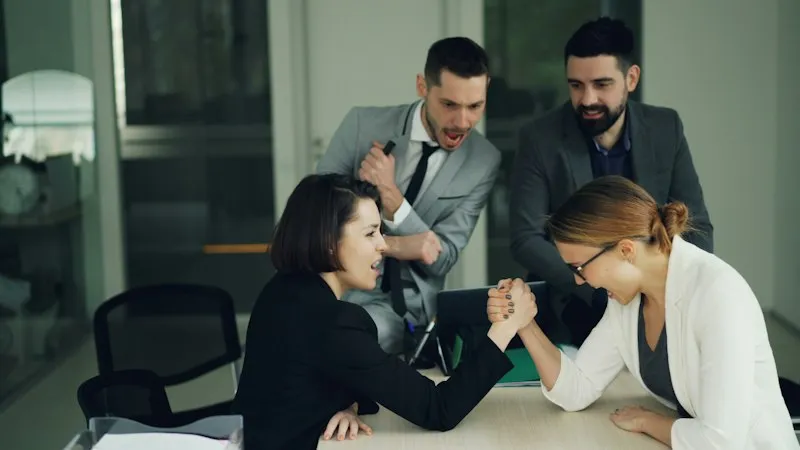
A key way to identify relationship conflict is to look for signs of personal friction rather than disagreements about the work itself. Relationship conflict involves interpersonal disagreements, such as personality clashes or tension between members. In contrast, task conflict is about diverse opinions on the work, and process conflict concerns disagreements on roles or schedules. Each type has different effects: process and relationship conflict reduce knowledge sharing, while task conflict can increase it.
For example, if two teammates argue over how to divide tasks, that is process conflict; if they argue because they dislike each other's communication style, that is relationship conflict. Recognizing these differences helps leaders choose the right response, as each type requires a different approach. The presence of personal friction, rather than task-related debate, is a clear sign of relationship conflict.
Take it further
Conflict Patterns
Have you noticed any patterns in how disagreements arise in your team, and what seems to set them off?
Reflect in Mneno
Underlying Antecedents of Relationship Conflict
Relationship conflict often stems from identifiable antecedents. In cross-functional project teams, research has identified four key drivers: intrapersonal diversity, uncertain project tasks, organizational culture diversity, and inappropriate team member behavior. These factors were validated using structural equation modeling, with significant path coefficients: intrapersonal diversity (β=0.29), uncertain project tasks (β=0.39), organizational culture diversity (β=0.23), and inappropriate behavior (β=0.37).
These antecedents offer a practical way to identify relationship conflict. For instance, if team members come from diverse personal backgrounds or have unclear task responsibilities, the risk of relationship conflict rises. Similarly, when organizational cultures differ or someone behaves inappropriately, friction is likely. Practitioners can use these drivers to detect and control relationship conflict before it damages project performance.
Origins of Relationship Conflict in Teams
Relationship conflict can originate at different levels within a team: individual, dyad, subgroup, team, or none. A structured method identifies these origins using a four-step procedure: enter the team's conflict network and candidate configurations, score each to select the best fit, assign the origin to the team panel, and repeat for each conflict type and project period. This approach helps pinpoint where the conflict starts.
An individual origin occurs when one 'bad apple' instigates conflict with others. Such individuals are often low in agreeableness, lack conscientiousness, and are emotionally unstable, leading them to disregard relationships and create turmoil that spreads. Identifying whether the origin is one person or a pair is crucial because interventions differ. The method also handles missing data with iterative runs and weights multiple origins when needed.
How Relationship Conflict Relates to Task Conflict
Relationship conflict often escalates from task conflict, but this is not inevitable. Team identification-the extent to which members feel connected to their team-can reduce the risk. A longitudinal study in health care teams found that team identification weakened the positive association between task conflict and growth in relationship conflict. When team identification was high and task conflict moderate, the association disappeared entirely.
Perceived team performance also plays a role. When team members believe their team is productive, their self-worth increases, enhancing team identification. This, in turn, promotes group-oriented behavior and reduces defensive reactions to task disagreements. Thus, if you notice task conflict, also assess the level of team identification and perceived performance to gauge whether it may turn into relationship conflict. This insight helps you identify potential relationship conflict early.
Next read
Keep reading
Nearby guides picked by the editors of this article.
 MomentsHow do I stop disagreements at work from becoming personal?When a work disagreement starts to feel like a personal attack, see why trust matters and try one separating statement to reset the conversation.3 min read
 DecisionHow to Tell if You're Fighting About the Task or About Each OtherLearn to distinguish task conflict from relationship conflict in your team disagreements and choose a strategy based on your current capacity.4 min read
 How-toHow to Tell If a Team Fight Is About the Task or About UsLearn how to distinguish task conflict from relationship conflict in your team, using indicators researchers have identified.3 min read
 TechniquesHow to Tell If a Conflict Is About the Relationship or the WorkLearn practices to distinguish relationship conflict from task conflict in your team, based on research about conflict types and their effects.3 min read
 TechniquesAssessing Personal Tension in Your TeamCompare three evidence-based ways to understand personal tension in your team: identifying relationship conflict, tracing conflict origins, and using a3 min read
 TechniquesRelationship Conflict and Why It Drains YouRelationship conflict creates emotional exhaustion and stress. Compare three ways to understand and address its draining effects.2 min read
References
Sources & evidence
4 research papers informed this article. The numbers beside each section link here, and each DOI opens the original paper.
Source 1:The Effect of Conflict and Knowledge Sharing on the Information Technology Project Team Performance
Hewitt, Barbara, Walz, Diane B., McLeod, Alexander (2020). The Effect of Conflict and Knowledge Sharing on the Information Technology Project Team Performance. DOI 10.4018/ijkm.2020010101
articleSource 2:When Task Conflict Becomes Personal
Guenter, Hannes, van Emmerik, Hetty, Schreurs, Bert, Kuypers, Tom, et., al. (2016). When Task Conflict Becomes Personal. DOI 10.1177/1046496416667816
articleSource 3:Antecedents of Relationship Conflict in Cross-Functional Project Teams
Huo, Xiaoyan, Zhang, Lianying, Guo, Haiyan (2016). Antecedents of Relationship Conflict in Cross-Functional Project Teams. DOI 10.1177/875697281604700505
Source 4:Things Are Not Always What They Seem: The Origins and Evolution of Intragroup Conflict
Shah, Priti Pradhan, Peterson, Randall S., Jones, Stephen L., Ferguson, Amanda J. (2020). Things Are Not Always What They Seem: The Origins and Evolution of Intragroup Conflict. DOI 10.1177/0001839220965186
article