

Individual perceptions - how people interpret a disagreement, its importance, and whether it can be resolved - strongly influence how conflict unfolds and whether it helps or harms a team. People do not simply react to a conflict; they react to what they believe about it, including the type of conflict involved, the emotions it stirs, and their sense of whether a resolution is possible.
Research shows that team members who perceive a conflict as resolvable are more likely to engage constructively, while those who view it as intractable may withdraw or compete. Perceptions also shape whether task disagreements escalate into damaging relationship conflicts, which in turn affects a team’s ability to learn, share knowledge, and perform well.
What Shapes Perceived Resolution Potential

A key perceptual factor is resolution potential - the degree to which individuals believe a conflict can be resolved. This perception varies by conflict type. Process conflicts, such as disagreements about procedures, are often seen as easily resolvable, for instance by consulting a manual or supervisor. In contrast, personality-based relationship conflicts and conflicts over high-stakes strategic decisions are perceived as harder to resolve.
Several determinants influence this perception. A history of antagonism between parties, the costs involved in resolving the dispute, status differences, socialization, uncertainty about the situation, and the ability to leave the situation all play a role. For example, if team members have clashed repeatedly, they may view a current disagreement as less resolvable, leading them to avoid addressing it or to escalate their competitive stance. Understanding these perceptual roots helps teams and managers encourage open discussions of task conflicts while working to resolve relationship and process conflicts quickly.
Take it further
Start a Conversation
What strategies have you seen teams use when they disagree about how to get work done?
Reflect in Mneno
How Perceptions of Conflict Type Drive Outcomes
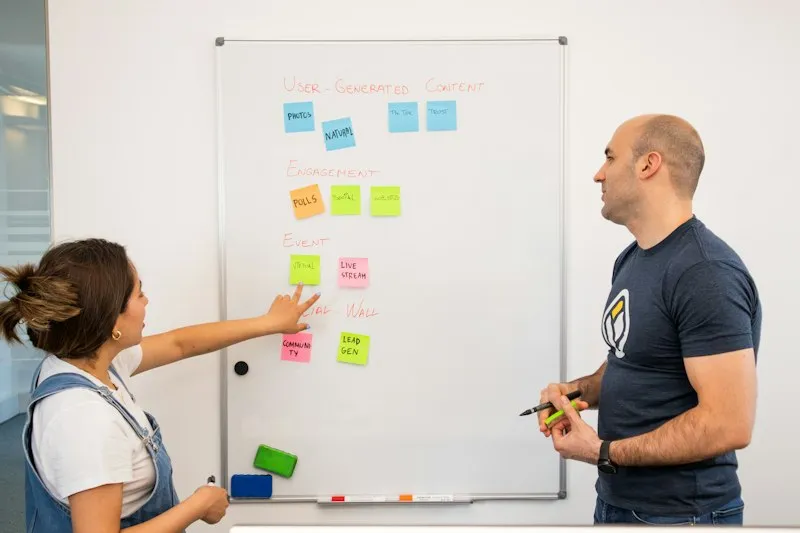
People also perceive different types of conflict - task, relationship, and process - and these perceptions lead to different dynamics. Task conflict involves disagreements about the work itself, such as goals or methods. Moderate levels of task conflict can enhance group performance, but this benefit depends on how it is perceived. If task conflict is accompanied by strong negative emotions like anger or defensiveness, and if members perceive it as not resolvable, it can become dysfunctional and actually decrease performance.
Relationship conflict - personal incompatibilities or interpersonal animosity - is almost always perceived negatively. Unresolved relationship conflict impedes communication and the formation of transactive memory systems (shared knowledge of who knows what), which in turn hinders learning and performance. Process conflicts about logistics and roles are often seen as resolvable, but if left unaddressed, they can also trigger negative emotions.
Cooperative vs. Competitive Perceptions in Teams

Individual perceptions also determine whether teams approach conflict cooperatively or competitively. Cooperative conflict management involves investigating issues together to find solutions acceptable to all, exchanging accurate information, and bringing concerns into the open. Competitive conflict management, by contrast, involves using influence, authority, or expertise to push one's own ideas, and being firm in pursuing one's own side.
These approaches are measured through scales that capture how team members perceive their typical conflict-handling style. A team that perceives conflict as a zero-sum contest is more likely to use competitive tactics, such as relying on power or positional authority. In contrast, a team that perceives shared goals will more often collaborate, combine ideas, and work for mutual benefit.
Observable Conflict Resolution Strategies

How individuals perceive a conflict directly influences which resolution strategies they choose. Research that analyzed team conflict resolution statements identified seven categories of strategies: Voting, Compromise or Consensus, Discuss or Debate, Open Communication, Idiosyncratic Solutions, Avoided or Ignored, and Rotating Responsibilities.
These strategies reflect underlying perceptions. Teams that see a conflict as manageable and important are more likely to use open communication or debate. Teams that perceive a conflict as unimportant or intractable may avoid it or rotate responsibilities to sidestep the issue. Voting or compromise can signal a perception that consensus is possible but that time is limited.
FAQ
Common questions
Each answer is linked to its research.
What is the difference between task conflict and relationship conflict?
Task conflict refers to disagreements about the work itself, such as goals, tasks, or procedures. Relationship conflict involves personal incompatibilities, animosity, or interpersonal friction. The distinction matters because perceptions of each type lead to different outcomes. Moderate task conflict can improve performance when managed well, but relationship conflict almost always harms communication, trust, and team learning. People often perceive relationship conflict as harder to resolve, which can lead to avoidance or escalation.
SourcesS1S6S8S10All sources
How can teams improve their conflict resolution strategies?
Teams can improve by adopting cooperative conflict management techniques. Training programs teach members to express ideas directly without animus, pause defending their own views to ask for more information, work for solutions that benefit everyone, and combine the best ideas to create new solutions. Encouraging a 'we are in this together' attitude helps prevent task disagreements from turning into personal conflicts. Autonomous teams, where members manage their own processes, are especially well-suited for observing and refining these strategies.
SourcesS2S11S12All sources
What factors influence whether a conflict is seen as resolvable?
Several factors shape perceived resolution potential, including a history of antagonism between parties, the costs involved in resolving the dispute, status differences, socialization, uncertainty about the situation, and the ability to leave the situation. Process conflicts are typically seen as more resolvable than personality-based conflicts or strategic disagreements. When people view a conflict as resolvable, they are more likely to engage constructively; when they see little hope, they may withdraw or compete.
SourcesS6All sources
Next read
Keep reading
Nearby guides picked by the editors of this article.
 MomentsIs this conflict serious or just a minor disagreement?Assess conflict severity by considering the dyad's centrality, location, and specific interactions. Use observation and targeted questions to gauge impact.3 min read
 DecisionWhy Do I Keep Having Personal Clashes With Teammates That Ruin Our Work?Personal clashes with teammates can erode collaboration. Learn three strategies to address relationship conflict based on your current capacity and the3 min read
 How-toWhy do we keep arguing about the wrong things in our team?Understand common patterns that shift team arguments from tasks to personal issues, and learn strategies to refocus conflict on what matters.6 min read
 TechniquesApproaches to Task Disagreements in TeamsExplore three evidence-based approaches to handling task conflicts at work: calibrating debate to task type, discussing process early, and trusting teammates.3 min read
 TechniquesAssessing Personal Tension in Your TeamCompare three evidence-based ways to understand personal tension in your team: identifying relationship conflict, tracing conflict origins, and using a3 min read
 TechniquesRelationship Conflict and Why It Drains YouRelationship conflict creates emotional exhaustion and stress. Compare three ways to understand and address its draining effects.2 min read
References
Sources & evidence
4 research papers informed this article. The numbers beside each section link here, and each DOI opens the original paper.
Source 1:Relationship conflict, task conflict and teams’ transactive memory systems
Riley, Jason M., Ellegood, William A. (2019). Relationship conflict, task conflict and teams’ transactive memory systems. DOI 10.1108/ijem-01-2019-0003
Source 2:The Role of Conflict Resolution in Teams - An Empirical Study
Mukherjee, Sanjukta (2012). The Role of Conflict Resolution in Teams - An Empirical Study. DOI 10.2139/ssrn.2191886
articleSource 3:Team conflict management and team effectiveness: the effects of task interdependence and team identification
Somech, Anit, Desivilya, Helena Syna, Lidogoster, Helena (2008). Team conflict management and team effectiveness: the effects of task interdependence and team identification. DOI 10.1002/job.537
articleSource 4:A Qualitative Analysis of Conflict Types and Dimensions in Organizational Groups
Jehn, Karen A. (1997). A Qualitative Analysis of Conflict Types and Dimensions in Organizational Groups. DOI 10.2307/2393737
article