
How to Tell a Healthy Disagreement from a Personal Argument
Learn to distinguish task conflict from relationship conflict and choose a strategy based on your current capacity.
The question underneath
How do I know if we're having a healthy disagreement or a personal argument?
Sound familiar?
You and someone else are in a heated discussion, and you're not sure whether you're still arguing about the work itself or whether it has become personal.
First, get oriented
Before you choose

You're in the middle of a disagreement and you sense the mood shift - your stomach tightens and the other person's words start to feel like an attack. You are not alone in wondering whether this is still a productive debate about the task or if it has slipped into a personal argument. [sourceRef: 1]
There is no single right way to handle this moment, only trade-offs that depend on what you can give right now. Research distinguishes task conflict (about the work itself) from relationship conflict (personal disagreements) and shows that when task conflict is perceived as relationship conflict, people become more rigid and less able to find the right solution [sourceRef: 3]. The three options below ask you to assess your current capacity: you can reduce emotional friction without fully resolving the issue, redirect the conversation toward task content, or depersonalize by surfacing unspoken agreements. None is better - each fits a different level of immediate effort. [sourceRef: 2]
Find your starting point
What feels closest to your situation right now?
Choose the situation closest to yours. We’ll take you to that path so you can weigh it without committing to anything.
- See this pathPathI feel tense and need to step back for a moment
- See this pathPathI can keep talking, but I need to steer us back to the work itself
- See this pathPathI'm ready to pause and dig into each other's reasoning openly
Still unsure? Ask yourself:
What about each option feels more or less possible right now, given where the conversation already is?
Compare your paths
Three ways forward, different trade-offs
There is no perfect choice. Skim the trade-offs, then read the path that fits what you can manage today.
Path
Strategy 1: Acknowledge and Pause
You concretely stop the exchange, say something like 'We might be off track - can we take a breather?' and step away for a few minutes. This requires you to notice the shift and interrupt the conversation rather than push through. [sourceRef: 2]
Avoiding the conflict entirely can prevent escalation, but research on global virtual teams shows that avoidance does not yield beneficial outcomes for task conflict [sourceRef: 6]. The trade-off you accept is that the disagreement may remain unresolved while you buy time to re-enter with a clearer head. [sourceRef: 6]
Path
Strategy 2: Redirect to Task Content
You concretely rephrase the other person's personal-sounding comment as a task-related point and respond only to the work issue, ignoring the delivery style. This requires you to mentally separate the interpersonal layer from the work layer and keep your tone collaborative. [sourceRef: 1]
High-performing teams use this approach: they focus on the content of interactions rather than interpersonal idiosyncrasies and ignore bad behavior while acknowledging contributions [sourceRef: 7]. Using collaborative statements like 'We will be working together - it's important we both feel comfortable with a solution' helps frame the conflict as a shared challenge [sourceRef: 1]. The trade-off is that it takes emotional discipline and may feel dismissive to the other person if they want their personal feelings heard. [sourceRef: 1, 7]
Path
Strategy 3: Explicitly Discuss Reasons and Assignments
You concretely say something like 'Let's pause and each explain the reasoning behind our positions, then decide who should work on what based on expertise.' This requires you to initiate a structured discussion, state your reasons openly, and negotiate assignment based on skill rather than convenience. [sourceRef: 3]
Teams that improve over time consistently focus on content rather than delivery style, explicitly discuss reasons behind decisions, and assign work to members with relevant expertise rather than by convenience [sourceRef: 3]. This strategy directly addresses the root of personal arguments - when people feel unheard or unfairly assigned - but it demands the most effort, time, and willingness to be transparent about your own reasoning. The trade-off is that it may feel vulnerable and requires all parties to participate in good faith. [sourceRef: 3]
SourcesS3
Help in 2 minutes
Reflect on Your Capacity
What is your immediate capacity to engage deeper, step away, or redirect the conversation, and how might that guide your next move?
Talk through my situation with the AI mentorQuick start in chat
Talk It Over
How do you usually tell when a discussion has gone from being about the work to being about the person?
Describe my situation (free)Next read
Keep reading
Nearby guides picked by the editors of this article.
 MomentsIs this team fight about the work or about us?Learn to tell whether a team disagreement is about the task or about personal issues, and how to redirect conflict toward better outcomes.3 min read
- TechniquesHow to Tell If Your Argument Is About the Task or About YouLearn to distinguish task conflict from relationship conflict using three evidence-based practices: check the focus of the disagreement, assess the emotional3 min read
 How-toWhy do we keep arguing about the wrong things in our team?Understand common patterns that shift team arguments from tasks to personal issues, and learn strategies to refocus conflict on what matters.6 min read
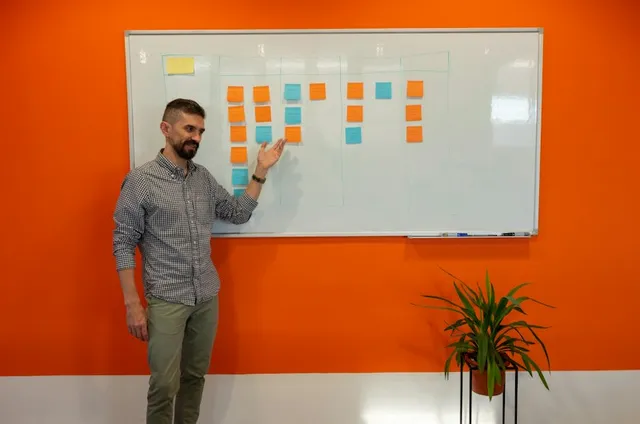 ExplainerTask vs Relationship ConflictLearn the difference between task and relationship conflict in teams, how they interact, and what affects their outcomes.5 min read
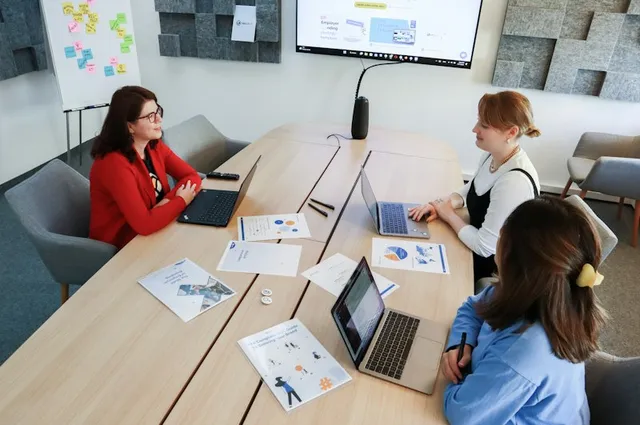 TechniquesDistinguishing Work Conflicts from Personal ConflictsCompare three evidence-informed approaches to tell whether a conflict is about work tasks or personal issues.3 min read
 DecisionWhy Does My Group Feel Less Trusting After a Disagreement?When a disagreement leaves your group less trusting, you can choose a low, moderate, or high-effort strategy. Each option has real trade-offs.3 min read
References
Sources & evidence
4 research papers informed this article. The numbers beside each section link here, and each DOI opens the original paper.
Source 1:Decoupling task and relationship conflict: the role of intragroup emotional processing
Yang, Jixia, Mossholder, Kevin W. (2004). Decoupling task and relationship conflict: the role of intragroup emotional processing. DOI 10.1002/job.258
articleSource 2:Conflict and Performance in Global Virtual Teams
Kankanhalli, Atreyi, Tan, Bernard C.Y., Wei, Kwok-Kee (2006). Conflict and Performance in Global Virtual Teams. DOI 10.2753/mis0742-1222230309
Source 3:The Role of Conflict Resolution in Teams - An Empirical Study
Mukherjee, Sanjukta (2012). The Role of Conflict Resolution in Teams - An Empirical Study. DOI 10.2139/ssrn.2191886
articleSource 4:Task conflict, information processing, and decision-making: The damaging effect of relationship conflict
de Wit, Frank R.C., Jehn, Karen A., Scheepers, Daan (2013). Task conflict, information processing, and decision-making: The damaging effect of relationship conflict. DOI 10.1016/j.obhdp.2013.07.002