
Why Arguing About Work Damages Our Relationship
Work disagreements can strain personal bonds when trust is low. Learn how trust buffers conflict and what practices help protect relationships.
The question
Why does arguing about work damage our relationship?

Overview
Work disagreements, known as task conflict, damage your relationship when they spill into personal friction, or relationship conflict. Research shows that trust between you and your partner or teammate is the key factor that either prevents or accelerates this spillover. When trust is high, you can disagree about work tasks without those disagreements turning into personal attacks or emotional distance.
The evidence points to several practices that can help keep work disagreements from harming your relationship. These include intentionally building trust before conflicts arise, learning to separate task disagreements from personal feelings, and addressing relationship conflict directly when it emerges. No single approach works for everyone, but understanding these options can help you choose where to start.
Build Trust Proactively

Trust is a buffer that prevents work disagreements from becoming personal. You can build it by being reliable, showing competence, and demonstrating goodwill over time. Start small: follow through on commitments, acknowledge others' expertise, and express appreciation for their contributions. These actions create a foundation of trust that makes future disagreements less threatening.
Studies show that teams with high intragroup trust experience far less relationship conflict when task conflict occurs. For example, one analysis found that trust significantly moderates the link between task and relationship conflict (interaction β = -0.55, p < 0.05). However, this evidence comes from team and organizational settings, not personal relationships, and building trust requires ongoing effort rather than a single fix.
Separate Task From Personal
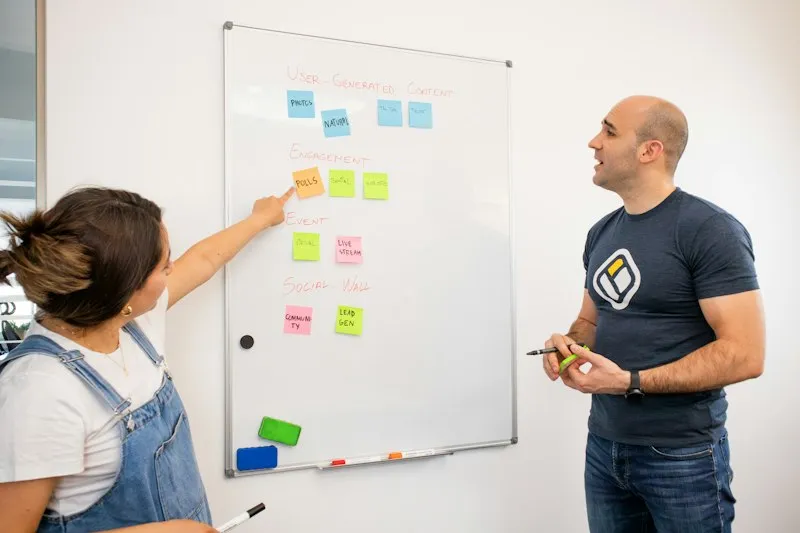
When a work disagreement arises, consciously label it as a task issue rather than a personal critique. You can say, "I disagree with this approach, not with you." This helps prevent misattributing the other person's disagreement as a hidden agenda or personal attack. It also signals that you respect them even while challenging their ideas.
Research indicates that misattribution is a key mechanism: under low trust, group members interpret task disagreements as personal attacks, which triggers relationship conflict. When trust is high, they accept disagreements at face value. This practice is most effective when combined with trust-building, as it relies on both parties' willingness to separate the issue from the person.
Address Relationship Conflict Directly

If a work disagreement has already turned into personal tension, address the relationship conflict directly rather than ignoring it. You might say, "I feel like we're taking this disagreement personally. Can we reset and talk about what's going on between us?" This approach involves acknowledging the emotional hurt and working to repair trust without rehashing the original task disagreement.
The evidence shows a bidirectional relationship between trust and conflict: relationship conflict shatters trust, and low trust makes future relationship conflict more likely. Addressing relationship conflict directly can stop this cycle, but it requires emotional risk and both parties' willingness. Studies note that interventions may need to target both trust-building and conflict resolution simultaneously.
Take it further
Your Situation
What feels most challenging about keeping a work disagreement from becoming personal in your relationship right now?
Talk it out
Talk About It
How do you usually tell the difference between a disagreement about work and a personal conflict?
References
Sources & evidence
4 research papers informed this article. The numbers beside each section link here, and each DOI opens the original paper.
Source 1:Does conflict shatter trust or does trust obliterate conflict? Revisiting the relationships between team diversity, conflict, and trust.
Curşeu, Petru Lucian, Schruijer, Sandra G. L. (2010). Does conflict shatter trust or does trust obliterate conflict? Revisiting the relationships between team diversity, conflict, and trust.. DOI 10.1037/a0017104
DOI 10.1037/a0017104articleSource 2:Does Conflict Shatter Trust or Does Trust Reduce Conflict in Teams? Revisiting the Relationships between Team Diversity, Conflict, Trust and Team
Curseu, Petru Lucian, Schruijer, Sandra (2007). Does Conflict Shatter Trust or Does Trust Reduce Conflict in Teams? Revisiting the Relationships between Team Diversity, Conflict, Trust and Team. DOI 10.2139/ssrn.1100581
DOI 10.2139/ssrn.1100581articleSource 3:Competing hypotheses analyses of the associations between group task conflict and group relationship conflict
Choi, Kyoosang, Cho, Bongsoon (2010). Competing hypotheses analyses of the associations between group task conflict and group relationship conflict. DOI 10.1002/job.733
DOI 10.1002/job.733articleSource 4:Task conflict and relationship conflict in top management teams: The pivotal role of intragroup trust.
Simons, Tony L., Peterson, Randall S. (2000). Task conflict and relationship conflict in top management teams: The pivotal role of intragroup trust.. DOI 10.1037/0021-9010.85.1.102
Next read
Keep reading
 MomentsHow do I stop disagreements at work from becoming personal?When a work disagreement starts to feel like a personal attack, see why trust matters and try one separating statement to reset the conversation.3 min read
 DecisionHow to disagree without a personal fight? Three approachesThree strategies for disagreeing with a colleague without escalating into personal conflict, from lowest to highest immediate effort.4 min read
 ExplainerDecoupling Task and Relationship ConflictLearn how teams can separate task disagreements from personal friction, the role of emotional regulation, and the impact on performance.6 min read
 How-toHow to disagree with a coworker without damaging your relationshipLearn practical steps to handle workplace disagreements constructively, drawing on team conflict and emotional intelligence research.4 min read
 TechniquesConflict Hurts Team Work: Practices That HelpCompare practices to reduce harmful conflict. Learn how trust, how you disagree, and understanding your conflict types can protect your team's performance.3 min read
 ExplainerWhat Is Relationship Conflict?Relationship conflict is interpersonal incompatibility causing friction and reduced team performance.5 min read