
How to disagree without a personal fight? Three approaches
Three strategies for disagreeing with a colleague without escalating into personal conflict, from lowest to highest immediate effort.
The question underneath
How can I disagree with a colleague without it turning into a personal fight?
Sound familiar?
You want to raise a legitimate work difference without it turning into a personal fight.
First, get oriented
Before you choose

You have a real difference with a colleague-maybe about a project approach, a deadline, or how to interpret data-and you worry that saying what you think will spark a personal argument. That tension between raising the issue and protecting the relationship is the exact dilemma you are navigating right now.
There is no single right way to handle this, only trade-offs between how much immediate effort you invest, how much you rely on others, and what you risk emotionally. The three strategies below are ordered by what they ask of you in the moment: starting with low effort (stop or reduce immediate pressure), then moderate effort (use a structured exchange), then high effort (actively shape the group's emotional climate over time). No option guarantees a fight-free outcome; each asks you to choose based on your current capacity and relationship.
Find your starting point
What feels closest to your situation right now?
Choose the situation closest to yours. We’ll take you to that path so you can weigh it without committing to anything.
- See this pathPathI have enough self‑awareness to redirect the conversation now.
- See this pathPathI have the time and patience to explore the disagreement more deliberately.
- See this pathPathI am willing to invest in longer-term team habits, even if it takes time.
Still unsure? Ask yourself:
Which trade-off-immediate effort or longer-term relationship protection-feels more realistic for you today?
Compare your paths
Three ways forward, different trade-offs
There is no perfect choice. Skim the trade-offs, then read the path that fits what you can manage today.
Path
Strategy 1: Pause and pivot to task
Concretely, when you feel the discussion slipping into personal territory-raised voices, personal comments, or emotional spillover-stop the conversation. Say something like, 'I think we are getting off track. Let me come back to the project deadline,' and refocus on the objective issue. This requires only the self-awareness to recognize the shift and the discipline to redirect, not extra preparation or help from others.
Research on team emotional intelligence climates shows that groups with higher collective emotional intelligence are more capable of recognizing downward emotional spirals and acting to prevent damage; they can keep task-related conflicts from spilling over into personal interrelationships [sourceRef: 1]. However, this depends on both parties being aware and willing to redirect. The trade-off is that if your colleague is already emotionally triggered, a simple pivot may feel dismissive, and the conflict may resurface later without addressing the underlying tension. This is a low-effort, moderately reversible option: you can always return to the issue more deliberately.
Path
Strategy 2: Structure the disagreement with integrating or compromising tactics
Here you actively choose a conflict-handling style such as integrating (finding a solution that meets both needs) or compromising (each side gives something up). You might say, 'Let's map out what each of us needs from this decision and see where we can find common ground.' This requires you to spend more time in the conversation, ask clarifying questions, and resist your own defensiveness-but you do not need a third party or formal training to start.
Emotionally intelligent leaders and team members use these constructive strategies to set a positive mood and prevent task conflict from escalating [sourceRef: 2]. Evidence from teams indicates that practicing these approaches, even informally, fosters trust and helps diffuse unacceptable emotions [sourceRef: 3]. The trade-off is that structuring the discussion takes more immediate mental energy and patience; if your colleague is unwilling or very emotional, it may still fail. This is a moderate-effort option with moderate emotional risk, and it is fairly reversible if the conversation still goes poorly.
Path
Strategy 3: Build the team's emotional intelligence climate over time
This is a long‑term, high‑effort approach. Instead of handling one disagreement in the moment, you invest in developing or influencing the group's collective emotional intelligence-through regular team practices like debriefing conflicts, using humor to diffuse tension, or encouraging empathic concern. This might mean suggesting a team norm about how disagreements are handled, or modeling empathy consistently yourself. It requires sustained attention and possibly coordination with teammates or leadership, not a single conversation.
Research shows that teams with higher collective emotional intelligence are better at recognizing and preventing emotional spirals, and that empathic concern is linked with longer but more constructive conflict episodes [sourceRef: 4]. A perceived leader's emotional intelligence also buffers relationship conflict's negative impact on engagement [sourceRef: 5]. The trade‑off is that this strategy does not help you with the current disagreement quickly, and it may not work if your team is unwilling to engage in these practices. It is high effort, low immediate reversibility (you cannot undo a tense moment with a team habit), but potentially very protective over time.
Help in 2 minutes
What you need right now
Given your current energy and the history with this colleague, which approach-stopping the spiral, structuring the discussion, or reshaping the climate-feels most doable for you today?
Talk through my situation with the AI mentorQuick start in chat
Talk it through
If you were to describe this disagreement to a trusted coworker, what part of the conflict would you focus on first?
Describe my situation (free)Next read
Keep reading
Nearby guides picked by the editors of this article.
 MomentsHow do I stop disagreements at work from becoming personal?When a work disagreement starts to feel like a personal attack, see why trust matters and try one separating statement to reset the conversation.3 min read
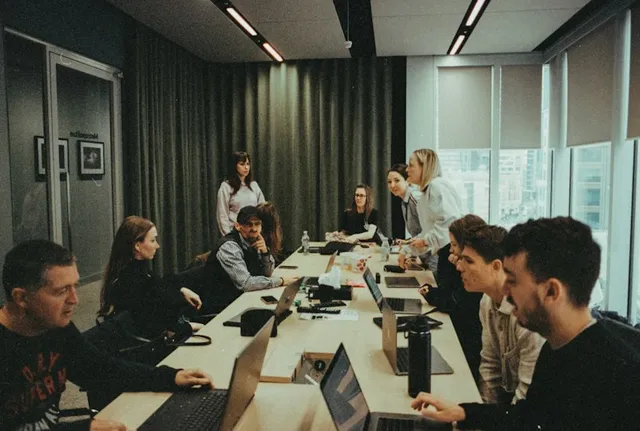 TechniquesConflict Hurts Team Work: Practices That HelpCompare practices to reduce harmful conflict. Learn how trust, how you disagree, and understanding your conflict types can protect your team's performance.3 min read
 How-toHow to disagree with a coworker without damaging your relationshipLearn practical steps to handle workplace disagreements constructively, drawing on team conflict and emotional intelligence research.4 min read
 ExplainerDecoupling Task and Relationship ConflictLearn how teams can separate task disagreements from personal friction, the role of emotional regulation, and the impact on performance.6 min read
 TechniquesWhy Arguing About Work Damages Our RelationshipWork disagreements can strain personal bonds when trust is low. Learn how trust buffers conflict and what practices help protect relationships.3 min read
 DecisionWhy Does My Group Feel Less Trusting After a Disagreement?When a disagreement leaves your group less trusting, you can choose a low, moderate, or high-effort strategy. Each option has real trade-offs.3 min read
References
Sources & evidence
3 research papers informed this article. The numbers beside each section link here, and each DOI opens the original paper.
Source 1:Decoupling task and relationship conflict: the role of intragroup emotional processing
Yang, Jixia, Mossholder, Kevin W. (2004). Decoupling task and relationship conflict: the role of intragroup emotional processing. DOI 10.1002/job.258
articleSource 2:Are teams experiencing relationship conflicts destined to fail
Yuan, Ling, Yu, Yue, Liu, Pan (2019). Are teams experiencing relationship conflicts destined to fail. DOI 10.1108/cms-03-2018-0455
articleSource 3:The Influence of Team Emotional Intelligence Climate on Conflict and Team Members' Reactions to Conflict
Ayoko, Oluremi B., Callan, Victor J., Härtel, Charmine E. J. (2008). The Influence of Team Emotional Intelligence Climate on Conflict and Team Members' Reactions to Conflict. DOI 10.1177/1046496407304921
article