
Resolving Team Arguments Without Escalation
Compare three practices for resolving team arguments: proactive compromise, consensus-building, and open communication. Evidence-based, no winner declared.
The question
How do I resolve team arguments without making it worse?

Overview
When a team argument starts to heat up, you want to resolve it without making things worse. The research on team conflict resolution points to several distinct practices teams have used, though no single approach is right for every situation. This article compares three of them-proactive compromise, consensus building, and open communication-so you can see what each involves and what the evidence says.
These practices come from studies of how teams handle task and process conflicts. The evidence does not establish which practice fits every team or argument, and each has trade-offs. The overview below sets the stage for the comparison cards that follow.
Proactive Compromise
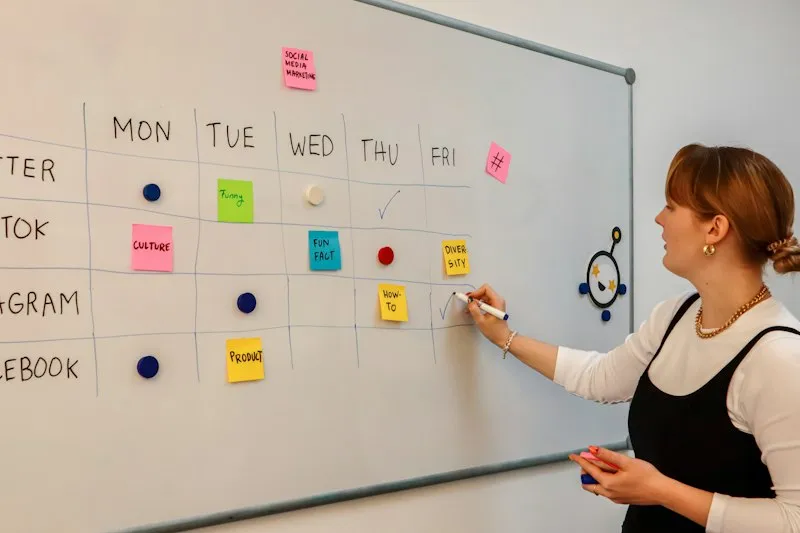
Proactive compromise means you and your team try to foresee potential disagreements before they boil over. You discuss schedules, preferences, and constraints openly, and you may reorganize meetings or adjust tasks to accommodate members who are running late or have conflicting priorities. The goal is to integrate everyone's interests into a shared plan that still achieves the group's objective.
In one study of high-performing, high-satisfaction teams, this practice was linked to better handling of process conflicts-disagreements about logistics and methods. The teams used well-secured compromise, meaning compromises were explicit and agreed upon, not vague. A key limit: the study focused on process conflict, not personal clashes, so results may not transfer directly to every argument.
Consensus or Compromise

With this practice, you and your team work toward consensus on how to resolve a disagreement. Everyone discusses the reasons behind the compromise so that all members understand why a particular decision was made. It differs from simply agreeing to disagree, where no shared understanding is reached.
In the same study, teams that achieved a collectively secured compromise-where everyone understood the reasoning-saw increases in both performance and satisfaction. However, teams that used an 'agree to disagree' approach without secured compromise also improved performance but experienced decreased satisfaction. This suggests the quality of the consensus matters for team morale.
Open Communication

Open communication involves creating space for team members to discuss a disagreement directly and respectfully. You share perspectives, listen to each other, and work through the differences without shutting down or avoiding the issue. It is less structured than proactive compromise and focuses on dialogue rather than immediate agreement.
Researchers identified 'discuss or debate' as one of seven conflict resolution strategies used by teams. Unlike avoiding the conflict, open communication gives the team a chance to clarify misunderstandings and surface underlying concerns. A noted limitation: the study did not compare outcomes across strategies, so it is not clear when open discussion alone resolves an argument versus when it might escalate without additional structure.
Take it further
Your Team's Pattern
Which of these approaches feels most doable given your team's current dynamics, and what might be the first small step to try it?
Talk it out
Talk It Over
How does your team usually handle disagreements-do you tend to compromise openly, discuss until a consensus forms, or just let things slide?
References
Sources & evidence
4 research papers informed this article. The numbers beside each section link here, and each DOI opens the original paper.
Source 1:The Role of Conflict Resolution in Teams - An Empirical Study
Mukherjee, Sanjukta (2012). The Role of Conflict Resolution in Teams - An Empirical Study. DOI 10.2139/ssrn.2191886
DOI 10.2139/ssrn.2191886articleSource 2:A META‐ANALYSIS OF TEAMWORK PROCESSES: TESTS OF A MULTIDIMENSIONAL MODEL AND RELATIONSHIPS WITH TEAM EFFECTIVENESS CRITERIA
LePINE, JEFFERY A., PICCOLO, RONALD F., JACKSON, CHRISTINE L., MATHIEU, JOHN E., et., al. (2008). A META‐ANALYSIS OF TEAMWORK PROCESSES: TESTS OF A MULTIDIMENSIONAL MODEL AND RELATIONSHIPS WITH TEAM EFFECTIVENESS CRITERIA. DOI 10.1111/j.1744-6570.2008.00114.x
Source 3:The effect of task conflict and cooperation on performance of teams: Are the results similar for different task types?
Puck, Jonas, Pregernig, Ursula (2014). The effect of task conflict and cooperation on performance of teams: Are the results similar for different task types?. DOI 10.1016/j.emj.2014.03.007
Source 4:The effectiveness of teams in organizations: a meta-analysis
Richter, A. W., Dawson, J. F., West, M. A. (2011). The effectiveness of teams in organizations: a meta-analysis. DOI 10.1080/09585192.2011.573971
Next read
Keep reading
 MomentsWhy does my team keep having the same fightsLearn why your team has repeated conflicts and how to use open communication and information sharing to break the cycle.3 min read
 DecisionWhy do I seem to be the only one noticing the conflict in our team?You might be the only one seeing the conflict due to conflict asymmetry. Consider whether to address it, try private outreach, or initiate a team discussion.4 min read
 ExplainerManaging Team Conflict EffectivelyLearn evidence-based strategies for managing team conflict, including early intervention, open communication, value alignment, and proactive planning.4 min read
- How-toHow to Assess Personal Conflict in Your TeamUse a team discussion to assess shared perceptions of personal conflict, and understand what a consensus response can and cannot tell you.1 min read
 DecisionWhy Is There So Much Tension and Arguing Within Our Team?Explore three strategies to address team tension and arguing, from low to high effort, with clear trade-offs based on your current capacity.3 min read
 ExplainerTask-Focused Team FunctioningTask-focused team functioning refers to processes and states teams use to accomplish their work, including planning, coordination, and collective efficacy.5 min read