
Why does my team keep having the same fights
Learn why your team has repeated conflicts and how to use open communication and information sharing to break the cycle.
Sound familiar?
You notice the same argument flaring up in meeting after meeting, and nothing ever really changes.

Overview
If you are watching your team rehash the same disagreements with no progress - you are not alone, and there is a clear way to analyze what is happening. The first step is to look at how your team communicates: open communication can either fuel or defuse conflict depending on the psychological needs of your members.
When your team has members who are driven by achievement, open communication - where everyone freely proposes and criticizes ideas - can actually increase productive task conflict, because members recognize each other's drive and become more assertive. At the same time, intentionally sharing information about each other's expertise helps reduce the interpersonal, relationship-based conflict that makes fights feel personal and stuck.
Why the same fights keep happening

The psychological mechanism behind repeated team conflict often lies in how your group's composition interacts with its communication norms. Studies show that open communication-free and candid expression of opinions-helps members understand what others want and adjust their behavior. But it also has a powerful moderating effect: it strengthens the link between a group's average need for achievement and task conflict. In plain terms, if many of your teammates are high achievers, open communication can lead them to clash more over ideas, because they feel safe enough to criticize and defend their viewpoints.
This means that what feels like a personal attack may actually be a healthy push toward better ideas-if it stays task-focused. However, if your team lacks open information sharing, that same debate can spill into relationship conflict. Research shows that higher levels of information sharing are associated with lower levels of relationship conflict, because when everyone understands each member's expertise, interpersonal friction decreases.
The tool: information sharing to break the cycle
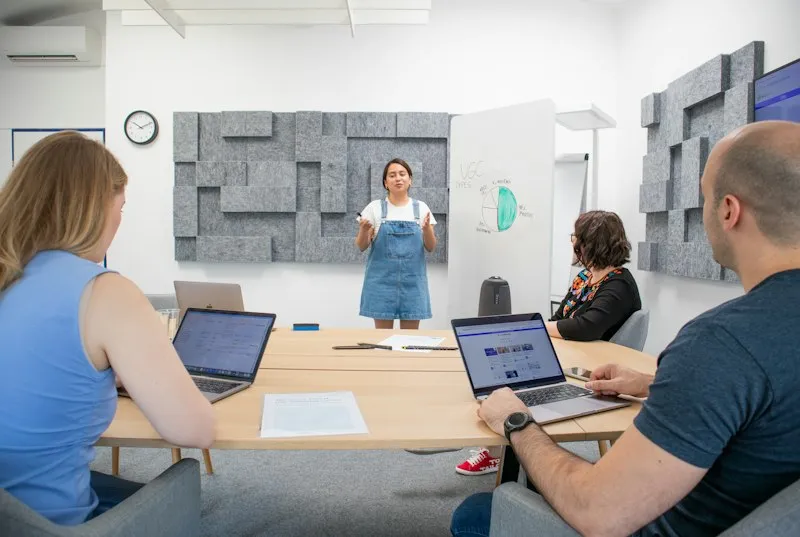
A single, concrete tool you can use in your next meeting is a structured information-sharing round. Ask each member to briefly share what they are working on and one piece of expertise they bring to the current project. This takes about 2 minutes and directly targets the root of repeated relationship conflict. When expertise is visible, disagreements about tasks are less likely to be misinterpreted as personal opposition.
This technique is backed by research that finds open exchange of expertise reduces relationship conflict. It works because it shifts the group's focus from personalities to contributions. If you notice the same fight recurring, interrupt the pattern by asking, "Before we continue, can each of us share what we know about this issue?" This simple step can transform a stuck debate into a productive exploration of different expertise.
SourcesS2
When this keeps happening
If information sharing alone doesn't break the cycle, consider that your team's task interdependence might be amplifying conflict. Highly interdependent groups perceive more task-relevant conflict even with the same amount of disagreement. In such teams, every disagreement feels bigger because coordination is tighter. You might benefit from exploring how to reduce unnecessary interdependence or create more structured agendas to channel the debate productively.
SourcesS6
Where are you
What feels closest to your situation right now?
Pick the situation that feels closest and bring it into a private reflection in Mneno.
Not sure? Start here:Help me understand this situation and choose one constructive next step.
- The same argument keeps coming up with no resolution.Help me understand why this argument keeps repeating and what I can do differently.
- Disagreements about work feel personal and tense.Help me see how to turn personal tension back into productive debate.
- People avoid sharing their real opinions, and conflict stays hidden.Help me encourage more open sharing without making things worse.
References
Sources & evidence
3 research papers informed this article. The numbers beside each section link here, and each DOI opens the original paper.
Source 1:Members’ needs, intragroup conflict, and group performance.
Chun, Jinseok S., Choi, Jin Nam (2014). Members’ needs, intragroup conflict, and group performance.. DOI 10.1037/a0036363
articleSource 2:INFORMATION SHARING AND GROUP CONFLICT: GOING BEYOND DECISION MAKING TO UNDERSTAND THE EFFECTS OF INFORMATION SHARING ON GROUP PERFORMANCE
Moye, Neta A., Langfred, Claus W. (2004). INFORMATION SHARING AND GROUP CONFLICT: GOING BEYOND DECISION MAKING TO UNDERSTAND THE EFFECTS OF INFORMATION SHARING ON GROUP PERFORMANCE. DOI 10.1108/eb022919
articleSource 3:Conflict and Performance in Global Virtual Teams
Kankanhalli, Atreyi, Tan, Bernard C.Y., Wei, Kwok-Kee (2006). Conflict and Performance in Global Virtual Teams. DOI 10.2753/mis0742-1222230309
Keep reading
 DecisionWhy do I seem to be the only one noticing the conflict in our team?You might be the only one seeing the conflict due to conflict asymmetry. Consider whether to address it, try private outreach, or initiate a team discussion.4 min read
 TechniquesResolving Team Arguments Without EscalationCompare three practices for resolving team arguments: proactive compromise, consensus-building, and open communication. Evidence-based, no winner declared.3 min read
 How-toResponding to Snide Remarks in TeamsLearn evidence-based actions to address snide remarks by focusing on content, discussing decisions, and assigning tasks by expertise.4 min read
 ExplainerManaging Team Conflict EffectivelyLearn evidence-based strategies for managing team conflict, including early intervention, open communication, value alignment, and proactive planning.4 min read
 TechniquesWhy Do Team Meetings Turn Into Fights?Explore three approaches to team conflict: open communication, early resolution, and integrative problem-solving. Compare evidence on each practice.3 min read
- TechniquesWhy Your Team Feels Off After a ConflictExplore practices to understand why conflict can linger in a team, with insights on trust dynamics and communication.3 min read