
Examining Why Teammates May Slow You Down
Explore practices to improve teamwork efficiency when relying on others feels slow. Evidence-based insights on team processes and structure.
The question
Why does depending on my teammates slow me down?

Overview
Depending on teammates can slow you down when team processes are inefficient, goals are unclear, or conflicts arise. The research reviewed here compares several practices that address these issues: building clear team structures, improving interpersonal processes, and aligning team mental models. These practices offer different approaches to potentially speed up teamwork, but evidence does not show which works best for every situation.
This article presents three evidence-grounded practices: fostering structured teamwork with HRM support, strengthening interpersonal processes, and developing shared mental models. Each is based on studies of team performance and member satisfaction. The limits of these findings-such as weaker links to performance in healthcare settings-are noted in the cards below.
Structured teamwork with HRM support

This practice involves embedding your team within a supportive system that provides goal clarity, training, and performance management. Try discussing with your team or manager how to set clear shared goals, define roles, and schedule regular check-ins on progress. It may require some upfront time to plan these structures, but the aim is to reduce ambiguity that slows work down.
Research indicates teamwork is moderately effective across settings, but its impact on productivity is stronger when teams are supported by accompanying HRM practices like goal clarity and training. In contrast, in healthcare the link between teamwork and performance is weaker, possibly due to complex outcomes or poorly structured 'pseudo teams'. This suggests that simply putting people in a team without clear structure may not speed things up.
Strengthening interpersonal processes
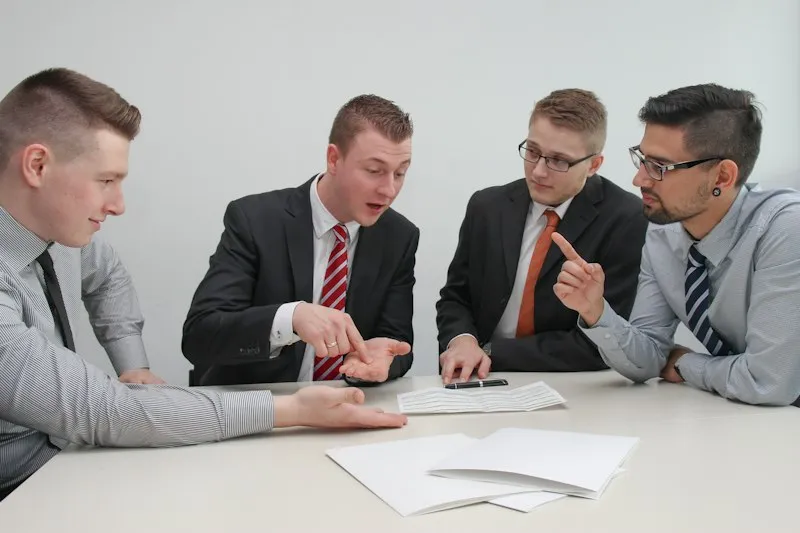
Here, the focus is on improving how team members interact-cooperation, conflict management, and mutual support. You could start by having a conversation with your team about how you handle disagreements or workload sharing, and set norms for respectful communication. This practice requires willingness to engage in open dialogue but no special materials.
Teamwork processes-including transition, action, and interpersonal phases-show meaningful positive relationships with both team performance and member satisfaction. A key finding is that relationship conflict can harm teamwork mental models, creating a gap between expected and actual interactions. So addressing conflicts early may help prevent slowdowns caused by strained relationships.
Developing shared mental models
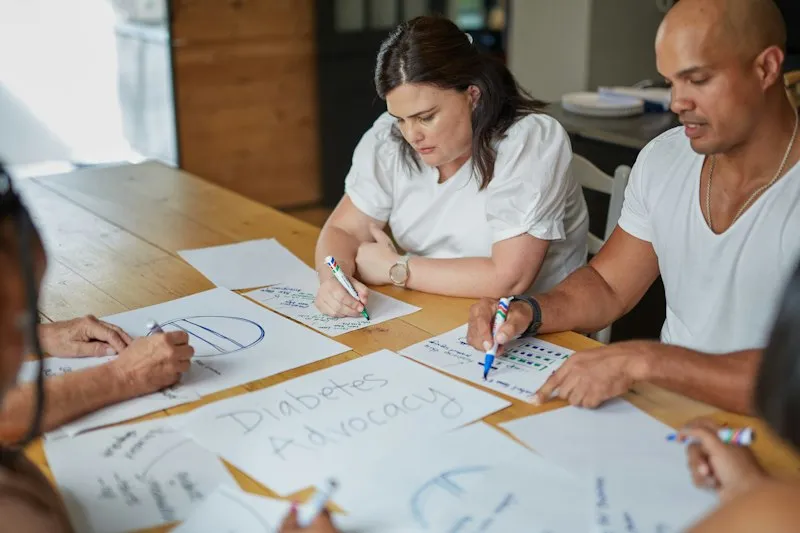
This practice involves aligning how team members think about their tasks, roles, and each other. Try an exercise where you and your team explicitly discuss each person's expectations for the project and identify any mismatches. For example, you might use a hypothetical project scenario to surface different assumptions. This requires a few meetings and a willingness to adjust individual perspectives.
A study with 216 students in 48 groups showed that engaging in a creative group task can shift teamwork-related mental models. The research specifically noted that relationship conflict leads to a negative shift in those mental models. This implies that building shared understanding early could prevent conflicts that slow the group down. However, the study used a single brief exercise, and long-term effects are not clear from this evidence.
Take it further
Consider your team
Which of these practices-clearer structure, better interactions, or shared understanding-might be most helpful to start with, given your current situation?
Talk it out
Talk it through
What part of depending on teammates feels most challenging to you right now?
References
Sources & evidence
4 research papers informed this article. The numbers beside each section link here, and each DOI opens the original paper.
Source 1:Managing Creative People: Strategies and Tactics for Innovation
Mumford, Michael D (2000). Managing Creative People: Strategies and Tactics for Innovation. DOI 10.1016/s1053-4822(99)00043-1
Source 2:The effectiveness of teams in organizations: a meta-analysis
Richter, A. W., Dawson, J. F., West, M. A. (2011). The effectiveness of teams in organizations: a meta-analysis. DOI 10.1080/09585192.2011.573971
Source 3:Personality, Relationship Conflict, and Teamwork-Related Mental Models
Vîrgă, Delia, CurŞeu, Petru Lucian, Maricuţoiu, Laurenţiu, Sava, Florin A., et., al. (2014). Personality, Relationship Conflict, and Teamwork-Related Mental Models. DOI 10.1371/journal.pone.0110223
Source 4:A META‐ANALYSIS OF TEAMWORK PROCESSES: TESTS OF A MULTIDIMENSIONAL MODEL AND RELATIONSHIPS WITH TEAM EFFECTIVENESS CRITERIA
LePINE, JEFFERY A., PICCOLO, RONALD F., JACKSON, CHRISTINE L., MATHIEU, JOHN E., et., al. (2008). A META‐ANALYSIS OF TEAMWORK PROCESSES: TESTS OF A MULTIDIMENSIONAL MODEL AND RELATIONSHIPS WITH TEAM EFFECTIVENESS CRITERIA. DOI 10.1111/j.1744-6570.2008.00114.x
Next read
Keep reading
 MomentsWhy does my team's work always depend on what others do?If your team's work depends on others, you're experiencing high task interdependence. It can reduce the impact of negative relationships on team cohesion.3 min read
 DecisionWhy do I feel uninspired and unmotivated by my boss's leadership style?Explore three strategies for when your boss's leadership style leaves you feeling uninspired and unmotivated. Compare immediate effort and trade-offs.4 min read
 ExplainerWhat Is Transformational Leadership?Transformational leadership inspires teams to prioritize collective goals. Learn its core behaviors, effects on performance and creativity, and how it differs5 min read
 How-toRestoring Team Focus Through Information SharingWhen your team lacks clear focus, sharing task-related information can reduce conflict and reestablish shared direction.3 min read
 ExplainerTask InterdependenceTask interdependence describes how much team members rely on each other to complete their work. Learn what it is, how it affects teams, and how to manage it.5 min read
 How-toResolving Personality Clashes in Your TeamLearn practical steps to shift your team from personality clashes to productive work, based on evidence-based conflict resolution approaches.4 min read