
Resolving Personality Clashes in Your Team
Learn practical steps to shift your team from personality clashes to productive work, based on evidence-based conflict resolution approaches.
Why is our team always stuck in personality clashes instead of getting work done?
- Personality Clashes
- Relationship Conflict
- Conflict Resolution
- Team Performance

Overview
If your team is stuck in personality clashes instead of getting work done, you can shift the focus by using specific conflict resolution approaches. Research on team conflict shows that relationship conflict-marked by personality clashes, tension, and emotional friction-can be managed by emphasizing task-related content over interpersonal style and by making work assignments based on expertise, not convenience.
The studies that inform these steps examined in-person and global virtual teams, and their findings highlight that how a team handles conflict matters as much as the conflict itself. The actions below describe approaches used by high-performing teams to restore collaboration, but your team's unique dynamics and personality traits, such as conscientiousness, may influence how quickly these changes take hold.
1. Focus on the content of interactions, not on communication style

When a personality clash surfaces, redirect the conversation to the task-related content of what was said rather than how it was delivered. For example, if a team member's direct tone causes tension, instead of addressing the tone, respond to the specific idea or data they raised. High-performing teams that successfully manage relationship conflict use this approach: they stay focused on the task and acknowledge contributions while ignoring negative behaviors.
This technique is drawn from studies of top-performing teams and those that report both high performance and high satisfaction. It does not require suppressing genuine concerns about communication, but it helps prevent disagreements from escalating into personal attacks. You can practice this in a team meeting by gently steering the discussion back to the task at hand when you notice the conversation veering into personal criticism.
2. Explicitly discuss the rationale behind work assignments
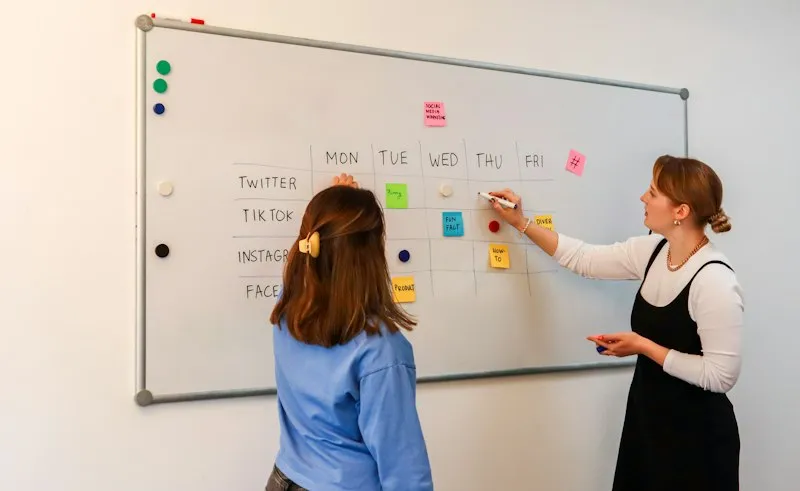
When assigning tasks, take a moment to explain why a particular person was chosen-highlighting their relevant expertise, not just convenience or preference. In top-performing teams, openly discussing the reasoning behind work distribution helps depersonalize decisions and builds trust. This is one of three key conflict-resolution tendencies found in teams that improve their performance over time.
The evidence comes from studies of teams that actively managed conflict and improved. You can implement this in your next project kick-off: before delegating tasks, share a brief note on each person's strengths or past successes related to the task. This approach works best when you also invite questions or alternative suggestions, ensuring it feels collaborative rather than top-down.
3. Assign work based on expertise, not convenience

Resist the urge to hand out tasks based on who is available or who volunteers first. Instead, match tasks to team members who have the clearest relevant skills or knowledge. This practice is a hallmark of high-performing teams and directly counters relationship conflict by reducing resentment over perceived unfairness or incompetence.
While this step seems straightforward, it may require you to take a careful inventory of your team's actual expertise. If someone with strong skills is underutilized, this change can also boost their engagement. The research notes that this approach is most effective when combined with the other two tendencies: focusing on content and explaining assignment rationale. If your team has limited expertise overlap, you may need to pair members or provide training, but the principle of intentional assignment still applies.
Where the evidence stops
Limits of these approaches
These steps are based on research with in-person and global virtual teams, and their effectiveness can depend on your team's specific context, such as the level of conscientiousness or emotional stability among members. For example, teams with members low in conscientiousness may need extra support to maintain a shared understanding of teamwork during conflict. Additionally, if you face severe or entrenched personality clashes, professional mediation or coaching may be necessary, as these approaches are not a substitute for addressing deeper interpersonal issues.
Common questions
What's the difference between relationship conflict and task conflict?
Relationship conflict involves personality clashes, tension, and emotional friction among team members. Task conflict, on the other hand, centers on disagreements about the work itself-different ideas about how to approach a problem, for example. The two are distinct, and research shows they require different resolution strategies: task conflict can sometimes be resolved through compromise or debate, while relationship conflict typically needs an integrative, collaborative approach to avoid harming team performance.
Should I avoid confronting relationship conflict altogether?
No. Avoidance-such as not acknowledging conflict openly or ignoring different viewpoints-is generally not helpful for relationship conflict because it can leave team members with low cohesion and low confidence in the team. Instead, researchers recommend an integrative, collaborative approach that addresses the conflict while focusing on task-related content and maintaining a respectful tone.
Take it further
Your Team's Patterns
Thinking about recent clashes, is there a recurring situation where focusing on task content rather than communication style might have changed the direction of the conversation?
Talk it out
Open a Conversation
What's one small thing your team could try this week to shift the focus from personalities to the work itself?
Keep reading
 MomentsIs this team fight about the work or about us?Learn to tell whether a team disagreement is about the task or about personal issues, and how to redirect conflict toward better outcomes.3 min read
 DecisionWhy do personality clashes at work derail our team progress?Personality clashes create relationship conflict that reduces collaboration and performance. Choose a strategy based on your capacity to act now.3 min read
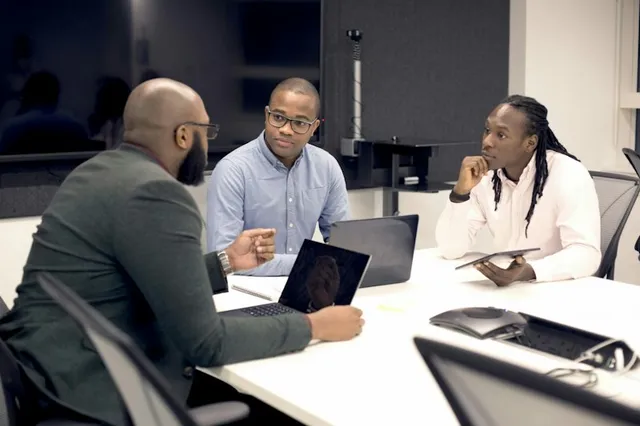 ExplainerTypes of Intragroup ConflictLearn about task and relationship conflict, their effects on team performance, and strategies for managing disagreements.6 min read
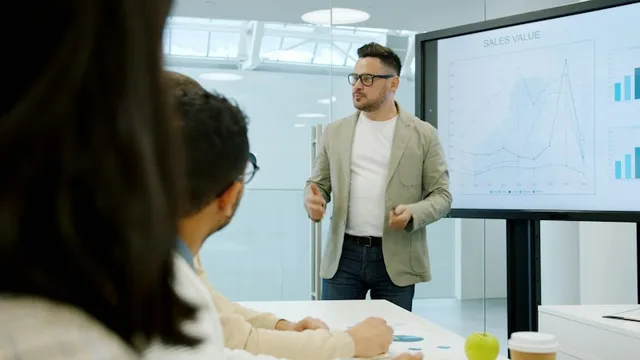 TechniquesHow to Tell If a Conflict Is Improving Your Work or Harming ItCompare three practices to assess whether conflict in your team is productive or damaging, based on research about conflict resolution and team performance.3 min read
 ExplainerTask vs. Relationship Conflict: Key DifferencesLearn how task conflict focuses on work issues while relationship conflict involves personal clashes, and how each affects team performance and resolution.5 min read
 ExplainerRecognizing Relationship Conflict in TeamsLearn to recognize relationship conflict by its markers: negative emotion, perceived low resolution potential, and its harmful effect on team performance.5 min read
References
Sources & evidence
4 research papers informed this article. The numbers beside each section link here, and each DOI opens the original paper.
Source 1:Personality, Relationship Conflict, and Teamwork-Related Mental Models
Vîrgă, Delia, CurŞeu, Petru Lucian, Maricuţoiu, Laurenţiu, Sava, Florin A., et., al. (2014). Personality, Relationship Conflict, and Teamwork-Related Mental Models. DOI 10.1371/journal.pone.0110223
Source 2:The Role of Conflict Resolution in Teams - An Empirical Study
Mukherjee, Sanjukta (2012). The Role of Conflict Resolution in Teams - An Empirical Study. DOI 10.2139/ssrn.2191886
articleSource 3:Relationship Conflict, Conflict Management, and Performance of Information Technology Teams
Nesterkin, Dmitriy A., Porterfield, Tobin E., Li, Xiaolin (2016). Relationship Conflict, Conflict Management, and Performance of Information Technology Teams. DOI 10.1080/08874417.2016.1153893
Source 4:Conflict and Performance in Global Virtual Teams
Kankanhalli, Atreyi, Tan, Bernard C.Y., Wei, Kwok-Kee (2006). Conflict and Performance in Global Virtual Teams. DOI 10.2753/mis0742-1222230309
A place to begin
Make room for your next step.
You do not need to have it all figured out. Bring one real moment to Mneno, notice what matters, and choose one step to try.
Name the moment
Describe what happened in your own words.
Notice what matters
Explore the needs and reactions beneath it.
Choose one step
Find a small action you can try next.
Start at your own pace