
Why do personality clashes at work derail our team progress?
Personality clashes create relationship conflict that reduces collaboration and performance. Choose a strategy based on your capacity to act now.
The question underneath
Why do personality clashes at work derail our team progress?
Sound familiar?
You're in the middle of team work that keeps stalling because of repeated personal friction among members.
First, get oriented
Before you choose

When personality clashes keep interrupting your team's ability to move forward, it can feel like the work itself gets stuck. You're not imagining the impact: relationship conflict-marked by tension, bickering, and emotional upset-is consistently linked to lower group performance and less productive collaboration [sourceRef: 1, 2].
There is no single right way to handle this right now. Your best move depends on what you and your team can actually take on at this moment. These three strategies differ in immediate effort and emotional risk, so you can pick one that fits your current capacity without assuming a quick fix.
Find your starting point
What feels closest to your situation right now?
Choose the situation closest to yours. We’ll take you to that path so you can weigh it without committing to anything.
- See this pathPathI can step back and just notice the pattern without acting on it yet.
- See this pathPathI have enough trust to bring the team together for a candid conversation.
- See this pathPathI have enough authority to change how work is assigned or who works with whom.
Still unsure? Ask yourself:
Which of these trade-offs feels most doable for you right now, given your team's current pressure and your own energy?
Compare your paths
Three ways forward, different trade-offs
There is no perfect choice. Skim the trade-offs, then read the path that fits what you can manage today.
Path
Strategy 1: Name and observe the clash
This requires you to privately name the personality clash as a pattern, then simply note it when it happens without trying to resolve it. Your immediate effort is low: you don't confront anyone or change how the team works. You just acknowledge to yourself that this is relationship conflict, not a task disagreement, and let that awareness sit.
Research shows that relationship conflict is a distinct type of friction that blocks collaboration and performance [sourceRef: 3]. By labeling it, you stop confusing it with task conflict (which can be productive) [sourceRef: 2]. The trade-off: you accept the tension may continue, but you reduce the emotional toll of mistaking a personality clash for a problem you must immediately solve.
Path
Strategy 2: Convene a focused conversation
This requires you to schedule a short, structured team conversation about how you work together, not about the personalities. You'd ask each member to describe one way the current friction is affecting the work and one small change that might help. The immediate effort is moderate: you must set aside time and guide the discussion without letting it become personal.
Evidence suggests that teams with a healthy conflict profile-where relationship conflict is minimal-tend to use collaborative conflict management, which in turn reinforces that profile [sourceRef: 4]. By inviting the team to focus on process rather than blame, you create a chance to shift the dynamic before it becomes entrenched. The trade-off: you take an emotional risk, because the conversation could amplify tension if members feel defensive, but it also opens a path toward a healthier team system.
SourcesS6Path
Strategy 3: Restructure how the team works together
This requires you to redesign tasks so that members who clash have fewer direct interactions, or reduce the team's dependency on joint decisions. You might reassign roles, change reporting lines, or break the project into parallel workstreams. The immediate effort is high: you need authority or buy-in to make structural changes, and the redesign itself takes time and coordination.
Research on the Team Conflict Dynamics Model shows that relationship conflict can create a negative feedback loop where competitive conflict management worsens the profile [sourceRef: 6]. Restructuring interdependence can break that cycle by reducing the number of triggering interactions. The trade-off: this move is hard to reverse quickly, and it may solve the interpersonal friction at the cost of losing the benefits of close collaboration, such as cross-pollination of ideas.
SourcesS6
Help in 2 minutes
Weighing your options
Given what you know about your team's current pressure and your own capacity, which trade-off feels most sustainable for you right now?
Talk through my situation with the AI mentorQuick start in chat
Talk it through
What has been the hardest part of watching personality clashes slow down your team's work?
Describe my situation (free)Next read
Keep reading
Nearby guides picked by the editors of this article.
 MomentsHow do I stop disagreements at work from becoming personal?When a work disagreement starts to feel like a personal attack, see why trust matters and try one separating statement to reset the conversation.3 min read
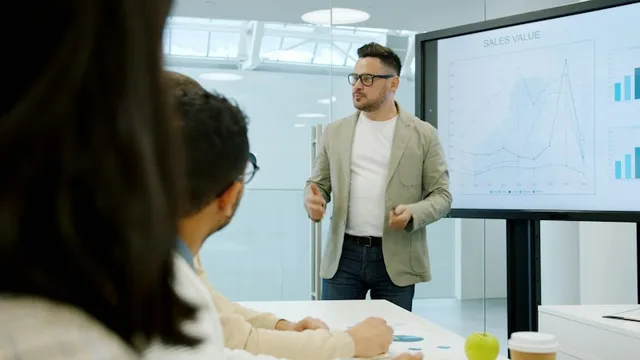 TechniquesHow to Tell If a Conflict Is Improving Your Work or Harming ItCompare three practices to assess whether conflict in your team is productive or damaging, based on research about conflict resolution and team performance.3 min read
 How-toResolving Personality Clashes in Your TeamLearn practical steps to shift your team from personality clashes to productive work, based on evidence-based conflict resolution approaches.4 min read
 ExplainerMain Types of Intragroup ConflictLearn about the two main types of intragroup conflict: task conflict and relationship conflict, their differences, and how they affect team outcomes.7 min read
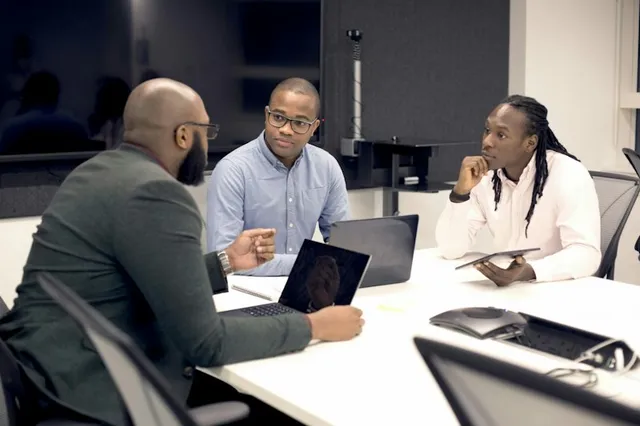 ExplainerTypes of Intragroup ConflictLearn about task and relationship conflict, their effects on team performance, and strategies for managing disagreements.6 min read
 DecisionWhy Does My Group Feel Less Trusting After a Disagreement?When a disagreement leaves your group less trusting, you can choose a low, moderate, or high-effort strategy. Each option has real trade-offs.3 min read
References
Sources & evidence
4 research papers informed this article. The numbers beside each section link here, and each DOI opens the original paper.
Source 1:Personality, Relationship Conflict, and Teamwork-Related Mental Models
Vîrgă, Delia, CurŞeu, Petru Lucian, Maricuţoiu, Laurenţiu, Sava, Florin A., et., al. (2014). Personality, Relationship Conflict, and Teamwork-Related Mental Models. DOI 10.1371/journal.pone.0110223
Source 2:Relationship Conflict, Conflict Management, and Performance of Information Technology Teams
Nesterkin, Dmitriy A., Porterfield, Tobin E., Li, Xiaolin (2016). Relationship Conflict, Conflict Management, and Performance of Information Technology Teams. DOI 10.1080/08874417.2016.1153893
Source 3:A Qualitative Analysis of Conflict Types and Dimensions in Organizational Groups
Jehn, Karen A. (1997). A Qualitative Analysis of Conflict Types and Dimensions in Organizational Groups. DOI 10.2307/2393737
articleSource 4:Optimizing team conflict dynamics for high performance teamwork
O'Neill, Thomas A., McLarnon, Matthew J.W. (2018). Optimizing team conflict dynamics for high performance teamwork. DOI 10.1016/j.hrmr.2017.06.002