

Task interdependence is the extent to which a team member needs information, materials, or support from other members to perform their job. It reflects how closely and how often members must work together to complete tasks. High task interdependence means work is tightly interconnected, while low interdependence means members can largely work independently.
Researchers distinguish task interdependence from outcome interdependence, which concerns how members are rewarded or evaluated based on team performance. Understanding this concept helps clarify why some teams thrive when they work closely, while others may be harmed by forced collaboration, particularly when relationships are strained.
How Task Interdependence Shapes Team Dynamics

Task interdependence acts as a moderator of several team processes. For example, in global virtual teams, the level of task interdependence influences how relationship conflict affects team performance. A study of three global virtual teams found that when interdependence was moderate or high, relationship conflict hindered collaboration and reduced performance. In contrast, when interdependence was low, relationship conflict had little effect on performance because members could work independently without needing to interact closely.
Similarly, high task interdependence can buffer the team against negative relationships. In teams where members depend heavily on each other, the adverse effects of negative relationships on team cohesion are neutralized. This occurs because the need for coordinated action and mutual support motivates promotive interactions, even when personal relationships are strained. However, low task interdependence combined with negative relationships tends to harm cohesion and performance.
Take it further
Discuss Teamwork
How does the way your team's tasks are connected affect how you collaborate with each other?
Reflect in Mneno
Types and Degrees of Task Interdependence

Task interdependence is not a single state but exists on a spectrum. Workflow patterns range from low interdependence, where tasks are pooled and completed individually, to high interdependence, where tasks require reciprocal, iterative coordination. In pooled workflows, each member contributes separately to a shared outcome; in reciprocal workflows, members continuously exchange inputs and adjust their work based on others' outputs.
These different forms of interdependence are determined by how leaders define tasks and give instructions, but in autonomous teams, members themselves often decide how to allocate subtasks. The distinction between task interdependence and outcome interdependence further clarifies the concept. Outcome interdependence involves how members are rewarded or evaluated collectively, and while related, it is a separate dimension of team design.
Managing Task Interdependence in Teams

Managers and team leaders can actively adjust task interdependence through deliberate design decisions. For example, to develop effective teamwork in schools, administrators can redesign teachers' work environment to create high task and goal interdependence. This involves setting common goals and designing tasks for the team as a whole, which helps members realize they should help each other rather than compete. Achieving this requires active effort, such as imposing procedures, keeping records, and ensuring meetings occur.
Another practical approach is to enhance team-member exchange (TMX) by stimulating helping norms within the team. When combined with appropriate levels of task interdependence, these actions can buffer the team against the negative effects of toxic relationships. High task interdependence and high TMX together help maintain cohesion and performance even when negative relationships exist, because they encourage productive collaboration.
Task Interdependence and Team Performance

The relationship between task interdependence and team performance is not straightforward; it depends on other factors such as relationship conflict and negative relationships. As noted, high interdependence can amplify the detrimental effects of relationship conflict on performance, as seen in a global virtual team with high interdependence and moderate relationship conflict that performed poorly. However, high interdependence can also protect team cohesion from negative relationships, which in turn supports performance.
Additionally, task characteristics like high complexity and high interdependence in global virtual teams tend to increase the need for managerial and sponsor assistance. These factors also influence the type and intensity of conflict within the team, suggesting that leaders must carefully consider the level of interdependence when designing tasks and supporting teams. The evidence highlights that interdependence is not inherently good or bad-its impact depends on the team's relational context.
FAQ
Common questions
Each answer is linked to its research.
What is the difference between task interdependence and outcome interdependence?
Task interdependence refers to how team members rely on each other for inputs, resources, or processes to complete their work. Outcome interdependence, on the other hand, concerns how team members are rewarded or evaluated based on team performance. While both are forms of team interdependence, they address different aspects: task interdependence focuses on the workflow and coordination required, whereas outcome interdependence focuses on the consequences of team performance for individual members. Understanding this distinction helps clarify the meaning and impact of interdependence in teams.
SourcesS5All sources
Can task interdependence be changed or designed?
Yes, task interdependence can be actively adjusted by managers or team leaders through deliberate decisions. For example, administrators in schools can redesign teachers' work environment to create high task and goal interdependence by setting common goals and designing tasks for the team as a whole. This requires active effort, such as imposing procedures, keeping records, and ensuring meetings take place. In autonomous teams, members themselves often decide how to allocate subtasks, which influences the degree of interdependence. Leaders can also enhance team-member exchange by stimulating helping norms, which works alongside task interdependence to buffer teams against negative relationships.
SourcesS4S7S10All sources
How does task interdependence affect teams with negative relationships?
Task interdependence moderates the impact of negative relationships on team cohesion and performance. In teams with high task interdependence, the adverse effects of negative relationships on cohesion are neutralized, because the need for close collaboration motivates promotive interactions. However, when task interdependence is low, negative relationships harm cohesion and performance, as members can avoid interacting. Similarly, the effect of relationship conflict on team performance depends on task interdependence: high interdependence can make conflict more detrimental because members must work closely despite friction, whereas low interdependence allows members to work independently and avoid the conflict's effects.
SourcesS1S3S9S11All sources
Next read
Keep reading
Nearby guides picked by the editors of this article.
 MomentsWhy does my team's work always depend on what others do?If your team's work depends on others, you're experiencing high task interdependence. It can reduce the impact of negative relationships on team cohesion.3 min read
 DecisionWhy Do I Feel Frustrated When I Depend on Teammates to Get My Work Done?Explore three strategies to address frustration from task interdependence, with trade-offs based on your current capacity and team dynamics.2 min read
 How-toRestoring Team Focus Through Information SharingWhen your team lacks clear focus, sharing task-related information can reduce conflict and reestablish shared direction.3 min read
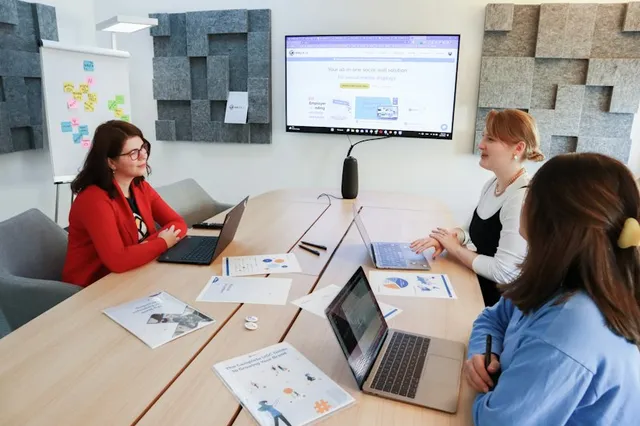 TechniquesUnderstanding Why Your Team Struggles to Work TogetherExplore factors like goal orientation, conflict types, and task interdependence that can hinder team collaboration, along with practical approaches.2 min read
 TechniquesExamining Why Teammates May Slow You DownExplore practices to improve teamwork efficiency when relying on others feels slow. Evidence-based insights on team processes and structure.3 min read
 TechniquesHow to Tell If a Conflict Is Improving Your Work or Harming ItCompare three practices to assess whether conflict in your team is productive or damaging, based on research about conflict resolution and team performance.3 min read
References
Sources & evidence
4 research papers informed this article. The numbers beside each section link here, and each DOI opens the original paper.
Source 1:Conflict and Performance in Global Virtual Teams
Kankanhalli, Atreyi, Tan, Bernard C.Y., Wei, Kwok-Kee (2006). Conflict and Performance in Global Virtual Teams. DOI 10.2753/mis0742-1222230309
Source 2:Managing Conflict in School Teams: The Impact of Task and Goal Interdependence on Conflict Management and Team Effectiveness
Somech, Anit (2008). Managing Conflict in School Teams: The Impact of Task and Goal Interdependence on Conflict Management and Team Effectiveness. DOI 10.1177/0013161x08318957
articleSource 3:When do bad apples not spoil the barrel? Negative relationships in teams, team performance, and buffering mechanisms.
de Jong, Jeroen P., Curşeu, Petru L., Leenders, Roger Th. A. J. (2014). When do bad apples not spoil the barrel? Negative relationships in teams, team performance, and buffering mechanisms.. DOI 10.1037/a0036284
articleSource 4:Structural interdependence in teams: An integrative framework and meta-analysis.
Courtright, Stephen H., Thurgood, Gary R., Stewart, Greg L., Pierotti, Abigail J. (2015). Structural interdependence in teams: An integrative framework and meta-analysis.. DOI 10.1037/apl0000027
article