
How do I bring conflicting team members to a solution everyone supports?
If you're facing team conflict, you can use cooperative conflict management to build a solution everyone supports.
Sound familiar?
You're stuck in a disagreement where every proposed solution seems to leave someone unhappy.

Overview
If you're facing a team disagreement where every suggestion seems to leave someone unhappy, you are not failing at leadership. The key is to shift from forcing a single solution to integrating everyone's genuine concerns into a plan that meets the group's shared goal.
High-performing, high-satisfaction teams do this by proactively foreseeing conflicts and using well-secured compromise to weave individual interests and time constraints into achieving the group mission. They discuss schedules, preferences, and even reorganize meetings to accommodate late members - adjusting the how without losing the what.
SourcesS1
Why this moment happens

When team members clash over process - how to schedule, who does what, which tool to use - it's rarely about the schedule itself. Each person is protecting a genuine need: a preferred workflow, a personal deadline, a past frustration. If those needs aren't acknowledged, the conflict escalates into a battle of positions rather than a search for a workable plan.
Research on cooperative conflict management shows that teams who adopt active collaboration - bringing concerns into the open to resolve issues in the best possible way - tend to reach solutions that satisfy everyone. This style treats differences as something to work through together, not as obstacles that require one side to lose.
SourcesS6
The tool: Cooperative Problem-Solving Loop
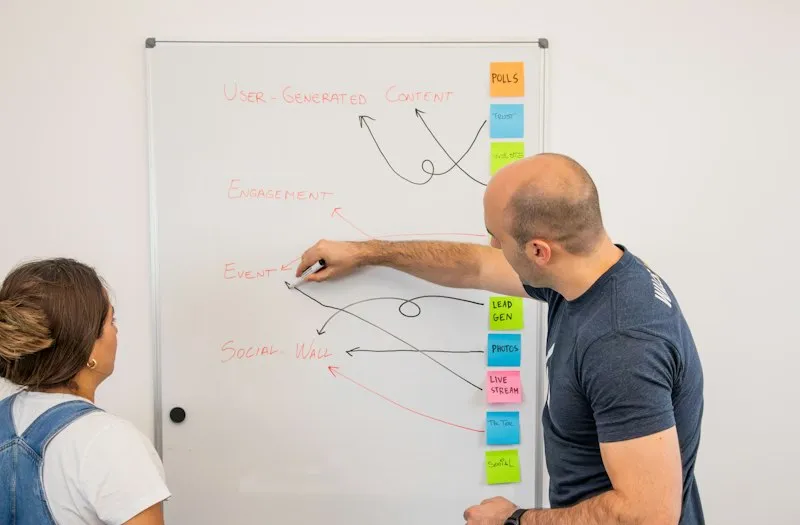
When you spot a conflict forming, use this two-minute loop. First, pause the conversation and say, 'Let's make sure we understand everyone's underlying needs before we pick a solution.' Then go around and ask each person one question: 'What is the most important thing this schedule (or decision or process) needs to protect for you?'
Listen without judging or solving. After everyone has spoken, look for where those needs overlap - they almost always do. Then propose one small, concrete adjustment that addresses the common ground, and ask, 'Does this work as a starting point?' In the time it takes to vent frustration, you can build a solution that everyone actually supports.
Where are you
What feels closest to your situation right now?
Pick the situation that feels closest and bring it into a private reflection in Mneno.
Not sure? Start here:Help me understand this situation and choose one constructive next step.
- My team avoids conflict until it boils over.Help me understand how to gently surface underlying needs without making people defensive.
- One person's strong opinion keeps dominating the conversation.Help me find a way to ensure quieter voices get heard without sidelining the dominant person.
- We've talked but can't find any agreement on the path forward.Help me identify where our genuine needs actually overlap so we can build from there.
References
Sources & evidence
3 research papers informed this article. The numbers beside each section link here, and each DOI opens the original paper.
Source 1:The Role of Conflict Resolution in Teams - An Empirical Study
Mukherjee, Sanjukta (2012). The Role of Conflict Resolution in Teams - An Empirical Study. DOI 10.2139/ssrn.2191886
articleSource 2:Conflict and Performance in Global Virtual Teams
Kankanhalli, Atreyi, Tan, Bernard C.Y., Wei, Kwok-Kee (2006). Conflict and Performance in Global Virtual Teams. DOI 10.2753/mis0742-1222230309
Source 3:Team conflict management and team effectiveness: the effects of task interdependence and team identification
Somech, Anit, Desivilya, Helena Syna, Lidogoster, Helena (2008). Team conflict management and team effectiveness: the effects of task interdependence and team identification. DOI 10.1002/job.537
article
Keep reading
 DecisionWhy Does My Team Keep Fighting Over Who Does What?Process conflict over roles and responsibilities can harm team performance. Compare three approaches: low-effort pause, moderate structured plan, or3 min read
 TechniquesHow to compromise without feeling like you've lostCompare approaches to finding a fair compromise in relationships. Learn about collaborative negotiation, relationship-focused resolution, and conflict3 min read
 How-toHow to Help Your Team Cooperate on a Shared SolutionExplore ways to focus team discussions, seek solutions that accommodate members' needs, and make work assignments more deliberate.2 min read
- ExplainerCompromise in Conflict ResolutionCompromise in conflict resolution means finding a mutually acceptable middle ground. Learn how it works, when it helps, and when it may backfire.5 min read
 TechniquesResolving Team Arguments Without EscalationCompare three practices for resolving team arguments: proactive compromise, consensus-building, and open communication. Evidence-based, no winner declared.3 min read
 TechniquesUnderstanding Why Your Team Struggles to Work TogetherExplore factors like goal orientation, conflict types, and task interdependence that can hinder team collaboration, along with practical approaches.2 min read