
How to Help Your Team Cooperate on a Shared Solution
Explore ways to focus team discussions, seek solutions that accommodate members' needs, and make work assignments more deliberate.
How do I get my team to cooperate and find a solution that works for everyone?
- Team Collaboration
- Conflict Resolution
- Common Goals
- Task Expertise

Overview
To encourage cooperation, focus discussions on their substance, seek a solution that accommodates team members' needs, and make work assignments deliberately. These approaches can guide a discussion, but they cannot guarantee a solution that works for everyone.
The evidence includes observations of teams that improved over time and a study of conflict resolution in global virtual teams. These findings describe team tendencies and associations, not proof that following individual steps will produce a particular result.
1. Focus on the content of interactions
When your team discusses a disagreement, focus on the content of what members are saying rather than on their delivery style. This was one of the conflict-resolution tendencies shared by teams that improved over time.
The finding describes a tendency observed alongside other team practices. It does not establish that focusing on content alone will resolve a disagreement.
2. Seek a solution that accommodates members' needs
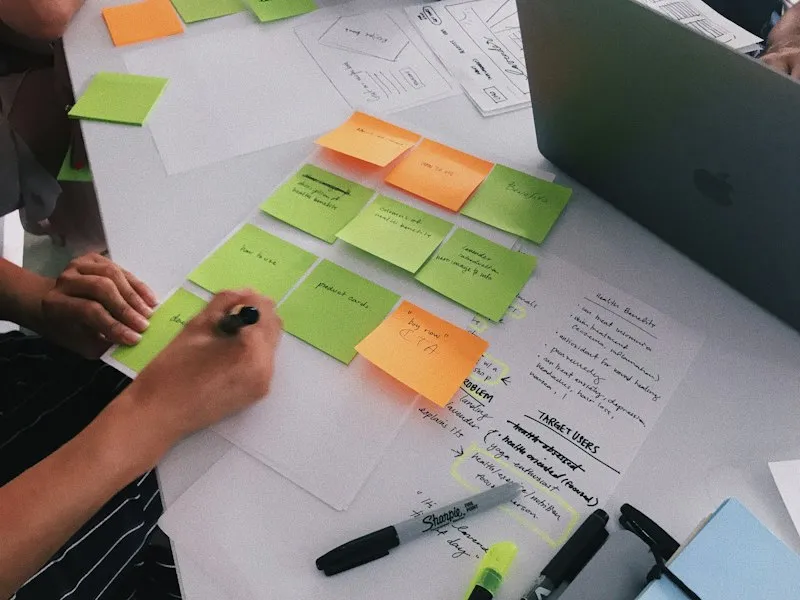
Aim to develop a solution that accommodates the needs of all group members. You can focus the discussion on common goals: in a study of global virtual teams, teams seeking a solution that satisfied everyone often used that approach.
In that study, this collaborative approach was associated with higher team performance. The association does not guarantee that every team will find a solution that satisfies everyone.
3. Discuss the reasons for work assignments
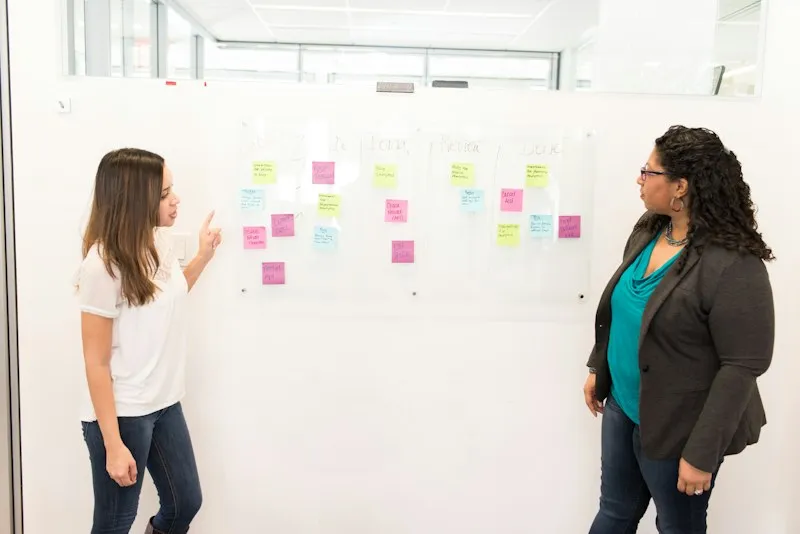
When team members accept or distribute work assignments, discuss the reasons behind the agreements or decisions. Teams that improved over time explicitly discussed those reasons as part of their conflict-resolution approach.
This was one tendency observed in improving teams, not a tested standalone step. Discussing the rationale does not by itself ensure agreement.
4. Assign work based on relevant expertise

When distributing work, consider which members have the relevant task expertise rather than assigning it by convenience. This was another tendency shared by teams that improved over time.
The finding describes how those teams approached assignments; it does not establish that matching work to expertise alone will improve cooperation or performance.
Take it further
Your Team's Needs
What might help your team consider its members' different needs?
Talk it out
Start a Discussion
What do you think would help us work toward a solution together?
Keep reading
 MomentsHow do I bring conflicting team members to a solution everyone supports?If you're facing team conflict, you can use cooperative conflict management to build a solution everyone supports.2 min read
 DecisionWhy Does My Team Keep Fighting Over Who Does What?Process conflict over roles and responsibilities can harm team performance. Compare three approaches: low-effort pause, moderate structured plan, or3 min read
 ExplainerTask vs Relationship ConflictLearn the difference between task and relationship conflict in teams, how they interact, and what affects their outcomes.5 min read
 TechniquesHow to compromise without feeling like you've lostCompare approaches to finding a fair compromise in relationships. Learn about collaborative negotiation, relationship-focused resolution, and conflict3 min read
- TechniquesHow to Tell If Your Argument Is About the Task or About YouLearn to distinguish task conflict from relationship conflict using three evidence-based practices: check the focus of the disagreement, assess the emotional3 min read
 TechniquesUnderstanding Why Your Team Struggles to Work TogetherExplore factors like goal orientation, conflict types, and task interdependence that can hinder team collaboration, along with practical approaches.2 min read
References
Sources & evidence
4 research papers informed this article. The numbers beside each section link here, and each DOI opens the original paper.
Source 1:Relationship Conflict, Conflict Management, and Performance of Information Technology Teams
Nesterkin, Dmitriy A., Porterfield, Tobin E., Li, Xiaolin (2016). Relationship Conflict, Conflict Management, and Performance of Information Technology Teams. DOI 10.1080/08874417.2016.1153893
Source 2:Conflict and Performance in Global Virtual Teams
Kankanhalli, Atreyi, Tan, Bernard C.Y., Wei, Kwok-Kee (2006). Conflict and Performance in Global Virtual Teams. DOI 10.2753/mis0742-1222230309
Source 3:Managing Creative People: Strategies and Tactics for Innovation
Mumford, Michael D (2000). Managing Creative People: Strategies and Tactics for Innovation. DOI 10.1016/s1053-4822(99)00043-1
Source 4:The Role of Conflict Resolution in Teams - An Empirical Study
Mukherjee, Sanjukta (2012). The Role of Conflict Resolution in Teams - An Empirical Study. DOI 10.2139/ssrn.2191886
article
A place to begin
Make room for your next step.
You do not need to have it all figured out. Bring one real moment to Mneno, notice what matters, and choose one step to try.
Name the moment
Describe what happened in your own words.
Notice what matters
Explore the needs and reactions beneath it.
Choose one step
Find a small action you can try next.
Start at your own pace