
How to Disagree About Approach Without Making It Personal
Learn practical steps to resolve task disagreements in virtual teams by reframing competition and addressing discontent early.
How can I disagree with my colleagues about the best approach without making it personal?
- Task Conflict
- Conflict Resolution
- Virtual Teams
- Reframing

Overview
When you disagree with a colleague about the best approach, you can keep the discussion focused on the work rather than the person by using specific strategies designed for task-related conflict. This is especially relevant in virtual teams, where the lack of social cues can make disagreements feel more personal. The evidence comes from studies on global virtual teams, where task conflict can actually improve performance when handled constructively.
Not all conflict is harmful. Task conflict-disagreement about ideas and methods-can benefit team performance, but only if you resolve it in a way that avoids escalating into relationship conflict. The following steps are drawn from research on global virtual teams and offer concrete actions you can take to keep disagreements productive and impersonal.
1. Reframe duplicate or overlapping work as complementary

If you discover that a colleague has done work that overlaps with yours, such as both of you coding separate but overlapping web pages, you can reframe the situation by suggesting that the pages are not in competition and that the best from both will be used. This approach, studied in virtual teams, helps defuse tension and promotes collaboration instead of competition.
This reframing works best in a virtual team context where trust is already established or developing. It is not a general solution for all disagreements, but it is a simple way to shift from a personal confrontation to a joint problem-solving frame. The key is to say something like, 'These aren't competing ideas-we can take the best from each.'
2. Address discontent early and with the right audience

When you sense that a colleague is unhappy with the direction of a project, address that perceived discontent as early as you notice it. In virtual teams, emotions left unchecked can escalate into a sequence of negative comments that are difficult to resolve through asynchronous communication. Additionally, when you need to send a potentially conflict-laden message, send it only to the concerned individual rather than copying the entire team.
This strategy is specifically studied for virtual environments where delayed responses and lack of nonverbal cues amplify misunderstandings. By acting early and keeping the conversation private, you reduce the chance that a task disagreement becomes a public, personal conflict. It does not guarantee a smooth resolution, but it gives you a better chance to keep the discussion focused on the work.
3. Use integrative or distributive resolution for task conflict
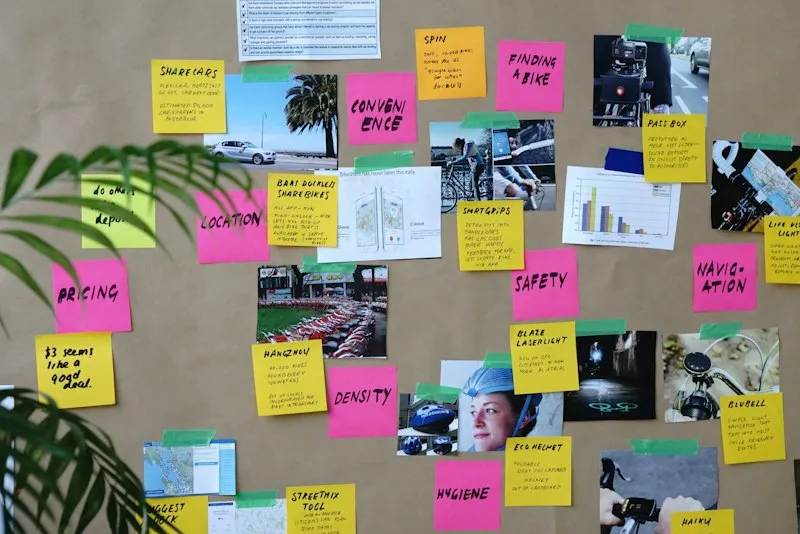
When a task conflict arises, resolve it either integratively (through collaboration, where you and your colleague work together to find a solution that satisfies both) or distributively (through assertion, where you firmly state your position to meet a deadline). The research on global virtual teams found that avoiding the conflict altogether does not yield beneficial outcomes, so direct engagement is necessary.
Be aware that if you use a distributive approach (asserting your position), it may alleviate the task conflict but could aggravate relationship conflict in the same team. Use distributive resolution only when time is short and integrative collaboration is not possible. The integrative approach-exploring alternatives together-is generally safer for maintaining working relationships.
Take it further
Your Current Situation
Thinking about a recent disagreement at work, what specific words or tone did you use that might have shifted the focus from the task to the person?
Talk it out
Open a Conversation
What has helped you keep a work disagreement from feeling personal?
Keep reading
 MomentsIs this team fight about the work or about us?Learn to tell whether a team disagreement is about the task or about personal issues, and how to redirect conflict toward better outcomes.3 min read
 DecisionWhy Disagreements About Work Methods Slow Us DownTask conflict can stall teams, but how you resolve it matters. Compare three evidence-based approaches to decide what fits your situation.3 min read
 ExplainerTask Conflict RecognitionTask conflict recognition means identifying disagreements among team members about the content of tasks, including differing views, ideas, and opinions on how5 min read
 TechniquesArguing About Work Without Hurting Team SpiritCompare practices for work-related arguments that protect team spirit: focus on content, discuss reasons, use virtual communication.3 min read
 DecisionHow to Use Disagreements in Your Team for Better Decisions Without Ruining RelationshipsChoose among three strategies to turn task disagreements into better decisions while preserving team relationships, based on research on conflict resolution in4 min read
 TechniquesPractices to Improve Team Task AlignmentCompare three evidence-based practices to reduce misalignment on tasks: aligning task conflict with workflows, building team-oriented mental models, and3 min read
References
Sources & evidence
4 research papers informed this article. The numbers beside each section link here, and each DOI opens the original paper.
Source 1:Conflict and Performance in Global Virtual Teams
Kankanhalli, Atreyi, Tan, Bernard C.Y., Wei, Kwok-Kee (2006). Conflict and Performance in Global Virtual Teams. DOI 10.2753/mis0742-1222230309
Source 2:Communication and Trust in Global Virtual Teams
Sirkka L. Järvenpää, Dorothy E. Leidner (1999). Communication and Trust in Global Virtual Teams. DOI 10.1287/orsc.10.6.791
articleSource 3:Virtual communicating, conflicts and performance in teams
de Jong, Remco, Schalk, René, Curşeu, Petru L. (2008). Virtual communicating, conflicts and performance in teams. DOI 10.1108/13527590810912331
Source 4:Conflict, Culture, and Performance in Virtual Teams: Results from a Cross-Cultural Study
Gallenkamp, Julia V., Assmann, Jakob J., Drescher, Marcus A., Picot, Arnold, et., al. (2010). Conflict, Culture, and Performance in Virtual Teams: Results from a Cross-Cultural Study. DOI 10.1109/hicss.2010.117
article
A place to begin
Make room for your next step.
You do not need to have it all figured out. Bring one real moment to Mneno, notice what matters, and choose one step to try.
Name the moment
Describe what happened in your own words.
Notice what matters
Explore the needs and reactions beneath it.
Choose one step
Find a small action you can try next.
Start at your own pace