

Self-regulation confidence, also called self-efficacy for self-regulation, is your belief in your own ability to manage your learning environment, use effective strategies, resist distractions, complete schoolwork, and participate actively in class. It is not simply knowing what to do-it is the conviction that you can actually do it.
Research consistently finds that higher self-regulation confidence is associated with less procrastination. Adolescents who feel more capable of organizing their own work tend to delay tasks less, and this pattern has been observed across different cultural settings. In fact, self-efficacy for self-regulation can be a stronger predictor of procrastination than other factors such as general academic confidence or self-esteem.
What Self-Regulation Confidence Looks Like

Self-regulation confidence involves specific beliefs about your capacity to handle academic tasks. According to the research, this includes confidence in using learning strategies, resisting distractions, completing schoolwork, and participating in class learning. A student with high self-regulation confidence, for example, might believe they can stick to a study schedule even when they feel bored or when a more tempting activity comes up.
This type of confidence is more specific than general academic confidence. The relationship between self-efficacy and procrastination is stronger when the measure of confidence closely matches the specific task being measured. Generic beliefs about being a good student may not capture the detailed steps needed to complete a particular assignment, whereas task-specific self-regulation confidence aligns more closely with actual procrastination behavior.
Take it further
Explore Together
Have you ever noticed that believing you can handle a task makes it easier to start, even if the task itself is hard?
Reflect in Mneno
How It Is Studied
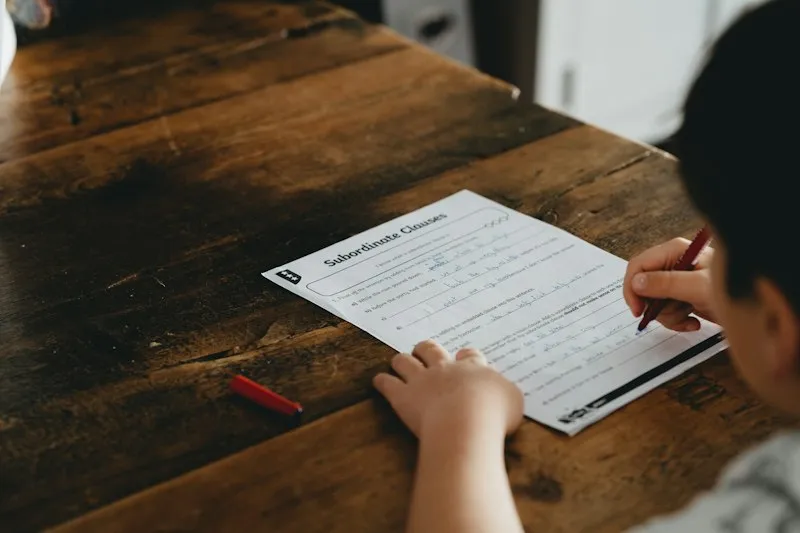
Researchers typically measure self-regulation confidence through self-report questionnaires that ask students how confident they are in their ability to perform specific self-regulatory behaviors, such as organizing their work, finishing assignments by deadlines, or studying even when there are more interesting things to do. These measures are then correlated with self-reported procrastination, GPA, and other academic outcomes.
Studies have been conducted with adolescents in both Canadian and Singaporean samples, and the findings are strikingly similar across these cultural contexts. In one study, self-efficacy for self-regulation was the strongest individual predictor of procrastination even after controlling for GPA, self-regulation habits, academic self-efficacy, and self-esteem. This suggests that the confidence to manage one's own learning is unique and important, not just a reflection of general ability or motivation.
Outcomes Linked to Self-Regulation Confidence

The most consistent finding is that higher self-regulation confidence is associated with lower procrastination. Students who are more confident in their ability to self-regulate report delaying tasks less often. This relationship holds in both cross-sectional and correlational studies, and it has been observed across different age groups and cultures.
Beyond procrastination, lower self-regulation confidence is linked to feeling more harmed by procrastination. Students who reported being most negatively affected by their delaying behaviors also had lower confidence in their ability to regulate their behavior. Additionally, qualitative research shows that when students doubt their ability to handle a task, they describe feeling frustrated, avoiding the task altogether, or giving up on persisting with academic work. Low confidence makes it harder to start and continue, creating a cycle of delay and distress.
What Affects Self-Regulation Confidence?

The research examined here does not directly test what causes changes in self-regulation confidence over time. However, it does offer clues. Self-efficacy beliefs are rooted in social-cognitive theory, which suggests they are built through personal experiences of mastery, vicarious observation, social persuasion, and emotional states. A student who successfully completes a challenging project may see a boost in confidence, while repeated failures may erode it.
Importantly, the evidence points to the specificity of confidence measures. If a student has high self-regulation confidence for some subjects but not others, that discrepancy may matter more for procrastination than their overall academic confidence. This suggests that building confidence in a targeted way-by practicing specific self-regulatory skills in a particular domain-could be more effective than trying to raise general self-beliefs. The findings also imply that confidence alone is not enough; it must be paired with actual strategies, since knowledge of self-regulation skills without the belief that you can use them may not reduce procrastination.
FAQ
Common questions
Each answer is linked to its research.
Is self-regulation confidence the same as self-esteem?
No. Self-esteem is a global evaluation of your worth as a person, while self-regulation confidence is a specific belief about your capability to manage your learning and tasks. Research shows that when both are measured together, self-regulation confidence predicts procrastination more strongly than self-esteem does. They are related but distinct concepts, and the more specific belief is a better predictor of procrastination.
SourcesS3S6All sources
Can self-regulation confidence change over time?
The evidence suggests it likely can, but this specific set of studies does not directly track changes over time. Self-efficacy beliefs in general, as described by social-cognitive theory, are thought to be shaped by experiences of success and failure, watching others, and feedback. The finding that self-regulation confidence is a stronger predictor than general academic confidence implies that it is a malleable belief tied to specific experiences, rather than a fixed trait.
SourcesS10S11All sources
Does self-regulation confidence matter in cultures outside Canada and Singapore?
The studies here found that the strong link between self-regulation confidence and lower procrastination held across both Canadian and Singaporean adolescents, with similar path strengths. This cross-cultural consistency suggests that the relationship is robust, but the research has not been extended to many other cultural contexts. The findings support the idea that self-regulation confidence is a generally important factor, but more studies are needed to confirm its role in other groups.
SourcesS2S8S12All sources
Next read
Keep reading
Nearby guides picked by the editors of this article.
 MomentsTired of short-term fixes that never workIf you use distractions to feel better for a moment, the urge is not weakness-it is your mind protecting you.2 min read
 DecisionWhy do I doubt I can handle my tasks even when I've done them before?Explore three strategies to address self-doubt about handling tasks you've done before, comparing immediate effort and trade-offs.4 min read
 How-toWhy Do I Doubt My Ability to Finish What I Start?Understand why you doubt your ability to finish tasks and how to build confidence through skill development.2 min read
 TechniquesUnderstanding the Doubt That Blocks Follow-ThroughExplore techniques to address self-doubt about following through on goals, based on research on self-efficacy and self-regulation.3 min read
 TechniquesWhy Giving In to Impulses Leads to Feeling WorseExplore practices related to understanding and managing impulse-driven actions that lead to regret.2 min read
 TechniquesComparing Techniques for Understanding Procrastination FrequencyExplore distinct practices to examine why you may procrastinate more than others, considering how gender might relate to self-regulation strategies.3 min read
References
Sources & evidence
4 research papers informed this article. The numbers beside each section link here, and each DOI opens the original paper.
Source 1:Procrastination and Motivation of Undergraduates with Learning Disabilities: A Mixed‐Methods Inquiry
Klassen, Robert M., Krawchuk, Lindsey L., Lynch, Shane L., Rajani, Sukaina (2008). Procrastination and Motivation of Undergraduates with Learning Disabilities: A Mixed‐Methods Inquiry. DOI 10.1111/j.1540-5826.2008.00271.x
Source 2:A Cross‐Cultural Study of Adolescent Procrastination
Klassen, Robert M., Ang, Rebecca P., Chong, Wan Har, Krawchuk, Lindsey L., et., al. (2009). A Cross‐Cultural Study of Adolescent Procrastination. DOI 10.1111/j.1532-7795.2009.00620.x
Source 3:Academic procrastination of undergraduates: Low self-efficacy to self-regulate predicts higher levels of procrastination
Klassen, Robert M., Krawchuk, Lindsey L., Rajani, Sukaina (2008). Academic procrastination of undergraduates: Low self-efficacy to self-regulate predicts higher levels of procrastination. DOI 10.1016/j.cedpsych.2007.07.001
Source 4:Self-efficacy, procrastination, and burnout in post-secondary faculty: An international longitudinal analysis
Hall, Nathan C., Lee, So Yeon, Rahimi, Sonia (2019). Self-efficacy, procrastination, and burnout in post-secondary faculty: An international longitudinal analysis. DOI 10.1371/journal.pone.0226716