
Comparing Techniques for Understanding Procrastination Frequency
Explore distinct practices to examine why you may procrastinate more than others, considering how gender might relate to self-regulation strategies.
The question
Why do I procrastinate so much more than others, especially as a woman?

Overview
If you often wonder why you procrastinate more than others, especially as a woman, it may help to explore different ways of understanding your own patterns. Research on gender and procrastination is mixed, but some studies suggest that self-efficacy for self-regulation and self-control pathways may differ across genders. The following cards describe practices that focus on specific aspects of self-regulation, self-efficacy, and emotional responses to help you reflect on your experience.
These practices are drawn from research on adolescent and young adult populations, so the evidence may not fully capture your situation. No single practice has been proven to explain or reduce procrastination for everyone. The goal is to offer you concrete frames of reference to compare, not to prescribe a solution.
Self-Efficacy Reflection
This practice involves taking a few minutes to reflect on your confidence in your ability to manage your own behavior and stick to plans. You might ask yourself: "How capable do I feel at organizing my time and follow through on tasks?" You can do this alone, with a journal, and it requires no special materials or time commitment.
Some research has found that male students report higher academic self-efficacy than female students, and that the link from self-efficacy to self-control may be stronger for female postgraduates. However, gender did not directly affect procrastination in that study. This suggests that building awareness of your perceived self-efficacy might give you clues, but it does not guarantee changes in procrastination.
Self-Control Pathway Mapping
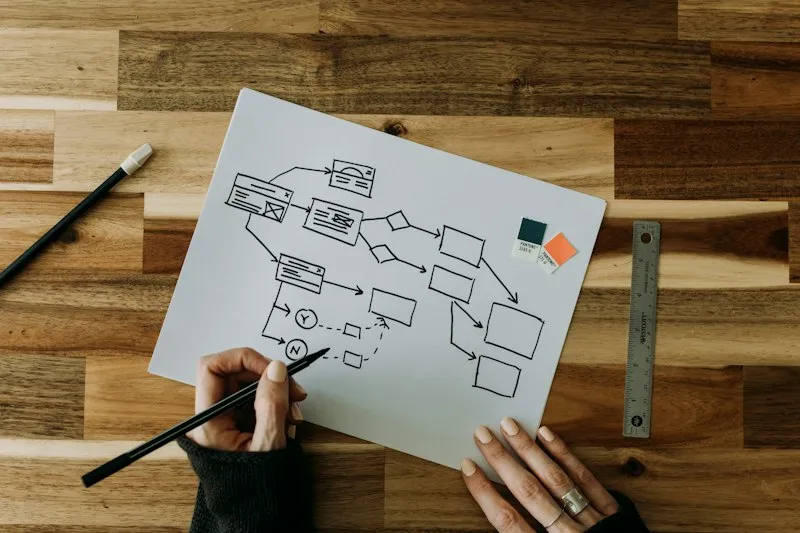
In this practice, you trace how your confidence in managing tasks (self-efficacy) connects to your actual ability to resist distractions (self-control) and then to procrastination. You could create a simple diagram or list: task → confidence → impulse control → delay. This may help you identify where you feel a gap.
A study of female postgraduate students found that the link between academic self-efficacy and self-control was particularly strong for them, though the direct link to procrastination was not significant for either gender. This means that for some women, improving self-efficacy might strengthen self-control, but that alone may not directly reduce procrastination. No causal effect is established.
Emotional Distress Inventory
This practice asks you to note moments when procrastination coincides with emotional distress-such as anxiety, low self-esteem, or feelings of loss after a setback. You could keep a simple log for a week: record a task you delayed and how you felt emotionally just before.
Studies on adolescent girls found they report higher negative self-esteem, test anxiety, and more emotional investment in relationships than boys. These emotional factors are linked to procrastination in some findings. For example, girls may feel more distress after a romantic breakup, which can contribute to delay. However, these patterns come from specific adolescent populations, not adult workplace settings, and associations do not prove cause.
Take it further
Pause and Reflect
What aspects of your own experience-such as your confidence in managing tasks, your emotional reactions, or your self-control habits-might be worth exploring further to understand your procrastination patterns?
Talk it out
Open a Conversation
Have you ever noticed a connection between your confidence in a task and how much you end up putting it off?
References
Sources & evidence
4 research papers informed this article. The numbers beside each section link here, and each DOI opens the original paper.
Source 1:A Cross‐Cultural Study of Adolescent Procrastination
Klassen, Robert M., Ang, Rebecca P., Chong, Wan Har, Krawchuk, Lindsey L., et., al. (2009). A Cross‐Cultural Study of Adolescent Procrastination. DOI 10.1111/j.1532-7795.2009.00620.x
Source 2:The nature of procrastination: A meta-analytic and theoretical review of quintessential self-regulatory failure.
Steel, Piers (2007). The nature of procrastination: A meta-analytic and theoretical review of quintessential self-regulatory failure.. DOI 10.1037/0033-2909.133.1.65
Source 3:Academic Self-Efficacy and Postgraduate Procrastination: A Moderated Mediation Model
Liu, Guoqing, Cheng, Gang, Hu, Juan, Pan, Yun, et., al. (2020). Academic Self-Efficacy and Postgraduate Procrastination: A Moderated Mediation Model. DOI 10.3389/fpsyg.2020.01752
DOI 10.3389/fpsyg.2020.01752articleSource 4:Romantic relationships
Connolly, J., Shulman, S., Fisher, Riana (2024). Romantic relationships. DOI 10.1016/b978-0-323-96023-6.00096-8
Next read
Keep reading
 MomentsWhy do I keep putting off important tasks until the last minute?If you're delaying a task right now, you're not lazy. This is about avoiding anxiety. Use a simple 2-minute start to break the cycle.2 min read
 DecisionWhy Do I Put Off Hard or Boring Tasks?Understand why you avoid difficult tasks and choose between three strategies to start, from lowering pressure to building momentum.3 min read
 ExplainerGender Differences in ProcrastinationResearch shows gender is only weakly related to procrastination, with men procrastinating slightly more than women in some studies. Differences are small.6 min read
 How-toHow to Measure How Much Procrastination Affects Your SchoolworkUse the Procrastination Assessment Scale-Students (PASS) to rate how often you delay academic tasks and how much it is a problem.4 min read
 ExplainerSelf-Efficacy and ProcrastinationProcrastination is linked to lower self-efficacy. Discover how confidence affects delay and what research says about breaking the cycle.7 min read
 ExplainerUnderstanding the Self-Efficacy MechanismLearn what self-efficacy is, how it shapes behavior, its link to procrastination, and how it is measured in research.4 min read