

Process conflict refers to disagreements among team members about task logistics, roles, and responsibilities. Unlike task conflict (disagreement about the work itself) or relationship conflict (personal clashes), process conflict centers on how the work should be done-who does what, when, and with which resources.
Research shows that process conflict generally harms group performance and member satisfaction, especially at higher levels. However, its impact can depend on timing, focus, and how it is managed. When addressed early and constructively, process conflict may even help teams clarify their approach and improve long-term effectiveness.
What Process Conflict Looks Like in Teams
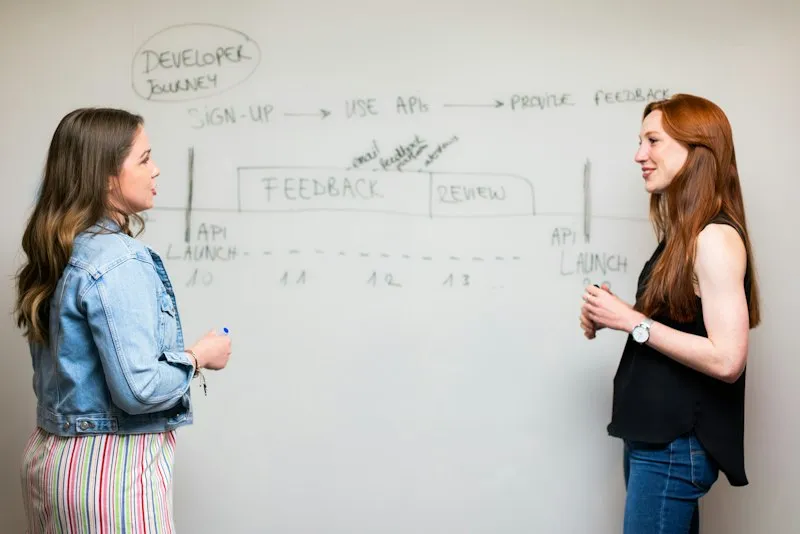
Process conflict arises when team members disagree on the practical aspects of completing a task. For example, one member might argue that a project timeline is too aggressive, while another insists the group needs to meet weekly instead of biweekly. These disagreements can involve scheduling, task assignments, resource allocation, or the sequence of steps needed to reach a goal.
Unlike task conflict, which involves differing opinions on the work content, process conflict focuses on the logistics of execution. It can become personal if members perceive others as obstructing progress. When that happens, process conflict may blend into relationship conflict, intensifying negative emotions and reducing team cohesion. Research suggests that process conflict is often seen as more resolvable than personality-based conflicts-for instance, by consulting a procedure manual or a supervisor-which may make it easier to address before it escalates.
Take it further
Talk It Over
Has your team ever had a disagreement about who should do what or how to schedule a project?
Reflect in Mneno
How Process Conflict Affects Team Performance

Studies have found a direct negative relationship between process conflict and group performance. Specifically, low levels of process conflict are associated with better performance, while higher levels become increasingly detrimental. The highest-performing groups tend to have little or no process conflict. This pattern suggests that even moderate disagreements about logistics can distract from the task and reduce efficiency.
The negative impact may be amplified when process conflict co-occurs with other conflict types. For instance, task and process conflict together can worsen outcomes due to increased time lost and reduced resolution effectiveness. Furthermore, process conflict tends to harm proximal outcomes like member satisfaction and group cohesion more than task conflict does. However, the effects are not uniformly negative: process conflicts that focus on actual process improvements-rather than personal obstruction-may be less harmful, especially when they occur early in a project during the preparation stage, allowing the team to benefit from evaluating different approaches.
Managing Process Conflict Early

Because process conflict can undermine performance and cohesion, addressing it early is a common recommendation. HR practitioners and team leaders can engage members in project management and planning exercises at the outset of a team's lifecycle. Discussing timelines, roles, and responsibilities explicitly helps resolve disagreements before they become entrenched. When teams clarify who does what and when, they reduce ambiguity and the potential for later conflict.
One structured approach is to develop a team charter that specifies the team's purpose, strategies, member responsibilities, and required skill sets. Creating this charter with a facilitator-from HR or an external consulting firm-can ensure it addresses the right issues. The charter serves as a reference point, reducing role ambiguity and preventing misunderstandings. By clarifying priorities and expectations early, teams can minimize the process conflict that might otherwise disrupt their work.
Resolution Approaches and Their Limits

The way process conflict is resolved influences its ultimate impact. In global virtual teams, research indicates that the conflict resolution approach moderates the relationship between conflict type and team performance. For process conflict, the perceived resolution potential is relatively high: team members often see it as easily resolvable by consulting procedures or a supervisor. This perception may make it easier to address constructively.
However, not all resolution approaches are equally effective. For relationship conflict, integrative (collaborative) resolution is recommended to avoid harmful effects on performance; distributive (assertive) or avoidance approaches can leave members with low cohesion and efficacy. While the excerpts focus on relationship conflict, the principle that resolution style matters likely applies to process conflict as well. A team that openly discusses logistics and collaboratively agrees on a plan may reduce the negative impact of process disagreements. Understanding the different conflict types and their resolution potential helps managers and members address conflicts quickly and appropriately.
FAQ
Common questions
Each answer is linked to its research.
Can process conflict ever be beneficial for a team?
Process conflict is generally detrimental, especially at higher levels, but it may be less harmful when it focuses on actual process improvements rather than personal obstruction. Early-stage process conflict-during preparation or planning-may allow a team to evaluate different approaches and improve long-term effectiveness. Low levels of process conflict have been associated with better performance compared to moderate or high levels. So while process conflict is not beneficial in itself, addressing it constructively early on can help teams clarify roles and logistics.
SourcesS1S3All sources
How is process conflict different from task conflict?
Process conflict involves disagreements about task logistics, roles, and responsibilities-how the work gets done. Task conflict involves disagreements about the content of the work itself-what the team should do. Research shows that task conflict has less negative associations with team member satisfaction and cohesion compared to process conflict. Additionally, task conflict can sometimes be beneficial when it occurs without relationship conflict, while process conflict tends to have a direct negative relationship with performance, especially at higher levels.
SourcesS3S11S12All sources
What strategies can teams use to reduce process conflict?
Teams can reduce process conflict by engaging in early planning exercises that clarify timelines, roles, and responsibilities. Developing a team charter-a document specifying the team's purpose, strategies, member responsibilities, and skill sets-can help reduce ambiguity and prevent misunderstandings. Creating this charter with a facilitator from HR or a consulting firm can improve its effectiveness. Additionally, open discussions about logistics and collaborative resolution of disagreements can help prevent process conflict from escalating into relationship conflict.
SourcesS2S4S10All sources
Next read
Keep reading
Nearby guides picked by the editors of this article.
 MomentsIs this team fight about the work or about us?Learn to tell whether a team disagreement is about the task or about personal issues, and how to redirect conflict toward better outcomes.3 min read
 DecisionWhy Does My Team Keep Fighting Over Who Does What?Process conflict over roles and responsibilities can harm team performance. Compare three approaches: low-effort pause, moderate structured plan, or3 min read
 How-toResolving Personality Clashes in Your TeamLearn practical steps to shift your team from personality clashes to productive work, based on evidence-based conflict resolution approaches.4 min read
 TechniquesApproaches to Task Disagreements in TeamsExplore three evidence-based approaches to handling task conflicts at work: calibrating debate to task type, discussing process early, and trusting teammates.3 min read
 TechniquesThree Practices for Reducing Process Conflict in TeamsCompare team charter, conflict resolution approaches, and learning from past mistakes to reduce process conflict and improve team performance.3 min read
 TechniquesRelationship Conflict and Why It Drains YouRelationship conflict creates emotional exhaustion and stress. Compare three ways to understand and address its draining effects.2 min read
References
Sources & evidence
4 research papers informed this article. The numbers beside each section link here, and each DOI opens the original paper.
Source 1:The paradox of intragroup conflict: A meta-analysis.
de Wit, Frank R. C., Greer, Lindred L., Jehn, Karen A. (2012). The paradox of intragroup conflict: A meta-analysis.. DOI 10.1037/a0024844
articleSource 2:Optimizing team conflict dynamics for high performance teamwork
O'Neill, Thomas A., McLarnon, Matthew J.W. (2018). Optimizing team conflict dynamics for high performance teamwork. DOI 10.1016/j.hrmr.2017.06.002
Source 3:A Qualitative Analysis of Conflict Types and Dimensions in Organizational Groups
Jehn, Karen A. (1997). A Qualitative Analysis of Conflict Types and Dimensions in Organizational Groups. DOI 10.2307/2393737
articleSource 4:Conflict and Performance in Global Virtual Teams
Kankanhalli, Atreyi, Tan, Bernard C.Y., Wei, Kwok-Kee (2006). Conflict and Performance in Global Virtual Teams. DOI 10.2753/mis0742-1222230309