

Intragroup conflict refers to perceived disagreements, tension, or friction among members of the same group. Researchers distinguish two core types: task conflict, which involves disagreements about the work itself, and relationship conflict, which involves perceived tension about personal differences such as interpersonal style, attitudes, and personality. Relationship conflict centers on group members per se and has a strong affective element, exemplified by friction over personal values and mannerisms.
Analysis of intragroup conflict examines not only these types but also how they interact and what factors influence their emergence and consequences. Key moderators studied include intragroup trust and open communication. Trust can reduce the spillover from task disagreements into personal conflict, while open communication shapes how group members' psychological needs relate to conflict levels. Research also investigates how teams resolve conflicts, identifying strategies such as open discussion, compromise, and focusing on content rather than delivery style.
Distinguishing Task and Relationship Conflict
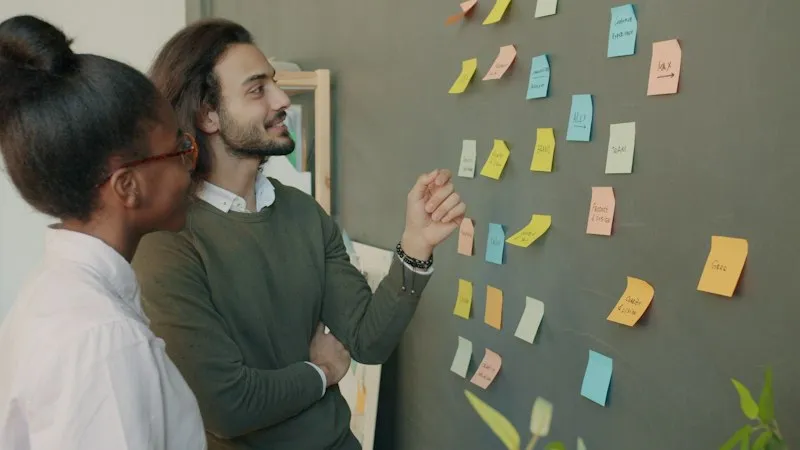
A foundational step in analyzing intragroup conflict is distinguishing between task conflict and relationship conflict. Task conflict involves disagreements about the content of the work-what should be done, how, or by whom. Relationship conflict, by contrast, involves perceived tension and frustration about personal differences such as interpersonal style, attitudes, preferences, and personality. It centers on group members themselves and carries an emotional charge, as seen in friction over personal values and mannerisms.
This distinction matters because the two types of conflict can have different effects on team outcomes and can influence each other. For example, task conflict can sometimes escalate into relationship conflict if members misinterpret disagreement as a personal attack. Researchers study the conditions under which this spillover occurs and what factors prevent it. Keeping these types separate in analysis allows for more precise understanding of a team's dynamics and the design of targeted interventions.
Take it further
Discussing Conflict Patterns
What strategies has your team used to keep disagreements about work from turning into personal conflicts?
Reflect in Mneno
The Role of Intragroup Trust

Intragroup trust-the shared belief that group members are reliable and will act in good faith-is a key moderator of how task and relationship conflict relate. Research shows that trust moderates the spillover of task conflict into relationship conflict: when group members trust each other, task disagreements are less likely to be misattributed as personal attacks, thus reducing the risk of relationship conflict. When trust is low, task conflict is more closely and positively related to relationship conflict.
One study found that intragroup trust significantly moderated the effect of task conflict on later relationship conflict (interaction β=-0.55, p<0.05). High trust reduced the positive association between task conflict and subsequent relationship conflict, though this effect was marginally significant when controlling for baseline relationship conflict (β=-0.40, p=0.09). The same study did not find that trust moderated the effect of relationship conflict on task conflict, suggesting that the protective role of trust is more about preventing task disagreements from turning personal than the reverse.
Open Communication as a Moderator

Open communication, defined as free and candid expression of opinions, moderates the relationships between group composition of psychological needs and intragroup conflict. By facilitating members' understanding of what others want, open communication helps them adjust their behaviors. Research indicates that open communication strengthens the negative relationship between a team's average need for affiliation and relationship conflict: when open communication is high, higher average need for affiliation is more strongly associated with lower relationship conflict.
Conversely, open communication strengthens the positive relationship between a group's average need for achievement and task conflict. When group members are high in need for achievement, open communication allows them to recognize each other's achievement orientation. This mutual recognition increases task conflict through two mechanisms: members propose and criticize ideas more freely, leading to clashes among heterogeneous ideas, and members become more assertive in defending their own viewpoints, increasing debate. Thus, open communication does not simply reduce conflict; it can amplify task conflict in groups with certain psychological profiles, which may be productive for problem-solving.
Conflict Resolution Strategies

Teams use a variety of strategies to resolve intragroup conflicts. Research using concept mapping identified seven categories of conflict resolution strategies: Voting, Compromise or Consensus, Discuss or Debate, Open Communication, Idiosyncratic Solutions, Avoided or Ignored, and Rotating Responsibilities. These categories reflect the different approaches teams take, from structured decision-making to avoidance.
Teams that improve over time share three conflict-resolution tendencies: focusing on the content of interpersonal interactions rather than delivery style, explicitly discussing reasons behind agreements or decisions about work assignments, and assigning work to members who have relevant task expertise rather than assigning by convenience. These tendencies suggest that effective resolution prioritizes substance over style and leverages member expertise.
FAQ
Common questions
Each answer is linked to its research.
Can collaborative communication techniques reduce personalization of conflict?
Yes, research suggests that teaching groups collaborative communication techniques during task disagreements can help frame conflicts as challenges to the whole group rather than to individuals. For example, using statements like 'We will be working together for a while. It’s important that we both feel comfortable with a solution' fosters a group orientation that alleviates personalization of conflict. This approach may help prevent task disagreements from turning into relationship conflict by maintaining a focus on shared goals rather than individual differences.
SourcesS1All sources
How does intragroup trust moderate the reverse causality from relationship conflict to task conflict?
Intragroup trust also moderates the reverse causality from relationship conflict to task conflict. When group members trust each other, they are less likely to disagree or refute disliked members' opinions based on negative impressions, so relationship conflict is less likely to trigger task conflict. When trust is low, relationship conflict is more likely to generate task conflict. This means trust can help contain interpersonal friction so that it does not spread into disagreements about the work itself.
SourcesS2All sources
What is the effect of relationship-focused conflict resolution on team performance?
Relationship-focused conflict resolution-where teams prioritize relationships over task analysis when resolving conflicts-can lead to a trade-off. Some teams that adopt this approach show performance decreases but increases in satisfaction. They respond to hurt feelings by incorporating all members' ideas without careful scrutiny, assign work based on member preferences rather than expertise, and compromise to preserve relationships. While this may improve team harmony and member satisfaction, it can come at the cost of task performance, as decisions may not be based on the best evidence or expertise.
SourcesS9All sources
Next read
Keep reading
Nearby guides picked by the editors of this article.
 MomentsWhy do some team fights feel personal and others about the work?Understand why a task disagreement can feel like a personal attack and learn a quick technique to keep team conflict focused on the work.3 min read
 DecisionWhy Is There So Much Tension and Arguing Within Our Team?Explore three strategies to address team tension and arguing, from low to high effort, with clear trade-offs based on your current capacity.3 min read
 How-toWhy Disagreements with Teammates Turn PersonalTask disagreements can feel personal when they trigger relationship conflict. Learn what causes this shift and how to keep discussions focused on the work.4 min read
 TechniquesIs This About the Task or About Us?Compare practices to tell whether an argument is about the work or the relationship, including shifting focus, medium choice, and open communication.3 min read
 TechniquesConflict Hurts Team Work: Practices That HelpCompare practices to reduce harmful conflict. Learn how trust, how you disagree, and understanding your conflict types can protect your team's performance.3 min read
 TechniquesHow to Tell When a Team Conflict Has Become PersonalCompare three practices for recognizing when a team disagreement shifts from task-focused to personal conflict.3 min read
References
Sources & evidence
4 research papers informed this article. The numbers beside each section link here, and each DOI opens the original paper.
Source 1:Decoupling task and relationship conflict: the role of intragroup emotional processing
Yang, Jixia, Mossholder, Kevin W. (2004). Decoupling task and relationship conflict: the role of intragroup emotional processing. DOI 10.1002/job.258
articleSource 2:Competing hypotheses analyses of the associations between group task conflict and group relationship conflict
Choi, Kyoosang, Cho, Bongsoon (2010). Competing hypotheses analyses of the associations between group task conflict and group relationship conflict. DOI 10.1002/job.733
articleSource 3:Members’ needs, intragroup conflict, and group performance.
Chun, Jinseok S., Choi, Jin Nam (2014). Members’ needs, intragroup conflict, and group performance.. DOI 10.1037/a0036363
articleSource 4:The Role of Conflict Resolution in Teams - An Empirical Study
Mukherjee, Sanjukta (2012). The Role of Conflict Resolution in Teams - An Empirical Study. DOI 10.2139/ssrn.2191886
article