

Constructive conflict management refers to cooperative, pro-social behaviors aimed at preserving relationships while addressing disagreements. It contrasts with destructive conflict management, which involves antisocial, competitive behaviors that disrupt relationships.
Rather than viewing conflict as inherently negative, constructive conflict management treats it as a necessary and positive aspect of team development. Teams that adopt an integrating style-appreciating and making constructive use of different perspectives-tend to promote team effectiveness and innovation, while dominating win-lose patterns reduce performance.
Team Identity and Prosocial Orientation

A strong team identity, defined as a collective sense of togetherness and oneness derived from individual team identification, plays a central role in enabling constructive conflict management. When team members identify strongly with their team, they develop a prosocial orientation that motivates them to share skills, information, knowledge, and resources-behaviors that enhance team welfare and joint outcomes.
In conflict situations, this prosocial orientation encourages people to adopt constructive, cooperative patterns of managing internal disagreements, such as integrating approaches. Rather than pursuing narrow self-interest, team members are more likely to seek solutions that work for everyone, which supports the long-term health of the team.
SourcesS4
Take it further
Open the conversation
Have you ever been part of a team where a disagreement actually led to a better outcome? What made that possible?
Reflect in Mneno
Constructive Controversy and Open Communication

Constructive controversy is a structured approach that encourages participation, mutual influence, and acceptance of others' personal competence. It discourages self-interest, the imposition of positions, and active interference with others-actions that can evoke negative emotionality. This method helps prevent task conflict from escalating into relationship conflict by keeping the focus on differing ideas rather than personal attacks.
Open communication norms complement constructive controversy by creating an environment where team members can express opinions without fear of reproach. Research on top management teams found that greater openness led to less relationship conflict, as members became more experienced with honest discussion and valued the exchange of ideas. However, open expression of frustration without constructive resolution was associated with decreased satisfaction, suggesting that open norms require skilled facilitation to be beneficial.
Norms, Structure, and Team Design
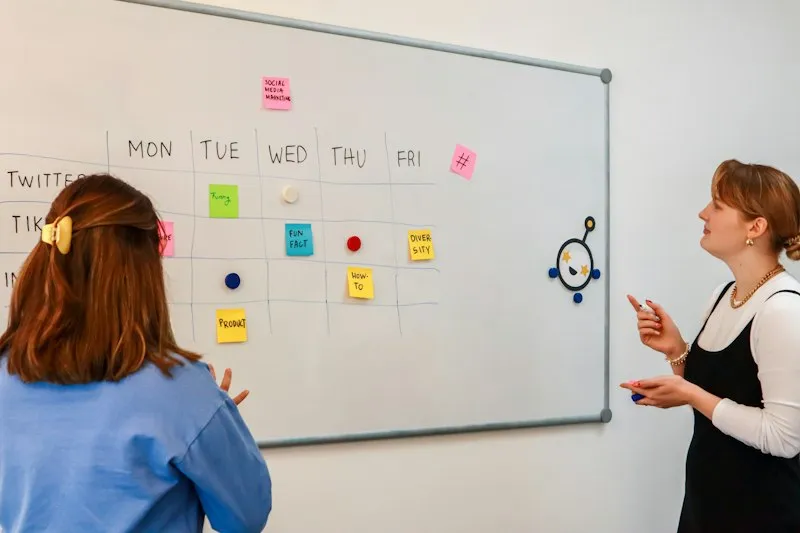
Establishing clear norms for constructive conflict is critical for keeping task conflict productive. Norms such as respectful communication, listening, and nonjudgmental discussion help prevent escalation into relationship conflict by discouraging personal attacks and encouraging emotional regulation.
Beyond interpersonal norms, the structural arrangement of a team also influences conflict management. Specifically, aligning task interdependence (how much team members depend on each other to complete their work) and goal interdependence (how much their goals are shared) can encourage constructive ways of handling conflicts. In school-staff teams, the highest levels of integrating conflict management occurred under conditions of high task interdependence and high goal interdependence.
Conflict-Resolution Tendencies in Improving Teams

Studies of autonomous teams, where members are responsible for managing communication and conflict arising from task decisions, have identified three conflict-resolution tendencies that distinguish teams that improve over time. First, effective teams focus on the content of interpersonal interactions rather than delivery style-they address the substance of disagreements instead of reacting to how something was said.
Second, these teams explicitly discuss the reasons behind any agreements or decisions reached in accepting and distributing work assignments. This transparency helps prevent misunderstandings and builds trust. Third, they assign work to members who have relevant task expertise, rather than assigning by convenience, ensuring that decisions are made based on competence.
FAQ
Common questions
Each answer is linked to its research.
What is the difference between constructive and destructive conflict management?
Constructive conflict management involves cooperative, pro-social behaviors aimed at preserving relationships while addressing disagreements. In contrast, destructive conflict management involves antisocial, competitive behavior that disrupts relationships. While constructive approaches treat conflict as a positive opportunity for team development and innovation, destructive patterns such as dominating win-lose solutions lead to continuous struggle and reduced team performance.
SourcesS1S2All sources
How can teams be trained to manage conflict constructively?
Teams can be trained to express ideas, positions, and feelings while learning to listen and integrate different points of view. Specific tools include routine designation of a devil's advocate and ensuring that no important decisions are finalized before antithetical points of view are fully aired. Additionally, administrators can encourage teams to debate essential issues and see controversy as normal and necessary. Training in constructive controversy, which encourages participation and mutual influence while discouraging self-interest and negative emotionality, is one structured approach.
SourcesS6S11All sources
What role do norms play in constructive conflict management?
Establishing norms for constructive conflict, such as respectful communication, listening, and nonjudgmental discussion, helps keep task conflict productive and prevents escalation into relationship conflict. Norms that discourage personal attacks and encourage emotional regulation are particularly important. Openness norms that allow group members to express opinions without fear of reproach have been found to lead to less relationship conflict, especially as members become more experienced with honest discussion and value the exchange of ideas. These norms may develop naturally or be encouraged through formal means such as constructive controversy.
SourcesS9S10All sources
Next read
Keep reading
Nearby guides picked by the editors of this article.
 MomentsHow do I know if I'm being too forceful in a disagreement?Signs you may be too forceful in a disagreement, why it happens, and how to shift toward collaborative communication.3 min read
 DecisionWhy do I seem to be the only one noticing the conflict in our team?You might be the only one seeing the conflict due to conflict asymmetry. Consider whether to address it, try private outreach, or initiate a team discussion.4 min read
- How-toHow to Assess Personal Conflict in Your TeamUse a team discussion to assess shared perceptions of personal conflict, and understand what a consensus response can and cannot tell you.1 min read
 TechniquesIs This About the Task or About Us?Compare practices to tell whether an argument is about the work or the relationship, including shifting focus, medium choice, and open communication.3 min read
 TechniquesResolving Team Arguments Without EscalationCompare three practices for resolving team arguments: proactive compromise, consensus-building, and open communication. Evidence-based, no winner declared.3 min read
 TechniquesTraining Yourself to Handle Workplace ConflictsLearn three evidence-backed practices for improving how you handle disagreements with colleagues at work: cooperative communication, constructive controversy2 min read
References
Sources & evidence
4 research papers informed this article. The numbers beside each section link here, and each DOI opens the original paper.
Source 1:Managing Conflict in School Teams: The Impact of Task and Goal Interdependence on Conflict Management and Team Effectiveness
Somech, Anit (2008). Managing Conflict in School Teams: The Impact of Task and Goal Interdependence on Conflict Management and Team Effectiveness. DOI 10.1177/0013161x08318957
articleSource 2:Innovation and Conflict Management in Work Teams: The Effects of Team Identification and Task and Relationship Conflict
Desivilya, Helena Syna, Somech, Anit, Lidgoster, Helena (2010). Innovation and Conflict Management in Work Teams: The Effects of Team Identification and Task and Relationship Conflict. DOI 10.1111/j.1750-4716.2009.00048.x
Source 3:The Role of Conflict Resolution in Teams - An Empirical Study
Mukherjee, Sanjukta (2012). The Role of Conflict Resolution in Teams - An Empirical Study. DOI 10.2139/ssrn.2191886
articleSource 4:Decoupling task and relationship conflict: the role of intragroup emotional processing
Yang, Jixia, Mossholder, Kevin W. (2004). Decoupling task and relationship conflict: the role of intragroup emotional processing. DOI 10.1002/job.258
article