

Conflict becomes complex when its outcomes depend on the task, team structure, and how it is managed. While some conflict can spark debate and better solutions, its effects vary dramatically with context. This explainer unpacks why conflict is not simply good or bad but shaped by factors like task complexity and hierarchy.
Research on global virtual teams shows that the same level of task conflict can improve performance in complex tasks but undermine it in simple ones. Similarly, how conflicts are resolved matters more than how much conflict exists. Understanding these contingencies helps in anticipating when conflict will be constructive or destructive.
How Task Complexity Shapes Conflict's Impact

Task complexity is a key factor that determines whether task conflict helps or hurts a team. In a study of three global virtual teams, when task complexity was moderate or high, task conflict improved team performance by encouraging debate and the development of better solutions. For instance, Team B, which had high interdependence and high complexity, benefited from open discussion of different approaches. In contrast, when task complexity was low, debate was unnecessary and task conflict offered no benefit; Team A worked independently on simple interviews and saw no performance gains from conflict.
These findings show that complexity changes the function of disagreement. In complex tasks, diverse perspectives are needed to solve problems, so conflict can be a mechanism for integration. However, in simple tasks, conflict may just create distraction. The relationship is not linear-the same amount of task conflict can produce opposite outcomes depending on the complexity of the work. This highlights why blanket advice about conflict being beneficial or harmful is misleading; the context of the task must be considered.
Take it further
Open a Conversation
What kinds of tasks does your team work on, and have you noticed any patterns in how conflicts arise depending on the task?
Reflect in Mneno
The Role of Team Hierarchy in Conflict
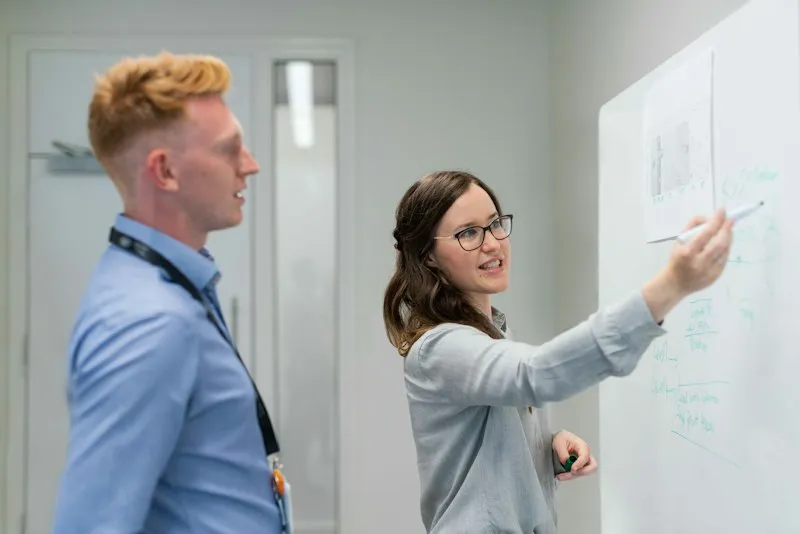
Team hierarchy-how steeply power and status are distributed-also moderates conflict dynamics. In teams with low task complexity, steeper hierarchies reduce process and task conflicts by providing clear directives and reducing ambiguity. For example, a hierarchical structure can prevent time-consuming disagreements about goals or procedures when tasks are straightforward. However, in complex tasks, steep hierarchies may backfire: they can increase disruptive process disputes if too many high-status members posture, and they can obstruct the integration of diverse perspectives needed for complex execution.
This means that for complex tasks, flatter structures may be more effective at managing conflict because they allow the diverse input required. The research suggests that when tasks are complex, constructive conflict management strategies become more important, as hierarchy alone cannot resolve the inevitable disagreements. Teams operating in complex environments should be aware that leaning on hierarchy to suppress conflict might actually worsen outcomes, and instead should foster open dialogue.
Why Resolution Matters More Than Conflict Level

A significant insight from research is that the actual resolution of conflicts may matter more for team performance than the absolute levels of conflict. In a study, task conflict resolution significantly predicted team performance, whereas the level of task conflict itself did not. This suggests that interventions should focus on how conflicts are resolved, not just on trying to reduce conflict levels. Teams that perform well over time are likely to be proactive in anticipating the need for conflict resolution and pluralistic in developing solutions that accommodate the needs of all group members.
Successful teams also share specific resolution tendencies: they focus on the content of interactions rather than delivery style, they explicitly discuss the reasons behind decisions and work assignments, and they assign work based on expertise rather than convenience. Even high-performing teams should remain vigilant about their process effectiveness and avoid relying on previously successful tactics. This emphasis on resolution quality explains why two teams with the same amount of conflict can have very different outcomes-one may resolve disagreements constructively, while the other allows them to fester.
Practical Approaches to Managing Complex Conflict
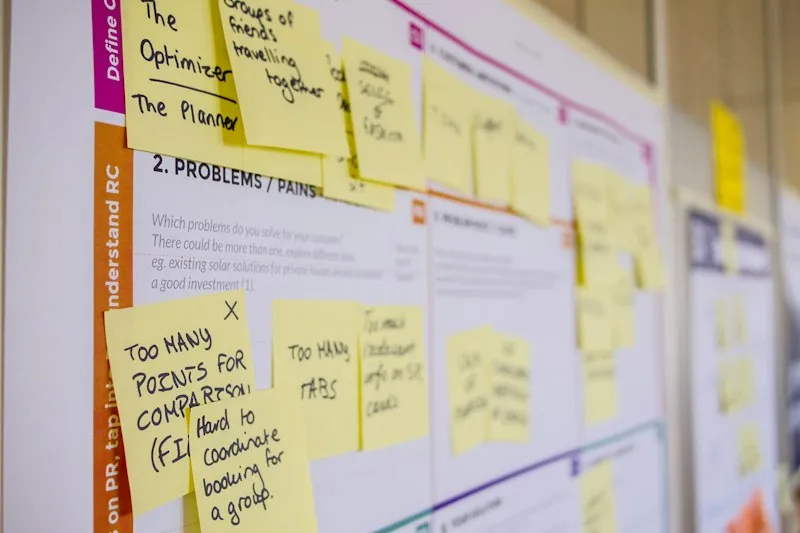
Given the complexity of conflict, structured approaches can help teams navigate disagreements. Developing a team charter that specifies the team's purpose, strategies, member responsibilities, and skill sets, ideally created with an HR facilitator, can clarify roles and priorities, reducing ambiguity and process conflict. Additionally, engaging team members in project management and planning exercises early in the team's lifecycle-discussing timelines, roles, and responsibilities-helps resolve process conflicts and improves long-term effectiveness.
These practical steps align with the evidence that resolution quality is key. By proactively setting expectations and creating structures for discussion, teams can transform potential conflict into productive debate. The research also cautions that even successful teams must remain adaptable; what worked in one context may not work in another. Therefore, teams should regularly assess whether their conflict management strategies are still appropriate as tasks and team composition evolve.
FAQ
Common questions
Each answer is linked to its research.
Can task conflict ever be beneficial for simple tasks?
According to the research on global virtual teams, task conflict does not improve performance when task complexity is low. In simple tasks, debate is unnecessary and may even be counterproductive. The study found that a team with low interdependence and low complexity (Team A) did not benefit from high task conflict. So, for straightforward tasks, the main goal should be to minimize unnecessary disagreements rather than encourage debate.
SourcesS5S6All sources
What are the three conflict-resolution tendencies of successful teams?
Teams that improve over time share three tendencies: (1) focusing on the content of interpersonal interactions rather than the delivery style, (2) explicitly discussing the reasons behind any agreements or decisions about accepting and distributing work assignments, and (3) assigning work to members who have the relevant task expertise rather than assigning by convenience. These practices help ensure that conflict is resolved constructively and that team performance improves.
SourcesS10All sources
How does task interdependence relate to task complexity in the studied teams?
In the study, teams with different levels of task interdependence and complexity were compared. Team A had low interdependence and low complexity: members could conduct interviews independently without generating complex subtasks. Team B had high interdependence and high complexity: members had to exchange information frequently and perform complex subtasks like generating interview questions. Team C had moderate interdependence and moderate complexity. This shows that complexity and interdependence often-but not always-go hand in hand, and both influence how conflict plays out.
SourcesS6All sources
Next read
Keep reading
Nearby guides picked by the editors of this article.
 MomentsIs this team fight about the work or about us?Learn to tell whether a team disagreement is about the task or about personal issues, and how to redirect conflict toward better outcomes.3 min read
 DecisionWhy This Conflict Feels So Complicated and StuckIf your team conflict seems stuck, the complexity of the task may be making standard fixes less effective. Compare three source-backed strategies.3 min read
 How-toHow to Turn Disagreements Into Productive DiscussionsUse evidence-based steps to turn team disagreements into discussions that improve work.3 min read
 TechniquesArguing About Work Without Hurting Team SpiritCompare practices for work-related arguments that protect team spirit: focus on content, discuss reasons, use virtual communication.3 min read
 DecisionWhy Disagreements About Work Methods Slow Us DownTask conflict can stall teams, but how you resolve it matters. Compare three evidence-based approaches to decide what fits your situation.3 min read
 ExplainerRecognizing Relationship Conflict in TeamsLearn to recognize relationship conflict by its markers: negative emotion, perceived low resolution potential, and its harmful effect on team performance.5 min read
References
Sources & evidence
4 research papers informed this article. The numbers beside each section link here, and each DOI opens the original paper.
Source 1:Conflict and Performance in Global Virtual Teams
Kankanhalli, Atreyi, Tan, Bernard C.Y., Wei, Kwok-Kee (2006). Conflict and Performance in Global Virtual Teams. DOI 10.2753/mis0742-1222230309
Source 2:When and why hierarchy steepness is related to team performance
Cantimur, Yeliz, Rink, Floor, van der Vegt, Gerben S. (2016). When and why hierarchy steepness is related to team performance. DOI 10.1080/1359432x.2016.1148030
Source 3:Optimizing team conflict dynamics for high performance teamwork
O'Neill, Thomas A., McLarnon, Matthew J.W. (2018). Optimizing team conflict dynamics for high performance teamwork. DOI 10.1016/j.hrmr.2017.06.002
Source 4:The Role of Conflict Resolution in Teams - An Empirical Study
Mukherjee, Sanjukta (2012). The Role of Conflict Resolution in Teams - An Empirical Study. DOI 10.2139/ssrn.2191886
article