
Why does conflict in my team always seem to spiral out of control?
Understanding the dynamics that make team conflict escalate and how to choose a response strategy based on your current capacity.
The question underneath
Why does conflict in my team always seem to spiral out of control?
Sound familiar?
You're in the middle of another heated exchange that feels bigger than the original issue.
First, get oriented
Before you choose
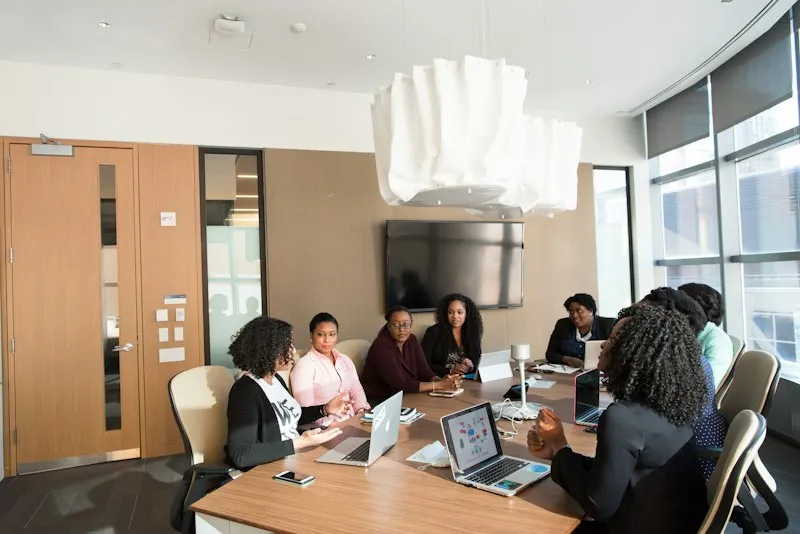
When team conflict feels like it spirals out of control, it's not because anyone is wrong-it's because conflict operates within a complex adaptive system, where trust and conflict co-evolve [sourceRef: S3]. The Team Conflict System shows how a minor task disagreement can shift toward relationship conflict and competitive management, reinforcing an unhealthy profile [sourceRef: S4]. This isn't a simple cause-and-effect chain, but a nonlinear, reciprocal process where your reaction influences the next escalation [sourceRef: S2].
There is no universally right way to respond, only trade-offs based on your current capacity. The most immediate effort you can invest now determines whether you pause and observe, address the interpersonal shift, or overhaul the team's conflict processes. Your choice depends on how much time, emotional energy, and support you have available. The options below help you match your response to the moment.
Find your starting point
What feels closest to your situation right now?
Choose the situation closest to yours. We’ll take you to that path so you can weigh it without committing to anything.
- See this pathPathI want to pause and observe
- See this pathPathI want to address the interpersonal shift
- See this pathPathI want to rebuild team processes
Still unsure? Ask yourself:
What would help you decide which approach fits right now without getting stuck in analysis?
Compare your paths
Three ways forward, different trade-offs
There is no perfect choice. Skim the trade-offs, then read the path that fits what you can manage today.
Path
Strategy 1: Pause and observe the spiral
Instead of reacting, intentionally step back from the current conflict. This means holding off on sending a reply, calling a time-out for the conversation, or asking for a 24-hour break to let initial emotions settle. It requires only that you recognize the escalation and choose to stop participating for the moment [sourceRef: 1].
Research suggests that team conflict is shaped by interdependent factors like psychological safety and conflict management, which reinforce each other over time [sourceRef: S6]. A pause interrupts the immediate feedback loop in the Team Conflict System [sourceRef: S4]. This is a low-effort move because it doesn't require changing others, but it risks leaving the underlying pattern unchanged if the resumption of conflict is not managed [sourceRef: 1]. The trade-off is that you may miss the chance to reshape the team's conflict profile if no one picks up a next step.
Path
Strategy 2: Address the interpersonal shift directly
When you notice the conflict moving from task disagreement to personal friction, address it openly with the relevant teammate. This could be a direct but conversational message acknowledging the strain, asking about their perspective, and clarifying your own intentions. It requires some emotional energy and a willingness to be vulnerable, but it can happen in a single conversation [sourceRef: 2].
Research on conflict profiles shows that individual differences in conflict expression and sensitivity shape whether others become defensive or remain open [sourceRef: S7]. A direct interpersonal intervention can shift the dynamic by breaking the cycle of mutual defensiveness. However, it requires trust to give and receive such feedback, and the approach works best when both people are willing to listen [sourceRef: S7]. The trade-off is that if your teammate is not ready or the team lacks psychological safety, the conversation itself might feel like another escalation [sourceRef: S4].
Path
Strategy 3: Rebuild team conflict processes from the ground up
This means initiating a structured process where the team re-establishes ground rules for conflict, incorporates conflict management training, or uses a facilitated session to address the root patterns. It requires time, coordination among all members, and buy-in from the team leader or HR support. This is a high-effort, team-wide investment [sourceRef: 3].
The Team Conflict System model suggests that a multi-pronged approach targeting psychological safety, conflict management, and performance feedback together can shift the team's conflict profile toward a healthier one, interrupting spiral patterns [sourceRef: S6]. Because trust and conflict co-evolve [sourceRef: S3], changes in one area can lead to improvements in others. However, this approach demands substantial resources and a commitment to ongoing change, not a one-time fix [sourceRef: S6]. The trade-off is that if the team isn't ready for collective change, this can lead to a further dip in morale or a perception of being blamed.
Help in 2 minutes
Reflect on capacity
What do you have the emotional space for right now: a pause, a single conversation, or a structural change?
Talk through my situation with the AI mentorQuick start in chat
Begin a conversation
What have you noticed about how conflict escalates in your team?
Describe my situation (free)Next read
Keep reading
Nearby guides picked by the editors of this article.
 MomentsHow do I stop disagreements at work from becoming personal?When a work disagreement starts to feel like a personal attack, see why trust matters and try one separating statement to reset the conversation.3 min read
 TechniquesWhy Team Conflicts Escalate So QuicklyLearn why team conflicts intensify rapidly and explore three evidence-based approaches to understanding and managing them.3 min read
 How-toUnderstanding Chaotic Team ConflictLearn why team conflict feels chaotic and how to make sense of it. This article explains conflict dynamics and offers a practical assessment approach.3 min read
- ExplainerThe Complexity Perspective on ConflictThe complexity perspective on conflict sees task, relationship, and process conflict as intertwined and co-evolving, challenging the traditional view by5 min read
 ExplainerMain Types of Intragroup ConflictLearn about the two main types of intragroup conflict: task conflict and relationship conflict, their differences, and how they affect team outcomes.7 min read
 MomentsWhy does my team's mood and trust change so much over time?If your team's mood and trust shift often, it's normal. Task disagreements can become personal when trust is low, creating a cycle of conflict.3 min read
References
Sources & evidence
4 research papers informed this article. The numbers beside each section link here, and each DOI opens the original paper.
Source 1:Optimizing team conflict dynamics for high performance teamwork
O'Neill, Thomas A., McLarnon, Matthew J.W. (2018). Optimizing team conflict dynamics for high performance teamwork. DOI 10.1016/j.hrmr.2017.06.002
Source 2:Does Conflict Shatter Trust or Does Trust Reduce Conflict in Teams? Revisiting the Relationships between Team Diversity, Conflict, Trust and Team
Curseu, Petru Lucian, Schruijer, Sandra (2007). Does Conflict Shatter Trust or Does Trust Reduce Conflict in Teams? Revisiting the Relationships between Team Diversity, Conflict, Trust and Team. DOI 10.2139/ssrn.1100581
articleSource 3:A Network Conceptualization of Team Conflict
Park, Semin, Mathieu, John E., Grosser, Travis J. (2020). A Network Conceptualization of Team Conflict. DOI 10.5465/amr.2016.0472
articleSource 4:The multilevel nomological net of team conflict profiles
O’Neill, Thomas A., McLarnon, Matthew J.W., Hoffart, Genevieve, Onen, Denis, et., al. (2017). The multilevel nomological net of team conflict profiles. DOI 10.1108/ijcma-05-2016-0038