
Why does my team's mood and trust change so much over time?
If your team's mood and trust shift often, it's normal. Task disagreements can become personal when trust is low, creating a cycle of conflict.
Sound familiar?
You notice a routine disagreement turns into hurt feelings and your team feels less connected afterward.

Overview
If you've watched your team's mood and trust swing from strong to strained over just a few days - you're not imagining it. These shifts follow a pattern backed by research on how trust interacts with conflict. The good news is that understanding this pattern helps you respond instead of just reacting.
Trust shapes how your team interprets disagreements. When trust is high, a difference of opinion stays what it is: a task debate. When trust is low, the same disagreement can feel like a personal attack, triggering more conflict and eroding trust further. Recognizing this cycle is the first step toward stabilizing your team's emotional climate.
Why trust and mood swing together
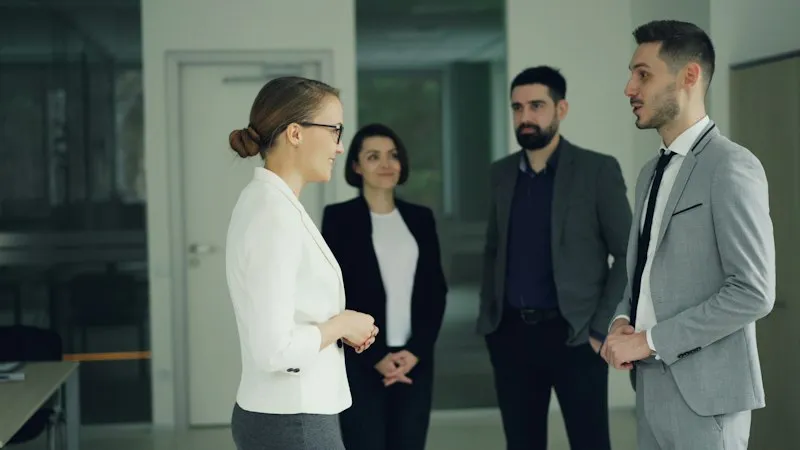
Trust and conflict feed each other in a loop. When trust is low, task disagreements (like debating which strategy to pursue) spill over into relationship conflict - people start feeling attacked or resentful. This is because low trust makes it easy to misinterpret someone else's point as a hidden agenda or a personal jab. Once that happens, the conflict becomes personal, and that personal conflict further damages trust.
In teams with high trust, the same task disagreement rarely becomes personal. Team members can push back on an idea without worrying the other person will take offense. Research shows that trust acts as a buffer; it prevents task conflict from turning into relationship conflict. But the reverse is also true: relationship conflict (like a past argument that never got resolved) can erode trust so much that even a normal workflow disagreement feels heated. This is why your team's climate can fluctuate so much - it's not random, it's a sensitive system that responds to the trust level in the room.
The check-in: a 30-second trust reset
One concrete method to break the cycle is a brief, structured check-in at the start of a discussion. Before diving into a tough topic, take 30 seconds to name the shared goal: "We both want this project to succeed, so let's look at the data together." This primes the group to accept each other's statements at face value.
If you notice tension rising, pause and ask a clarifying question: "I hear your concern about the timeline - can you say more about what specifically worries you?" This turns a potential personal conflict back into a task-focused discussion. Research shows that when trust is low, simply acknowledging the other person's perspective can reduce misattribution and prevent relationship conflict from escalating.
Where are you
What feels closest to your situation right now?
Pick the situation that feels closest and bring it into a private reflection in Mneno.
Not sure? Start here:Help me understand this situation and choose one constructive next step.
- A simple disagreement about work feels like a personal attack.Help me understand why a task disagreement feels personal and how I can respond differently.
- After a recent conflict, I feel the team's trust has dropped noticeably.Help me rebuild trust after a conflict that left everyone tense.
- The same issues keep coming up despite trying to resolve them.Help me break the cycle of repeated, unresolved disagreements in my team.
References
Sources & evidence
3 research papers informed this article. The numbers beside each section link here, and each DOI opens the original paper.
Source 1:Competing hypotheses analyses of the associations between group task conflict and group relationship conflict
Choi, Kyoosang, Cho, Bongsoon (2010). Competing hypotheses analyses of the associations between group task conflict and group relationship conflict. DOI 10.1002/job.733
articleSource 2:Does Conflict Shatter Trust or Does Trust Reduce Conflict in Teams? Revisiting the Relationships between Team Diversity, Conflict, Trust and Team
Curseu, Petru Lucian, Schruijer, Sandra (2007). Does Conflict Shatter Trust or Does Trust Reduce Conflict in Teams? Revisiting the Relationships between Team Diversity, Conflict, Trust and Team. DOI 10.2139/ssrn.1100581
articleSource 3:Task conflict and relationship conflict in top management teams: The pivotal role of intragroup trust.
Simons, Tony L., Peterson, Randall S. (2000). Task conflict and relationship conflict in top management teams: The pivotal role of intragroup trust.. DOI 10.1037/0021-9010.85.1.102
Keep reading
 DecisionWhy Does My Group Feel Less Trusting After a Disagreement?When a disagreement leaves your group less trusting, you can choose a low, moderate, or high-effort strategy. Each option has real trade-offs.3 min read
 TechniquesPractices to Improve Team Task AlignmentCompare three evidence-based practices to reduce misalignment on tasks: aligning task conflict with workflows, building team-oriented mental models, and3 min read
 ExplainerWhat Are Shared Mental Models?Shared mental models are a team's common understanding of tasks and teamwork. They help members coordinate, reduce conflict, and improve performance.5 min read
- TechniquesWhy Your Team Feels Off After a ConflictExplore practices to understand why conflict can linger in a team, with insights on trust dynamics and communication.3 min read
 TechniquesNoticing and Responding to Social CuesExplore practices that may help you notice social cues in conversations, based on awareness of context, internal sensations, and attention allocation.3 min read
 MomentsWhy do some team fights feel personal and others about the work?Understand why a task disagreement can feel like a personal attack and learn a quick technique to keep team conflict focused on the work.3 min read