
Why Does My Team Keep Arguing About the Best Way to Do Things?
Team arguments about methods often stem from a lack of shared understanding. Choose a strategy that fits your team's current capacity.
The question underneath
Why do my team and I keep arguing about the best way to do things?
Sound familiar?
Your team is stuck in repetitive arguments about the right approach, wasting time and straining relationships.
First, get oriented
Before you choose
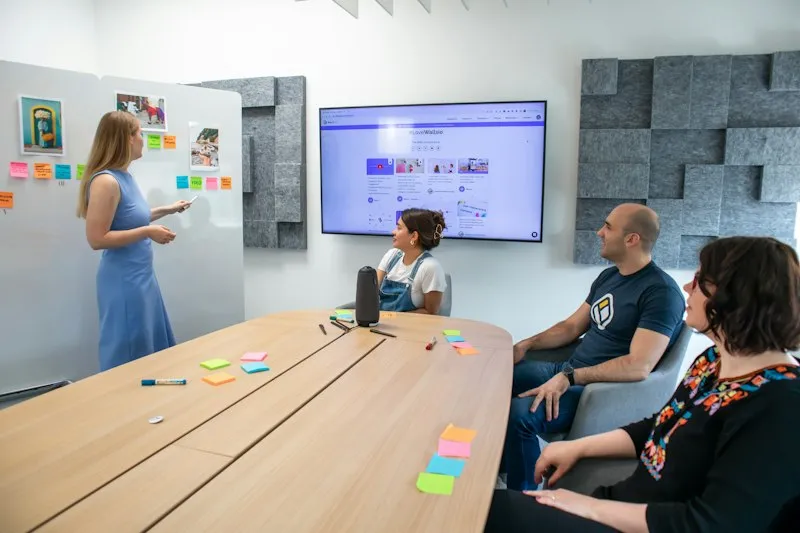
When your team repeatedly argues about the best way to work, it's exhausting and counterproductive. These disagreements often stem from a lack of shared understanding about the task or each other's skills, not from bad intentions [sourceRef: S1, S5].
There is no single perfect solution-only trade-offs. The right next step depends on your team's current capacity for time, emotional energy, and willingness to engage. You can choose a low-effort pause, a moderate investment in clarifying roles, or a high-effort foundational reset.
Find your starting point
What feels closest to your situation right now?
Choose the situation closest to yours. We’ll take you to that path so you can weigh it without committing to anything.
- See this pathPathWe need a breather to surface our own assumptions first.
- See this pathPathWe are willing to invest a session to clarify roles and progress.
- See this pathPathWe recognize we need a deeper, structured reset.
Still unsure? Ask yourself:
Which of these feels most doable given the current pressure and relationships on the team?
Compare your paths
Three ways forward, different trade-offs
There is no perfect choice. Skim the trade-offs, then read the path that fits what you can manage today.
Path
Strategy 1: Pause and Reflect
Stop the current argument and ask each team member to write down their understanding of the goal, the timeline, and the expected deliverables before the next meeting. This requires no new training or meetings-just 15 minutes of individual reflection. [sourceRef: S1]
Research shows that without shared understanding, challenges to ideas can feel like personal attacks [sourceRef: S1]. By pausing to surface hidden assumptions individually, you reduce immediate pressure. However, this does not build long-term alignment; you are only clarifying for yourself, not the group. The emotional risk is low because no one has to confront others directly, and you can easily return to the argument later.
SourcesS1Path
Strategy 2: Explicitly Define Roles and Processes
Hold a facilitated session where the team explicitly defines each member's role, the specific steps of the task, and the criteria for 'done.' This requires a few hours of structured conversation and a facilitator to keep it constructive. Information sharing about task details and reasoning is key here [sourceRef: S7].
When team members share task-relevant information about coordination, progress, and reasoning, it increases understanding and reduces the chance that disagreements feel personal [sourceRef: S1, S3]. Shared mental models about skills and communication reduce relationship, task, and process conflict [sourceRef: S4]. The trade-off: you need a neutral facilitator and everyone’s willingness to be explicit, which takes moderate effort and risks surfacing deeper disagreements. But the change is reversible-you can always return to old habits.
Path
Strategy 3: Invest in Pre-Task Training
Before tackling the next project, invest in a formal training program covering team mental models-what they are, why they matter-and conflict management competencies. This requires 2-3 days of facilitated sessions, plus follow-up practice [sourceRef: S6].
Training on shared understanding and conflict management before task performance reduces relationship conflict and sustains constructive disagreements, improving satisfaction and willingness to work together [sourceRef: S6]. Similar mental models at the start reduce conflict and improve effectiveness [sourceRef: S8]. The trade-off is high: substantial time and resources upfront, with a risk of low engagement. The benefits, if they take hold, are less reversible because the team develops new shared frameworks.
Help in 2 minutes
Pause to reflect
What does each person on your team need to feel heard before you can move forward together?
Talk through my situation with the AI mentorQuick start in chat
Ask your team
What do you think is really causing these disagreements-different priorities, unclear goals, or something else?
Describe my situation (free)Next read
Keep reading
Nearby guides picked by the editors of this article.
 MomentsMy team doesn't really understand each otherIf your team feels disconnected or conflict escalates quickly, shared mental models can help. Learn the mechanism and a rapid tool to build alignment.3 min read
 TechniquesPractices to Improve Team Task AlignmentCompare three evidence-based practices to reduce misalignment on tasks: aligning task conflict with workflows, building team-oriented mental models, and3 min read
 ExplainerWhat Are Shared Mental Models?Shared mental models are a team's common understanding of tasks and teamwork. They help members coordinate, reduce conflict, and improve performance.5 min read
- TechniquesWhy Your Team Feels Off After a ConflictExplore practices to understand why conflict can linger in a team, with insights on trust dynamics and communication.3 min read
 TechniquesNoticing and Responding to Social CuesExplore practices that may help you notice social cues in conversations, based on awareness of context, internal sensations, and attention allocation.3 min read
 DecisionWhy do I seem to be the only one noticing the conflict in our team?You might be the only one seeing the conflict due to conflict asymmetry. Consider whether to address it, try private outreach, or initiate a team discussion.4 min read
References
Sources & evidence
4 research papers informed this article. The numbers beside each section link here, and each DOI opens the original paper.
Source 1:Team conflict dynamics: Implications of a dyadic view of conflict for team performance
Humphrey, Stephen E., Aime, Federico, Cushenbery, Lily, Hill, Aaron D., et., al. (2017). Team conflict dynamics: Implications of a dyadic view of conflict for team performance. DOI 10.1016/j.obhdp.2017.08.002
Source 2:Understanding the relationship between mental models, conflict and conflict asymmetry
Bergiel, Erich B., Gainey, Thomas W., Bergiel, Blaise J. (2015). Understanding the relationship between mental models, conflict and conflict asymmetry. DOI 10.1108/tpm-02-2015-0009
articleSource 3:Team mental models, relationship conflict and effectiveness over time
Marques Santos, Catarina, Margarida Passos, Ana (2013). Team mental models, relationship conflict and effectiveness over time. DOI 10.1108/tpm-01-2013-0003
articleSource 4:INFORMATION SHARING AND GROUP CONFLICT: GOING BEYOND DECISION MAKING TO UNDERSTAND THE EFFECTS OF INFORMATION SHARING ON GROUP PERFORMANCE
Moye, Neta A., Langfred, Claus W. (2004). INFORMATION SHARING AND GROUP CONFLICT: GOING BEYOND DECISION MAKING TO UNDERSTAND THE EFFECTS OF INFORMATION SHARING ON GROUP PERFORMANCE. DOI 10.1108/eb022919
article