
Why Team Conflicts Escalate and How to Address Them
Explore practices for managing team conflict escalation, including building trust to prevent task disagreements from becoming personal.
The question
Why do team fights sometimes just keep getting worse?
Overview
Team fights can get worse when task disagreements turn into personal conflicts. Research shows that this escalation often happens through misattribution-interpreting a colleague's differing opinion as a personal attack or hidden agenda. The good news is that teams can take steps to reduce this risk.
Below are three evidence-based practices that help prevent task conflict from spiraling into relationship conflict. These are drawn from studies on intragroup trust, which consistently show it buffers the link between the two conflict types. No single approach works for every team, but comparing them can help you decide where to start.
Build Intragroup Trust Early

One way to prevent task disagreements from turning personal is to build trust among team members before conflict arises. This involves creating an environment where people feel safe to express differing views, knowing they won't be judged or attacked for their intentions. You might start by encouraging open communication, following through on commitments, and showing respect for others' perspectives, even when you disagree.
Research on top management teams and other groups consistently finds that intragroup trust moderates the link between task conflict and relationship conflict. When trust is high, task disagreements are much less likely to be misattributed as personal attacks. For example, one study of 79 teams found that with high trust, task conflict had almost no connection to later relationship conflict. However, building trust takes time and consistent effort; it's not a quick fix.
Monitor and Address Early Signs of Misattribution

When you notice a task disagreement starting to feel personal, you can deliberately check your own interpretations. Ask yourself or your team: "Are we assuming bad intent, or could there be a different explanation?" This practice involves pausing the discussion to clarify that the disagreement is about work, not about each other. You might also name the pattern aloud: "It seems like we're starting to take this difference of opinion personally."
This approach is supported by research on the interpretation process, which shows that misattribution is the key mechanism turning task conflict into relationship conflict. Studies also indicate that when intragroup trust is low, this misattribution happens more easily. While the research doesn't test this exact intervention, it suggests that catching and correcting misattributions in the moment could help prevent escalation.
Establish Norms for Disagreeing Respectfully
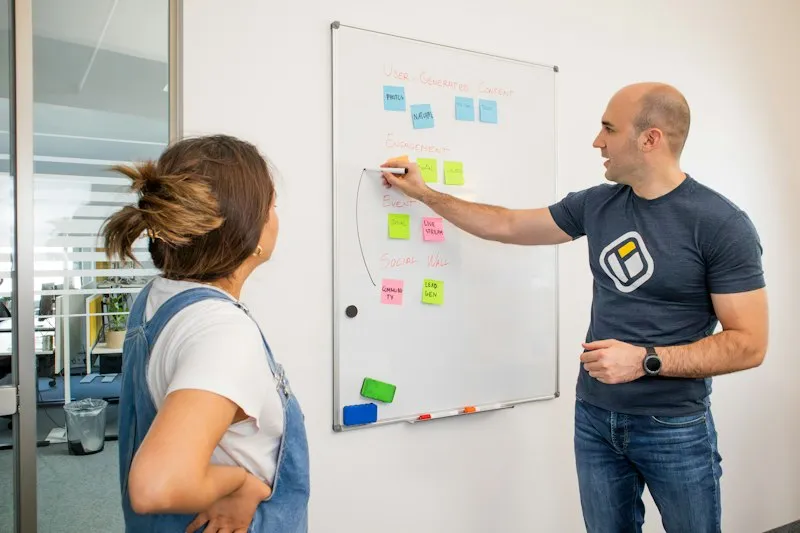
You can set clear team norms that separate the person from the problem. This means agreeing as a group that it's okay to challenge ideas, but not to attack the person presenting them. You might create a shared guideline: "When we disagree, we focus on the issue, not the individual." This can be reinforced by a leader modeling this behavior and gently reminding the team when discussions start to veer into personal territory.
Research does not directly test this exact norm-setting practice in team conflict. However, it is consistent with findings that intragroup trust buffers the task-to-relationship conflict link by reducing the likelihood of misattribution. Studies also show that low-trust teams are more prone to this escalation, suggesting that explicit norms could serve as a trust substitute in the moment. The evidence is indirect, but leaders can use this approach as a proactive strategy.
Take it further
Your Team's Patterns
Thinking of a recent team disagreement that escalated, what might have been the earliest moment where a different interpretation could have changed the direction?
Talk it out
Talk It Over
Have you ever been in a team where a disagreement over work turned into a personal conflict, and how did people react when it happened?
References
Sources & evidence
4 research papers informed this article. The numbers beside each section link here, and each DOI opens the original paper.
Source 1:Competing hypotheses analyses of the associations between group task conflict and group relationship conflict
Choi, Kyoosang, Cho, Bongsoon (2010). Competing hypotheses analyses of the associations between group task conflict and group relationship conflict. DOI 10.1002/job.733
DOI 10.1002/job.733articleSource 2:Task conflict and relationship conflict in top management teams: The pivotal role of intragroup trust.
Simons, Tony L., Peterson, Randall S. (2000). Task conflict and relationship conflict in top management teams: The pivotal role of intragroup trust.. DOI 10.1037/0021-9010.85.1.102
Source 3:The paradox of intragroup conflict: A meta-analysis.
de Wit, Frank R. C., Greer, Lindred L., Jehn, Karen A. (2012). The paradox of intragroup conflict: A meta-analysis.. DOI 10.1037/a0024844
DOI 10.1037/a0024844articleSource 4:Task Conflict snd Relationship Conflict in Top Management Teams:The Pivotal Role of Intragroup Trust.
SIMONS, TONY L., PETERSON, RANDALL S. (1998). Task Conflict snd Relationship Conflict in Top Management Teams:The Pivotal Role of Intragroup Trust.. DOI 10.5465/apbpp.1998.27667017
Next read
Keep reading
 MomentsWhy do some team fights feel personal and others about the work?Understand why a task disagreement can feel like a personal attack and learn a quick technique to keep team conflict focused on the work.3 min read
 DecisionWhy Is There So Much Tension and Arguing Within Our Team?Explore three strategies to address team tension and arguing, from low to high effort, with clear trade-offs based on your current capacity.3 min read
 ExplainerAssessing Intragroup ConflictIntragroup conflict is assessed by distinguishing task vs. relationship conflict, considering trust, origins, and evolution over time.6 min read
 How-toHow to Tell If a Team Fight Is About the Task or About UsLearn how to distinguish task conflict from relationship conflict in your team, using indicators researchers have identified.3 min read
 DecisionWhy Do Disagreements in My Team Sometimes Turn Into Personal Attacks?Three ways to respond when a work disagreement becomes personal, each with different immediate effort and trade-offs.3 min read
 ExplainerWhat Is Relationship Conflict?Relationship conflict is interpersonal incompatibility causing friction and reduced team performance.5 min read