
Ways to Argue Without Hurting Your Relationship
Compare three evidence-informed practices for arguing with a partner while protecting your relationship.
The question
How can I argue with my partner without hurting our relationship?

Overview
When you argue with a partner, the way you handle the disagreement can either protect or damage your relationship. Three distinct practices drawn from research on conflict resolution offer a starting point: focusing on the task at hand rather than the person, using an integrative collaborative approach to address hurt feelings, and leveraging supportive relationships to change expectations. The evidence does not establish that any single practice fits every couple or situation.
These approaches come from studies of teams and couples, and their effects depend on factors like the type of conflict you are facing and your willingness to try something new. None of them promises a perfect outcome, and some require another person's involvement or personal motivation. As you read, consider which approach fits the specific arguments you are navigating now.
Focus on the Task, Not the Person

When you feel tension rising, try steering the conversation toward the task-related content of the issue rather than your partner's personality or past behaviors. For example, if you disagree about how to spend the weekend, focus on the activity details and logistics instead of saying your partner always ignores your interests. This approach asks you to stay calm enough to discuss the concrete topic at hand while acknowledging your partner's contributions without engaging negative behavior. It r
Research on high-performing, high-satisfaction teams found that they resolve relationship conflict by focusing on task content rather than interpersonal differences. They discuss and debate to create a shared understanding and strategically ignore bad behavior to avoid disruption. This evidence comes from team contexts, not romantic couples, and the same dynamics may play out differently in intimate relationships. The practice does not promise to eliminate hurt feelings, but offers a structured
Resolve Hurt Collaboratively
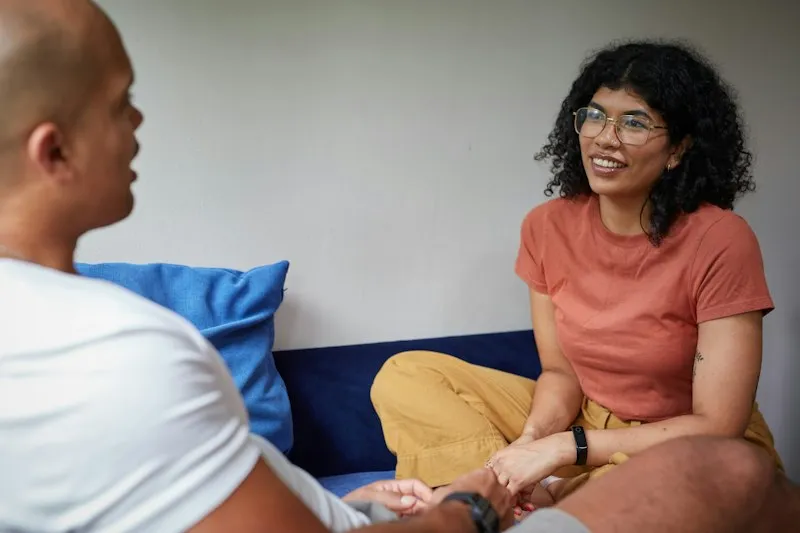
If an argument seems rooted in hurt feelings or relationship strain, you might try an integrative approach: work together with your partner to find a solution that addresses everyone's concerns, rather than pushing your own agenda or avoiding the issue entirely. This means listening to your partner's perspective, sharing your own openly, and brainstorming options that incorporate both views. This practice asks for time and a willingness to set aside winning the argument to preserve the relations
Studies of global virtual teams indicate that relationship conflict should be resolved integratively to avoid harmful effects on performance, such as low cohesion and a sense of the team not working well together. Avoiding or forcing a resolution leaves these negative effects in place. The research focused on teams, not couples, and does not establish that collaboration works the same way in every relationship. However, the idea of working together on the conflict itself is a concrete alternativ
Seek Supportive Connections

If you frequently expect rejection from your partner and find yourself reacting with hostility or defensiveness, leaning on a supportive outside relationship might help you change those patterns. That could mean talking to a trusted friend, a family member, a mentor, or even a therapist who can help you develop less harsh explanations for your partner's behavior and learn more adaptive conflict skills. This practice does require another person who is capable of offering effective guidance and en
Research on rejection sensitivity suggests that supportive relationships can fundamentally alter people's anxieties about rejection, but this change is unlikely unless you are highly motivated and the person supporting you can provide effective guidance. The evidence comes from studies of rejection sensitivity, not from a direct test of couples conflict. It does not guarantee a reduction in arguments, but points to the potential value of having someone outside the relationship who can help you s
Take it further
Finding Your Starting Point
Which of these approaches feels most possible to try in your next disagreement, and what might make that attempt easier for you?
Talk it out
Talking About It
Have you ever tried a different way of arguing that felt better for both of you?
References
Sources & evidence
4 research papers informed this article. The numbers beside each section link here, and each DOI opens the original paper.
Source 1:The Role of Conflict Resolution in Teams - An Empirical Study
Mukherjee, Sanjukta (2012). The Role of Conflict Resolution in Teams - An Empirical Study. DOI 10.2139/ssrn.2191886
DOI 10.2139/ssrn.2191886articleSource 2:Implications of rejection sensitivity for intimate relationships.
Geraldine Downey, Scott I. Feldman (1996). Implications of rejection sensitivity for intimate relationships.. DOI 10.1037/0022-3514.70.6.1327
Source 3:Conflict and Performance in Global Virtual Teams
Kankanhalli, Atreyi, Tan, Bernard C.Y., Wei, Kwok-Kee (2006). Conflict and Performance in Global Virtual Teams. DOI 10.2753/mis0742-1222230309
Source 4:A Qualitative Analysis of Conflict Types and Dimensions in Organizational Groups
Jehn, Karen A. (1997). A Qualitative Analysis of Conflict Types and Dimensions in Organizational Groups. DOI 10.2307/2393737
DOI 10.2307/2393737article
Next read
Keep reading
 MomentsHow do I stop disagreements at work from becoming personal?When a work disagreement starts to feel like a personal attack, see why trust matters and try one separating statement to reset the conversation.3 min read
- DecisionHow to Argue About Ideas Without Hurting the RelationshipThree strategies for debating ideas while preserving your relationship. Compare low, moderate, and high effort options based on conflict research.3 min read
 ExplainerUnderstanding Relationship ConflictRelationship conflict arises when disagreements are seen as personal attacks. Learn what it is, how it differs from task conflict, and ways teams address it.5 min read
 How-toHow to Tell If a Team Fight Is About the Task or About UsLearn how to distinguish task conflict from relationship conflict in your team, using indicators researchers have identified.3 min read
 DecisionHow to Tell if You're Fighting About the Task or About Each OtherLearn to distinguish task conflict from relationship conflict in your team disagreements and choose a strategy based on your current capacity.4 min read
 ExplainerTask-Focused Team FunctioningTask-focused team functioning refers to processes and states teams use to accomplish their work, including planning, coordination, and collective efficacy.5 min read