
Can't stop checking my phone when I should be working
If you keep picking up your phone during work, you're not lazy. Learn why it happens and one concrete tool to break the cycle in under two minutes.
Sound familiar?
You sit down to work, but your hand reaches for your phone before you even decide to.

Overview
If you keep checking your phone during work, you're not lacking willpower - your brain is following a learned cue. The fastest way to stop is to change what your phone signals to you, not to rely on self-control alone.
Phone checking often becomes an automatic habit: a beep, a glance, or even boredom triggers the behavior without conscious thought. The good news is you can break this loop in about 30 seconds by using stimulus control - removing the cues that trigger the habit so your brain no longer gets the signal to check.
Why your phone keeps pulling you in

Habits form when you repeat a behavior in the same context until it becomes automatic. Over time, cues in your environment - like the phone on your desk, a notification buzz, or even the feeling of boredom - directly trigger the checking response without you deciding to do it. This is why you can look up from work and realize you've already unlocked your phone without remembering the moment you decided to.
The phone has become a powerful cue for a deeply practiced routine. Your brain has learned that picking up the phone provides a small reward (a message, a scroll) that feels good in the moment, even if it derails your work. That's exactly how automatic habits work: they're efficient but often at odds with your goals.
One tool: Remove the cue in 30 seconds
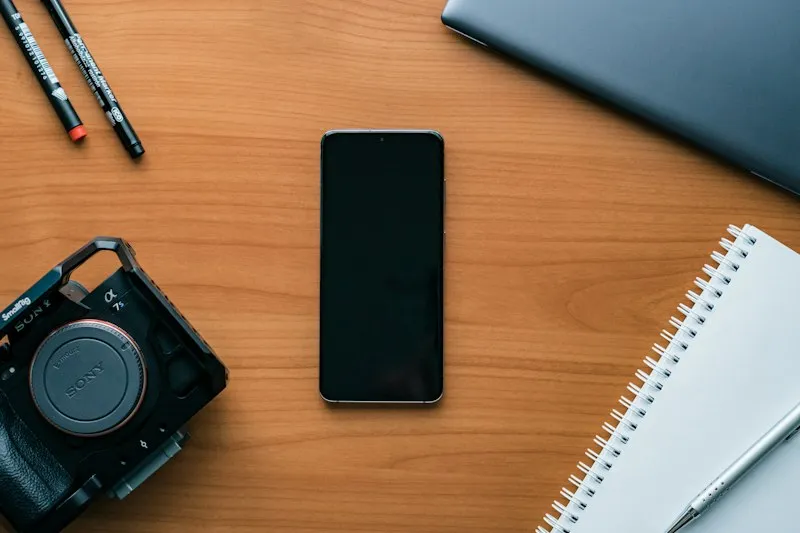
Stimulus control means changing your environment so the cue for checking isn't there. You don't need to strengthen willpower - you just need to make it harder for the habit to start. The simplest move: put your phone in another room, a drawer, or face down with the ringer off before you begin work. When the phone is out of sight and out of easy reach, the cue that usually triggers the habit is gone, and you won't have to fight the impulse moment by moment.
Studies show that training in stimulus control leads to longer study periods, and working in a space free of tempting cues improves productivity. You can test this right now: silence notifications, move the phone away, and see how long you stay focused without the automatic pull.
Where are you
What feels closest to your situation right now?
Pick the situation that feels closest and bring it into a private reflection in Mneno.
Not sure? Start here:Help me understand this situation and choose one constructive next step.
- My phone is always on my desk while I workHelp me think about small changes to where I keep my phone during work.
- I check my phone without realizing I'm doing itHelp me understand how automated my phone use has become.
- I'm afraid I'll miss something important if I put it awayHelp me weigh the real cost of missing notifications against my focus.
References
Sources & evidence
3 research papers informed this article. The numbers beside each section link here, and each DOI opens the original paper.
Source 1:Psychology of Habit
Wood, Wendy, Rünger, Dennis (2016). Psychology of Habit. DOI 10.1146/annurev-psych-122414-033417
Source 2:Adolescent Brain Development: A Period of Vulnerabilities and Opportunities. Keynote Address
DAHL, RONALD E. (2004). Adolescent Brain Development: A Period of Vulnerabilities and Opportunities. Keynote Address. DOI 10.1196/annals.1308.001
articleSource 3:Examining Procrastination Across Multiple Goal Stages: A Longitudinal Study of Temporal Motivation Theory
Steel, Piers, Svartdal, Frode, Thundiyil, Tomas, Brothen, Thomas (2018). Examining Procrastination Across Multiple Goal Stages: A Longitudinal Study of Temporal Motivation Theory. DOI 10.3389/fpsyg.2018.00327
article
Keep reading
 DecisionWhy Do Certain Places or Times Make Me Automatically Procrastinate?Understand how environmental cues trigger automatic procrastination and compare three strategies to respond based on your current capacity for effort.4 min read
 TechniquesWhy can't I stop checking my phone even when I need to focus?Understand the pull of phone checking and compare simple ways to reduce distractions and improve focus.2 min read
 How-toWhy can't I stop reaching for my phone when I need to work?Phone checking during work is often an automatic habit triggered by environmental cues. Learn how to identify and change these cues to reduce distraction.3 min read
 ExplainerStimulus ControlStimulus control means changing environmental cues to reduce procrastination and make desired behaviors automatic.6 min read
 ExplainerUnderstanding Cognitive Behavioral TherapyLearn what cognitive behavioral therapy (CBT) is, how it works, its applications in procrastination, insomnia, and anxiety, and how it can be delivered via5 min read
- TechniquesComparing Practices to Stay Focused While StudyingCompare three evidence-based practices for managing distraction while studying: stimulus control, self-regulation training, and emotion regulation skills.3 min read