

Cognitive behavioral therapy (CBT) is a structured psychological treatment that focuses on the connections between thoughts, feelings, and behaviors. It works by helping people identify and change dysfunctional thoughts and beliefs, replacing them with more realistic and helpful ones, which in turn can alter behavior and emotional responses.
CBT is used for a range of conditions, including procrastination, anxiety, depression, and chronic pain-related sleep problems. Research shows that CBT can be adapted for different delivery methods, such as group sessions, individual therapy, and even fully automated conversational agents. While many studies report positive outcomes, results can vary depending on the condition, delivery mode, and the specific techniques used.
How CBT Works

At its core, CBT targets the link between thoughts, feelings, and behavior by identifying dysfunctional thoughts and replacing them with functional ones. For example, in treating procrastination, therapy often includes exploring procrastination patterns, challenging irrational beliefs like perfectionism or low self-efficacy, and then working to change the behavior itself.
Two key techniques within CBT are cognitive restructuring and exposure therapy. Cognitive restructuring involves examining the evidence for and against automatic thoughts, considering alternative perspectives, and developing more balanced thinking. Exposure therapy, a core component for anxiety disorders, systematically confronts feared stimuli in a safe, controlled manner, helping the person learn that feared outcomes are unlikely or manageable. These techniques are often used together to address both the cognitive and behavioral aspects of a problem.
Take it further
Talking About Therapy
Have you ever discussed therapy options with someone who could help you decide what might work best?
Reflect in Mneno
CBT for Procrastination

CBT has been specifically studied as an intervention for procrastination, which is often driven by irrational beliefs and avoidance. In a meta-analysis comparing different intervention types, cognitive-behavioral therapy showed the largest reduction in procrastination, with a statistically significant association indicating a strong effect (B = -0.45, p = 0.02).
Beyond these aggregate results, CBT for procrastination was associated with less heterogeneity across studies, suggesting its effects are more consistent compared to other approaches. The therapy typically includes behavioral experiments designed to build tolerance for discomfort, helping individuals reduce avoidance and become more willing to engage in tasks they have been putting off.
CBT for Sleep and Pain

CBT is also effective for improving sleep, particularly in the context of chronic pain. In a study of patients with ankylosing spondylitis, CBT produced significant improvements on all outcome measures, including pain-related sleep problems. Effect sizes for sleep improvement were .41 at post-treatment and .62 at follow-up, while pain improvement effect sizes were .40 and .86, respectively.
A more specific approach, cognitive behavioral therapy for insomnia (CBT-I), has been applied to chronic pain conditions. In a trial with 60 chronic pain patients, a 7-session group CBT-I protocol-including stimulus control, sleep restriction, sleep hygiene education, and relaxation training-significantly improved sleep latency, wake after sleep onset, sleep efficiency, and sleep quality at post-treatment, with gains maintained at 3 months. Pain severity showed a trend toward greater reduction in the CBT group (effect size 0.56 at 3 months) compared to a waitlist control (0.15).
Digital CBT Delivery
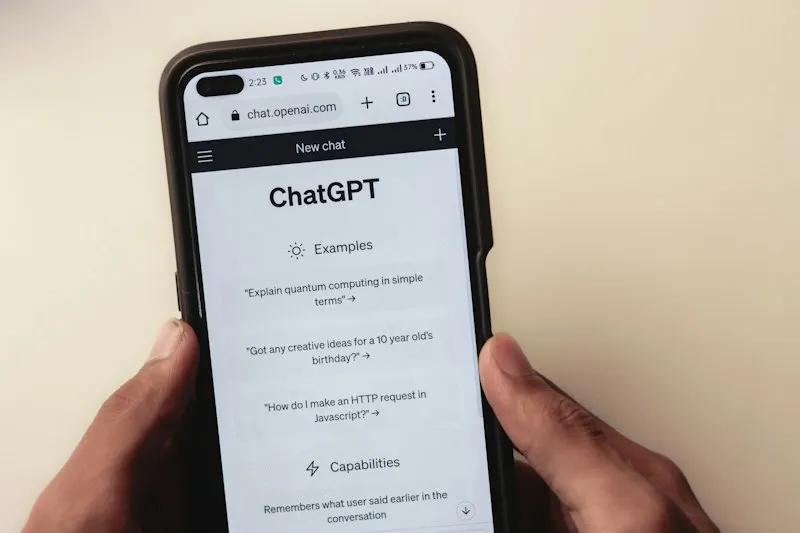
CBT is increasingly being delivered through technology, including fully automated conversational agents. A study using a text-only chatbot called Woebot showed that such agents are feasible in delivering CBT to significantly reduce self-reported anxiety and depression in young adults with symptoms of depression and anxiety.
Mental health chatbots represent a potential future for therapy, with pilot randomized controlled trials demonstrating that fully automated conversational agents can promote mental well-being. These digital approaches could expand access to CBT, though research is still emerging and the long-term effectiveness and limitations compared to traditional face-to-face therapy are areas of ongoing investigation.
FAQ
Common questions
Each answer is linked to its research.
What is cognitive restructuring and how does it help?
Cognitive restructuring is a technique used within CBT to identify and challenge maladaptive thoughts and beliefs. The person learns to examine the evidence for and against their automatic thoughts, consider alternative perspectives, and develop more balanced, realistic thinking. This process helps reduce emotional distress and improve problem-solving. For instance, someone who procrastinates might have a thought like 'I must do this perfectly or it's a failure.' Through cognitive restructuring, they can challenge that belief and develop a more flexible, realistic standard.
SourcesS12All sources
Can exposure therapy be used for all anxiety disorders?
Exposure therapy is a core component of cognitive-behavioral treatment for anxiety disorders, but its application depends on the specific disorder and the individual's needs. It involves systematic confrontation of feared stimuli or situations in a safe, controlled manner. The exposure can be imaginal (vividly imagining the fear) or in vivo (real-life), and is typically conducted in a graduated hierarchy from least to most anxiety-provoking. While it is widely used and effective for many anxiety disorders, the specific protocol may vary, and it should be tailored by a trained professional.
SourcesS11All sources
How effective is CBT-I for chronic pain patients?
In a trial with 60 chronic pain patients, a 7-session group CBT-I protocol significantly improved sleep latency, wake after sleep onset, sleep efficiency, and sleep quality at post-treatment, with effect sizes around 0.80. Gains were maintained at 3 months. Pain severity showed a trend toward greater reduction in the CBT group (effect size 0.56 at 3 months) compared to a waitlist control (0.15). These findings suggest that CBT-I can be beneficial for improving sleep in chronic pain, and may also have some positive impact on pain, though the pain reduction effect was less pronounced and only a trend.
SourcesS6All sources
Next read
Keep reading
Nearby guides picked by the editors of this article.
 MomentsCan't stop checking my phone when I should be workingIf you keep picking up your phone during work, you're not lazy. Learn why it happens and one concrete tool to break the cycle in under two minutes.2 min read
 DecisionWhy Do Certain Places or Times Make Me Automatically Procrastinate?Understand how environmental cues trigger automatic procrastination and compare three strategies to respond based on your current capacity for effort.4 min read
 How-toWhy can't I stop reaching for my phone when I need to work?Phone checking during work is often an automatic habit triggered by environmental cues. Learn how to identify and change these cues to reduce distraction.3 min read
 TechniquesWhy can't I stop checking my phone even when I need to focus?Understand the pull of phone checking and compare simple ways to reduce distractions and improve focus.2 min read
 ExplainerStimulus ControlStimulus control means changing environmental cues to reduce procrastination and make desired behaviors automatic.6 min read
 How-toHow to Break a Big Goal Into Smaller StepsBreak a large goal into attainable starting steps and near-term targets, and make a first action smaller if it still feels too difficult.2 min read
References
Sources & evidence
4 research papers informed this article. The numbers beside each section link here, and each DOI opens the original paper.
Source 1:Overcoming procrastination? A meta-analysis of intervention studies
van Eerde, Wendelien, Klingsieck, Katrin B. (2018). Overcoming procrastination? A meta-analysis of intervention studies. DOI 10.1016/j.edurev.2018.09.002
Source 2:Chatbots and Conversational Agents in Mental Health: A Review of the Psychiatric Landscape
Vaidyam, Aditya Nrusimha, Wisniewski, Hannah, Halamka, John David, Kashavan, Matcheri S., et., al. (2019). Chatbots and Conversational Agents in Mental Health: A Review of the Psychiatric Landscape. DOI 10.1177/0706743719828977
articleSource 3:Network Analysis: An Integrative Approach to the Structure of Psychopathology
Denny Borsboom, Angélique O. J. Cramer (2013). Network Analysis: An Integrative Approach to the Structure of Psychopathology. DOI 10.1146/annurev-clinpsy-050212-185608
Source 4:How do sleep disturbance and chronic pain inter-relate? Insights from the longitudinal and cognitive-behavioral clinical trials literature
Smith, Michael T, Haythornthwaite, Jennifer A (2004). How do sleep disturbance and chronic pain inter-relate? Insights from the longitudinal and cognitive-behavioral clinical trials literature. DOI 10.1016/s1087-0792(03)00044-3