
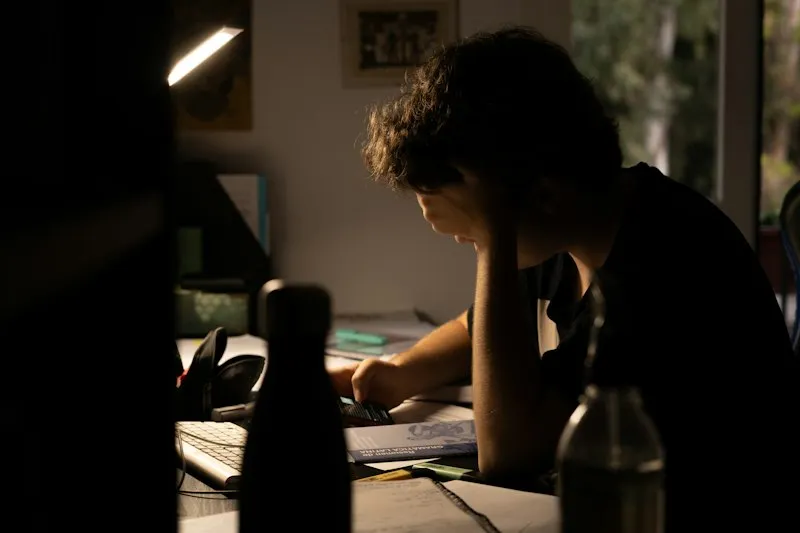
Academic procrastination-unnecessarily delaying tasks like studying or writing papers despite expecting negative consequences-has measurable costs for students. These costs show up in the quality of work, in grades, and in emotional well-being, and they tend to grow as deadlines approach.
Research has tracked how delay affects students over a semester, revealing a pattern of short-term relief followed by longer-term harm. While procrastinators may feel less stress early on, that advantage fades, leaving them with worse outcomes by the end of the term.
How Delay Hurts Academic Performance

Students who procrastinate report that their work quality suffers, making it harder to reach their academic goals. In surveys, procrastinators link their delay to lower-quality papers and projects, and to missed opportunities for revision or deeper learning.
The consequences can be severe. Some students, particularly those with learning disabilities who chronically delay, report dropping or failing courses as a direct result of procrastination. Even for typical college students, the pattern of delay is associated with worse grades and lower achievement overall.
Take it further
Opening the Conversation
What has your experience been with putting off assignments or studying-have you noticed any benefits or costs?
Reflect in Mneno
The Emotional Toll of Procrastination

Beyond grades, delay carries emotional costs. Students describe feeling anxious, helpless, regretful, embarrassed, or sad about their procrastination. Researchers measure this emotional cost using scales that capture feelings like stress, frustration, and worry about academic effort.
The emotional pattern is complex: early in a semester, procrastinators often report less stress and fewer health symptoms, which may reinforce the habit. But later, those same students experience more stress and more health problems than their non-procrastinating peers. The apparent short-term benefit gives way to a larger long-term cost.
Why the Costs Change Over Time
The shifting costs of procrastination-lower stress early, higher stress later-help explain why delay can be so persistent. The early relief feels rewarding, making it harder to change the behavior. But longitudinal research shows that the benefits are temporary; by the time exams and final projects are due, procrastinators pay a price for their earlier delay.
This pattern is not just about academic tasks. The same research links later stress and health effects to earlier procrastination, suggesting that delay in one area can spill over into general well-being. The total cost is not just a lower grade but a worse overall experience of the semester.
What Kinds of Tasks Are Affected?

Procrastination shows up across a range of academic tasks. Researchers measure delay using instruments like the Procrastination Assessment Scale-Students, which asks about writing papers, studying for exams, reading assignments, administrative tasks, attending meetings, and other schoolwork.
Some delay is linked to broader student motivations. Students who prioritize well-being over achievement tend to procrastinate more, preferring leisure activities to studying. And those who feel externally pushed toward tasks (rather than intrinsically motivated) are also more likely to delay, regardless of the specific task.
FAQ
Common questions
Each answer is linked to its research.
Is procrastination the same as laziness?
No. Procrastination involves voluntarily delaying a task despite expecting to be worse off because of the delay-a pattern that often includes emotional distress. Laziness implies a lack of intention to act, while procrastinators intend to start but struggle to follow through. The two concepts are not directly compared in the research provided.
SourcesS12All sources
Does procrastination ever have a positive side?
There is a potential short-term benefit: students who procrastinate tend to report less stress and fewer health symptoms early in a semester. But those effects reverse later, when procrastinators end up with more stress and health problems than others. The overall academic and emotional costs outweigh the temporary relief.
SourcesS2S4All sources
Can technology help reduce the costs of procrastination?
Technology usability may play an indirect role. When students perceive course technology as easy to use, they tend to feel more capable and less stressed about effort. This could reduce one factor that contributes to delay, but the research does not show that usability alone prevents procrastination or its costs.
SourcesS10All sources
Next read
Keep reading
Nearby guides picked by the editors of this article.
 TechniquesThree Ways to Use Classroom Support More EffectivelyLearn three practices from mentoring research to help you engage with available support in school or university settings.3 min read
 ExplainerAcademic and Cognitive Effects of Academic ProcrastinationAcademic procrastination undermines learning strategies and academic performance, with effects on cognitive and affective well-being.4 min read
 ExplainerWhat Are Academic Costs?Academic costs are the psychological and practical burdens of pursuing education, including stress, anxiety, procrastination, and financial strain.5 min read
 TechniquesAcademic Help Outside the Classroom: Comparing ApproachesCompare peer mentoring, mentor utilization, and help-seeking strategies to find academic support outside the classroom.2 min read
 TechniquesWhy You Might Doubt Your Ability to Succeed in Your StudiesDoubt in your studies may reflect task-specific confidence gaps, not a fixed limit. Compare practical ways to examine and build academic self-efficacy.4 min read
 TechniquesWhy Do I Always Postpone Studying?Explore why studying often gets delayed until the last minute, examining motivation and perfectionism as key factors, and compare approaches to understand your3 min read
References
Sources & evidence
4 research papers informed this article. The numbers beside each section link here, and each DOI opens the original paper.
Source 1:Procrastination and Motivation of Undergraduates with Learning Disabilities: A Mixed‐Methods Inquiry
Klassen, Robert M., Krawchuk, Lindsey L., Lynch, Shane L., Rajani, Sukaina (2008). Procrastination and Motivation of Undergraduates with Learning Disabilities: A Mixed‐Methods Inquiry. DOI 10.1111/j.1540-5826.2008.00271.x
Source 2:Perfectionism, procrastination, and psychological distress.
Rice, Kenneth G., Richardson, Clarissa M. E., Clark, Dustin (2012). Perfectionism, procrastination, and psychological distress.. DOI 10.1037/a0026643
articleSource 3:Why college students procrastinate in online courses: A self-regulated learning perspective
Cheng, Sheng-Lun, Xie, Kui (2021). Why college students procrastinate in online courses: A self-regulated learning perspective. DOI 10.1016/j.iheduc.2021.100807
Source 4:Understanding procrastination: A motivational approach
Grund, Axel, Fries, Stefan (2018). Understanding procrastination: A motivational approach. DOI 10.1016/j.paid.2017.09.035