

The ability to meet deadlines is a strong indicator of procrastination reversal. In research on active procrastination, this ability is the reversed complement of traditional procrastination measures, meaning that people who can meet deadlines tend not to procrastinate passively.
This skill is one of four features proposed for active procrastination, along with preference for pressure, intentional decision, and outcome satisfaction. Studies show it consistently relates to academic achievement, though the effect may be explained by other factors.
How Deadline Ability Is Measured
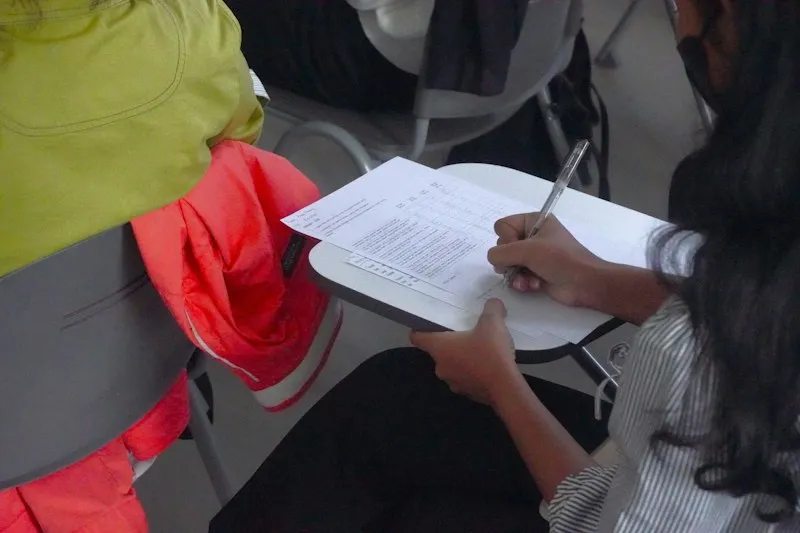
Researchers measure this ability using a subscale of the Active Procrastination Scale (APS), a 16-item questionnaire with a 7-point Likert scale. The subscale asks about your tendency to meet deadlines, and some items are reverse coded to reduce response bias.
Because the ability-to-meet-deadlines subscale correlates strongly and negatively with conventional procrastination scales (correlations from -0.54 to -0.86), it functions mainly as a reversed measure of procrastination rather than a separate component of purposeful delay.
Take it further
Talking About Procrastination
How do you usually handle deadlines, and what helps you meet them?
Reflect in Mneno
What It Predicts for Academic Achievement

Across studies, the ability to meet deadlines is the APS subscale most consistently and positively related to student achievement. For example, in a study of first-semester GPA, the positive effect of active procrastination was entirely driven by this subscale, while preference for pressure and intentional decision showed no significant relation.
However, when other covariates are controlled, the positive effect of deadline ability often becomes non-significant. This suggests that the apparent benefit may be explained by other factors, such as conscientiousness or self-efficacy, rather than by the ability itself.
How It Relates to Personality and Motivation

The ability to meet deadlines is associated with openness to experience and conscientiousness. Students high in openness may find ways to reach their goals, while conscientious students may deliberately manage their behavior to achieve goals even when they postpone tasks.
In addition, among students with high self-efficacy, higher task value is linked to a greater ability to meet deadlines. This suggests that feeling confident and seeing value in the task can support deadline meeting, but these effects are conditional and do not apply to everyone.
What It Does Not Show About Purposeful Delay

The ability to meet deadlines does not support the idea that preferring pressure or intentionally deciding to delay improves outcomes. Studies find no evidence that those aspects of active procrastination are linked to later grades.
Instead, the ability to meet deadlines reflects a tendency to work ahead of deadlines rather than simply delay work. This distinction matters because it shows that overcoming procrastination is not about embracing pressure, but about reliably completing tasks on time.
FAQ
Common questions
Each answer is linked to its research.
What is the difference between active and passive procrastination?
Active procrastination is intentional delay that people choose on purpose and still use productively before deadlines. Passive procrastination is harmful delay caused by difficulty deciding or acting in time. The ability to meet deadlines is part of active procrastination, but it is negatively correlated with passive procrastination measures, so it essentially reflects the opposite of procrastination.
SourcesS12S1All sources
Can self-efficacy explain why some people procrastinate?
Self-efficacy alone does not distinguish procrastinator types, but higher self-efficacy is positively associated with active procrastination. Some students may delay tasks because they feel confident they can meet deadlines under time pressure. The effect of self-efficacy on task initiation depends on whether ability and motivation are adequate.
SourcesS11All sources
Does the ability to meet deadlines guarantee better grades?
No. Although the ability to meet deadlines is the subscale most consistently and positively related to achievement, the positive effect often becomes non-significant after controlling for other factors. This means other characteristics, such as personality or motivation, may account for the relationship, so deadline ability alone does not ensure academic success.
SourcesS4All sources
Next read
Keep reading
Nearby guides picked by the editors of this article.
 MomentsWhy do I keep putting off important tasks until the last minute?If you're delaying a task right now, you're not lazy. This is about avoiding anxiety. Use a simple 2-minute start to break the cycle.2 min read
 DecisionWhat Are the Real Risks of Delaying Tasks?Explore the trade-offs of procrastination: academic risks, time pressure, and how to choose a response based on your current capacity.4 min read
 How-toHow to Measure How Much Procrastination Affects Your SchoolworkUse the Procrastination Assessment Scale-Students (PASS) to rate how often you delay academic tasks and how much it is a problem.4 min read
 TechniquesComparing Techniques for Understanding Procrastination FrequencyExplore distinct practices to examine why you may procrastinate more than others, considering how gender might relate to self-regulation strategies.3 min read
 TechniquesUnderstanding Why You Avoid Math Homework Despite Knowing the ConsequencesThis article explores why you avoid math homework even when you know it will cause later regret, focusing on mood repair and short-term emotion regulation.3 min read
 TechniquesUnderstanding the Doubt That Blocks Follow-ThroughExplore techniques to address self-doubt about following through on goals, based on research on self-efficacy and self-regulation.3 min read
References
Sources & evidence
4 research papers informed this article. The numbers beside each section link here, and each DOI opens the original paper.
Source 1:Purposeful delay and academic achievement. A critical review of the Active Procrastination Scale
Pinxten, Maarten, De Laet, Tinne, Van Soom, Carolien, Peeters, Christine, et., al. (2019). Purposeful delay and academic achievement. A critical review of the Active Procrastination Scale. DOI 10.1016/j.lindif.2019.04.010
Source 2:The role of personality traits and need for cognition in active procrastination
Zhou, Mingming (2019). The role of personality traits and need for cognition in active procrastination. DOI 10.1016/j.actpsy.2019.102883
Source 3:Examining ‘active’ procrastination from a self-regulated learning perspective
Cao, Li (2012). Examining ‘active’ procrastination from a self-regulated learning perspective. DOI 10.1080/01443410.2012.663722
Source 4:Reconsidering active procrastination: Relations to motivation and achievement in college anatomy
Hensley, Lauren C. (2014). Reconsidering active procrastination: Relations to motivation and achievement in college anatomy. DOI 10.1016/j.lindif.2014.10.012