
Comparing Approaches to Low Energy in Daily Routines
Compare three evidence-informed practices for addressing low energy that can make daily routines harder to stick with.
The question
Why do I lack the energy to stick to my daily routines?

Overview
If you lack the energy to stick to daily routines, you may wonder what practical approaches could help. While no single strategy works for everyone, research has examined several practices for understanding and managing this challenge. This article compares three distinct practices-strengthening self-regulation skills, using problem-focused coping for routine tasks, and managing energy depletion-so you can consider which fits your situation.
The evidence comes from studies on learned resourcefulness, procrastination, and self-regulation. The findings suggest associations and potential mechanisms, but they do not prove that any one practice will resolve low energy for you. Use these comparisons as a starting point for exploration, not a prescription.
Strengthening Self-Regulation Skills

This practice involves working on your self-regulation skills-the cognitive abilities that help you delay gratification and tolerate frustration to complete tasks even when you feel like doing something else. You could try activities like gradually extending your focus on a task despite distractions, or using small rewards to push through initial resistance. The key is practicing self-control in manageable doses, not forcing yourself all at once.
Research describes self-regulation (also called learned resourcefulness) as a set of acquired skills that correlate with lower procrastination. However, one daily diary study found that on evenings when employees reported higher self-regulatory resources, they actually reported more bedtime procrastination-contradicting the simple idea that more self-regulation always helps. This suggests that the role of self-regulation may vary by context and time of day.
Problem-Focused Routine Management
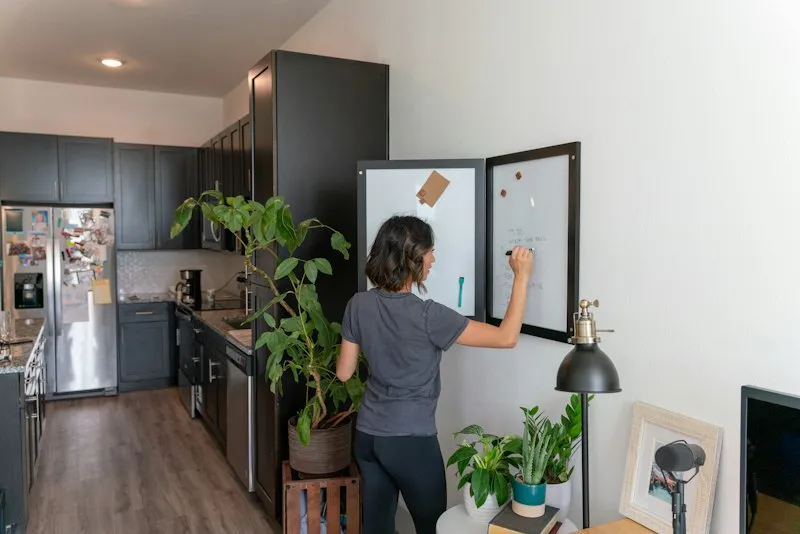
This approach is about choosing realistic goals and handling routine tasks efficiently so your attention can move to more important ends. You could start by identifying one small daily task that feels draining and setting a specific time to do it, without allowing yourself to substitute delay for action. The idea is to reduce the mental load of mundane routines by treating them as straightforward steps to check off, not as sources of stress.
In the research, procrastination is framed as the opposite of effective problem-focused coping because substituting delay for action gets in the way of efficient task management. The evidence does not directly test whether this practice boosts energy, but it suggests that handling routines efficiently could free up mental resources. A key limit: this is a conceptual link, not a tested intervention, so its practical effects are uncertain.
Managing Energy Depletion

This practice focuses on conserving your willpower and energy throughout the day. You might schedule your most demanding routines for times when your energy is naturally higher, or incorporate short breaks to replenish mental resources. Paying attention to tiredness as a signal-rather than pushing through-can help you plan your day around energy dips.
Studies show a strong correlation between low energy and procrastination, with one finding a correlation of 0.68. The theory suggests that willpower is exhaustible: as tiredness increases, self-control diminishes, making you more vulnerable to temptations. However, the research does not show that managing energy depletion directly reduces procrastination or improves routine adherence-it identifies an association, not a causal effect.
Take it further
Your Situations
Which of these practices might fit naturally into your current day, and what makes it feel like a possible next step?
Talk it out
Talk It Over
Have you ever tried a small change to manage your energy around daily routines, and what happened?
References
Sources & evidence
4 research papers informed this article. The numbers beside each section link here, and each DOI opens the original paper.
Source 1:The procrastination of everyday life
Milgram, Norman A., Sroloff, Barry, Rosenbaum, Michael (1988). The procrastination of everyday life. DOI 10.1016/0092-6566(88)90015-3
Source 2:Situational and Personal Determinants of Academic Procrastination
Milgram, Norman A., Dangour, Weizman, Ravi, Amiram (1992). Situational and Personal Determinants of Academic Procrastination. DOI 10.1080/00221309.1992.9921166
Source 3:Examining Procrastination Across Multiple Goal Stages: A Longitudinal Study of Temporal Motivation Theory
Steel, Piers, Svartdal, Frode, Thundiyil, Tomas, Brothen, Thomas (2018). Examining Procrastination Across Multiple Goal Stages: A Longitudinal Study of Temporal Motivation Theory. DOI 10.3389/fpsyg.2018.00327
DOI 10.3389/fpsyg.2018.00327articleSource 4:Why Don’t You Go to Bed on Time? A Daily Diary Study on the Relationships between Chronotype, Self-Control Resources and the Phenomenon of Bedtime Procrastination
Kühnel, Jana, Syrek, Christine J., Dreher, Anne (2018). Why Don’t You Go to Bed on Time? A Daily Diary Study on the Relationships between Chronotype, Self-Control Resources and the Phenomenon of Bedtime Procrastination. DOI 10.3389/fpsyg.2018.00077
DOI 10.3389/fpsyg.2018.00077article
Next read
Keep reading
 MomentsTired of short-term fixes that never workIf you use distractions to feel better for a moment, the urge is not weakness-it is your mind protecting you.2 min read
 DecisionWhy You Keep Turning to Food When UpsetUnderstand the short-term mood repair trap and compare three strategies to handle emotional eating, each with different trade-offs.3 min read
 ExplainerSelf-Regulation BufferA self-regulation buffer is the ability to compensate for procrastination tendencies and other challenges to follow through on intentions.5 min read
 How-toWhy I Give Up on Goals When Things Get HardExplore why giving up on goals when things get tough relates to self-regulation and learn one supported approach: setting effective subgoals.2 min read
 ExplainerWhat Is the Self-Regulation Framework?Self-regulation is the process of controlling thoughts, emotions, and behaviors to achieve long-term goals.5 min read
 How-toFinding Direction by Setting Clear GoalsLearn how to counter procrastination by setting clear, personally meaningful goals that guide your efforts and keep you on track.3 min read