
Simple Ways to Reduce Work Stress
Compare three evidence-based practices to reduce work stress: breathing relaxation, mindfulness meditation, and emotional expression.
The question
Is there a simple way to reduce my stress from work?

Overview
If you're looking for a simple way to reduce stress from work, several practices can help. This article compares three approaches described in research with healthcare workers: breathing relaxation, mindfulness meditation, and emotional expression. The evidence doesn't show which is best for everyone, so you can consider what fits your situation.
Each practice is described in a short card below. The first paragraph explains what trying it might involve, and the second shares what the research found and its limits. None of these replace professional support if you're experiencing severe distress.
Breathing Relaxation
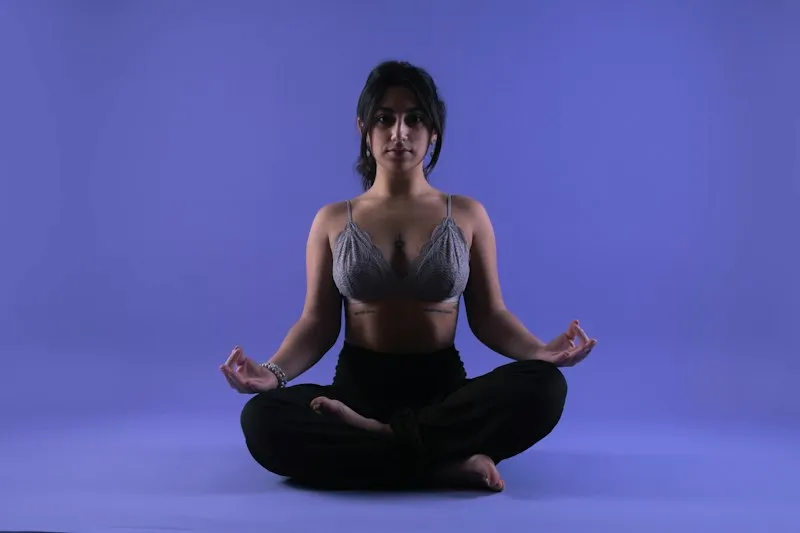
To try breathing relaxation, you can set aside a few minutes to sit quietly and focus on slow, deep breaths. It requires no special equipment and can be done almost anywhere. For example, you might inhale for a count of four, hold briefly, and exhale for a count of four. This is a low-effort practice you can start right away.
In a study of nurses during the COVID-19 pandemic, breathing relaxation was part of a set of techniques used to reduce stress. The study reported that these techniques helped alleviate stress, but it did not compare breathing relaxation alone to other methods. The findings are based on self-report and may not apply to all work settings.
Mindfulness Meditation

Mindfulness meditation involves paying attention to the present moment without judgment. One structured approach is an 8-week program with weekly classes and daily home practice, but you can start with shorter sessions. You might try a body scan or sitting meditation for five or ten minutes a day. A quiet space helps, but a meditation app or audio can guide you.
Research on an 8-week Mindfulness-Based Stress Reduction program found it reduced anxiety and depression in 22 patients with anxiety disorders, with improvements maintained at three months. However, this was a small study without a control group, so the results may be due to other factors. The program requires a significant time commitment, which may not be feasible for everyone.
Emotional Expression

Emotional expression means letting out feelings in a safe way, such as writing in a journal, talking with a trusted friend, or even crying. It doesn't require a set schedule or special tools. You might try writing about a stressful event for a few minutes or simply acknowledging your emotions to yourself. It's a low-effort practice you can adapt to your comfort level.
Among nurses coping with work stress, emotional expression and venting were noted as helpful strategies in a review of self-care approaches. The study did not measure whether this practice alone reduced stress compared to other techniques. As a personal coping method, its effectiveness may depend on the support you receive from others and your own willingness to engage with difficult feelings.
Take it further
Your Situation
Which of these practices feels like a natural first step given your daily schedule and access to a quiet moment?
Talk it out
Talking About Stress
What kind of work situations tend to feel most stressful for you?
References
Sources & evidence
4 research papers informed this article. The numbers beside each section link here, and each DOI opens the original paper.
Source 1:A qualitative study on the psychological experience of caregivers of COVID-19 patients
Sun, Niuniu, Wei, Luoqun, Shi, Suling, Jiao, Dandan, et., al. (2020). A qualitative study on the psychological experience of caregivers of COVID-19 patients. DOI 10.1016/j.ajic.2020.03.018
Source 2:Effectiveness of a meditation-based stress reduction program in the treatment of anxiety disorders
1992. Effectiveness of a meditation-based stress reduction program in the treatment of anxiety disorders. DOI 10.1176/ajp.149.7.936
DOI 10.1176/ajp.149.7.936articleSource 3:Mindfulness training as a clinical intervention: A conceptual and empirical review.
Ruth A. Baer (2003). Mindfulness training as a clinical intervention: A conceptual and empirical review.. DOI 10.1093/clipsy.bpg015
DOI 10.1093/clipsy.bpg015articleSource 4:Mindfulness Meditation for Chronic Pain: Systematic Review and Meta-analysis
Hilton, Lara, Hempel, Susanne, Ewing, Brett A., Apaydin, Eric, et., al. (2016). Mindfulness Meditation for Chronic Pain: Systematic Review and Meta-analysis. DOI 10.1007/s12160-016-9844-2
Next read
Keep reading
 MomentsIs there a way to reduce chronic stress without medication?If you feel stuck in chronic stress, you are not alone. Mindfulness-Based Stress Reduction (MBSR) offers a structured, evidence-based way to lower stress3 min read
 DecisionIs There a Way to Reduce Stress Using Mindfulness?Compare three mindfulness strategies for reducing stress, from low to high effort, and choose what fits your current capacity.3 min read
 ExplainerMindfulness-Based Stress ReductionMindfulness-Based Stress Reduction (MBSR) is an 8-week program teaching mindfulness meditation to help with stress, anxiety, depression, and chronic pain.6 min read
 How-toBreak the Panic-Avoid Cycle with Structured DeadlinesWhy deadlines trigger panic and avoidance, plus how to break the cycle using small, structured deadlines.3 min read
 DecisionWhy do I run out of willpower by the end of the day?Learn about decision fatigue and explore three strategies - reduce decisions, manage energy, or prioritize tasks - to conserve willpower when it runs low.3 min read
 ExplainerMindfulness Meditation and Its BenefitsMindfulness meditation is a practice of focused attention and acceptance. Learn how it can improve mental and physical health based on research.5 min read