
Comparing Ways to Assess Procrastination
Compare three concrete practices for gauging procrastination: tracking real deadlines, noting task-interruption patterns, and using self-report scales.
The question
How do I know if my procrastination is as bad as I think?

Overview
You can check whether your procrastination is as bad as you think by supplementing your own sense of delay with more concrete, observation-based methods. These three practices-tracking actual task-completion times, sampling your behavior as you work, and using validated questionnaires-each offer a different angle on measuring procrastination.
No single approach is proven best for everyone, and each has limits. The evidence below compares what they involve and what research shows about their strengths and weaknesses, so you can consider which feels most useful to try.
Real-Deadline Tracking
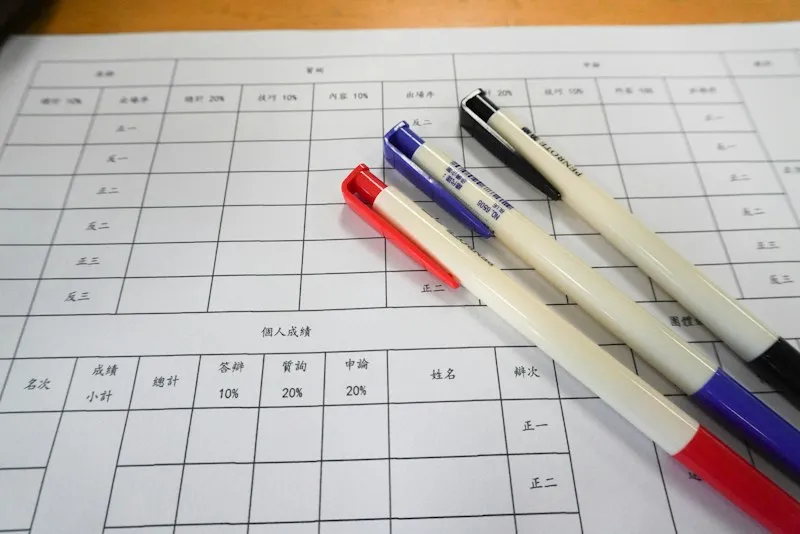
Pick a few recurring tasks with fixed due dates-work assignments, bills, or project milestones-and note the actual time you finish relative to the deadline. You might record the submission or completion time in a spreadsheet or calendar, giving yourself an objective log of how often and how long you delay.
Researchers have measured behavioral procrastination by recording the exact submission times of assignments and comparing them to due dates, treating early and late submissions as continuous scores. This method avoids relying on your memory or self-judgment, but it only captures tasks with clear deadlines, not everything you might put off.
In-the-Moment Sampling

Over several days, set a phone or browser alert to go off a few times a day at random intervals. When it sounds, note what you are doing, whether you intended to be doing something else, and how far along the intended task is. Keep a simple log of these quick check-ins.
This experience-sampling technique captures procrastination as it happens rather than asking you to summarize your behavior weeks later. Research suggests it is better at recording short-term changes and real-time choices than one-time questionnaires. The downside is that it requires several days of responding to alerts and may feel intrusive.
Structured Self-Report Scales

Find a widely used questionnaire such as the General Procrastination Scale, which asks you to rate statements like “I often delay tasks that I need to do” on a scale. You answer based on your typical behavior over the past few months. The score gives you a number to compare to published averages or to your own scores over time.
These scales are quick and easy to complete, but they rely on your subjective judgment and memory for broad habits. Research shows that self-reported procrastination correlates only moderately with actual observed delay, meaning your own score may not match how much you actually put things off limits that the scales' designers acknowledge.
Take it further
Your Fit
Which of these approaches feels most realistic to try in your current week, and what might that choice reveal about your procrastination?
Talk it out
Talk It Over
If you asked a friend or colleague to help you check how often you delay, what would you want them to watch for?
References
Sources & evidence
4 research papers informed this article. The numbers beside each section link here, and each DOI opens the original paper.
Source 1:On the Behavioral Side of Procrastination: Exploring Behavioral Delay in Real-Life Settings
Svartdal, Frode, Granmo, Sjur, Færevaag, Fredrik S. (2018). On the Behavioral Side of Procrastination: Exploring Behavioral Delay in Real-Life Settings. DOI 10.3389/fpsyg.2018.00746
DOI 10.3389/fpsyg.2018.00746articleSource 2:On the Positive Side of Avoidance Motivation: An Increase in Avoidance Motivation Reduces Procrastination among Students
Schödl, Michal M., Raz, Aharon, Kluger, Avraham N. (2018). On the Positive Side of Avoidance Motivation: An Increase in Avoidance Motivation Reduces Procrastination among Students. DOI 10.1111/apps.12147
DOI 10.1111/apps.12147articleSource 3:Comparing effects of active and passive procrastination: A field study of behavioral delay
Wessel, Jason, Bradley, Graham L., Hood, Michelle (2019). Comparing effects of active and passive procrastination: A field study of behavioral delay. DOI 10.1016/j.paid.2018.11.020
Source 4:Understanding the cognitive and genetic underpinnings of procrastination: Evidence for shared genetic influences with goal management and executive function abilities.
Gustavson, Daniel E., Miyake, Akira, Hewitt, John K., Friedman, Naomi P. (2015). Understanding the cognitive and genetic underpinnings of procrastination: Evidence for shared genetic influences with goal management and executive function abilities.. DOI 10.1037/xge0000110
DOI 10.1037/xge0000110article
Next read
Keep reading
 MomentsWhy do I always underestimate how long tasks will take?If you underestimate tasks, you're not alone. Learn why this happens and a quick tool to improve time estimates.3 min read
 DecisionIs It Procrastination or Planning?Learn how to tell if your actions are procrastination or planning. Practical strategies based on behavioral measures.2 min read
- ExplainerProcrastination Scales OverviewProcrastination scales are self-report tools that measure how often or intensely a person delays tasks.6 min read
 How-toHow can I tell if my procrastination is normal or a serious problem?Learn how to distinguish between typical delay and problematic procrastination using simple context-based questions about the pattern's impact and your4 min read
 How-toHow to Tell If Your Phone Scrolling Is Really ProcrastinationCompare your phone use to behavioral measures of delay, such as how often you put off intended tasks, to see if it is procrastination.3 min read
 ExplainerUnderstanding Behavioral Procrastination MeasuresA behavioral procrastination measure tracks actual delay in real-world tasks, such as assignment submission times, rather than relying solely on self-reports.5 min read