
Feeling Down After Certain Coworkers: Comparing Three Practices
Explore three ways to respond when you feel down after being around certain coworkers: widening your focus, brief emotion regulation, and team-based training.
The question
Why do I feel down after being around certain coworkers?

Overview
You might feel down after interacting with some coworkers because emotions can spread between people-a phenomenon called emotional contagion. When you are around someone who is stressed, frustrated, or unhappy, you may pick up on that feeling, especially if you are naturally attuned to others' emotions.
Three approaches supported by research can help you manage these moments: shifting your attention to what is happening around you rather than focusing on the other person's feelings, using brief emotion-regulation techniques to calm your own reaction, and, if the dynamic involves a whole team, participating in training that builds emotional and conflict-management skills. The evidence does not tell us which practice will work best for you; you may find one more natural or effective than others.
Broadening Your Attention

Instead of focusing solely on a coworker who seems upset, you can try widening your attention to include the situation around you-what needs to happen next, what tasks are moving forward, or even the physical environment. This might help you experience the emotion the other person is feeling less intensely, because your attention is not anchored on them.
In an experiment, people who were asked to focus on an object in need rather than on a potential helper reported feeling different emotions (sadness when help was not given, elation when it was). This finding suggests that where you direct your attention influences the emotions you experience. A key limitation is that the study involved a controlled scenario, not everyday coworker interactions, so the effect may vary with real relationships and repeated contact.
Brief Emotion Regulation

If you notice yourself starting to feel down after talking with someone, you can try a short calming technique, such as taking a few slow deep breaths or briefly distracting yourself (for example, by checking in with a neutral task). The idea is to gently lower your arousal before the feeling grows stronger.
Research on emotion regulation suggests that methods like deep breathing, distraction, and mindfulness of breath can help reduce intense emotional states. The same work notes that labeling the emotion you are feeling can be a helpful first step. However, these findings come from clinical and treatment contexts, so their effect on subtle, everyday mood shifts around coworkers is unclear. Also, suppressing feelings altogether may sometimes backfire, making things worse later.
Team Emotional Skills Training
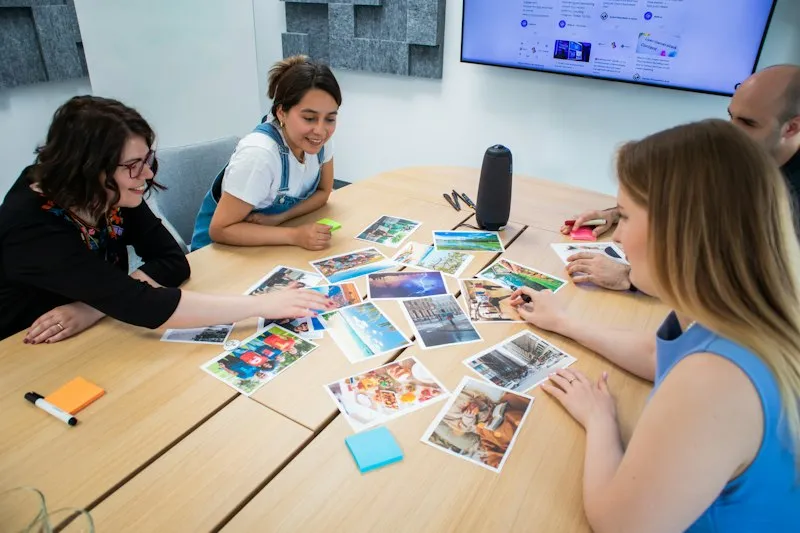
If you sense that a whole team, not just one person, is contributing to a draining emotional atmosphere, you could see whether your workplace offers-or might be open to-training that builds empathy, emotion management, and conflict-management skills together. This is not something you do alone; it typically involves the team learning and practicing new ways of interacting.
Research on team emotional intelligence climate shows that shared norms around empathy and managing emotions shape whether disagreements turn into damaging conflict or remain productive. One recommendation is that teams experiencing destructive reactions to conflict receive skills training. A significant limitation is that this advice is based on a general model, not on a study that tested the effect of such training on the specific feeling of being down after interacting with coworkers.
Take it further
What Fits Your Situation
When you think about the times you feel down after being with certain coworkers, what feels most helpful-finding a different focus in the moment, calming yourself briefly afterward, or exploring a team-based change?
Talk it out
Talk About It
Have you ever noticed that being around certain people can change your own mood, and what do you usually do in that situation?
References
Sources & evidence
4 research papers informed this article. The numbers beside each section link here, and each DOI opens the original paper.
Source 1:Empathy: Its ultimate and proximate bases
Stephanie D. Preston, Frans Β. Μ. de Waal (2002). Empathy: Its ultimate and proximate bases. DOI 10.1017/s0140525x02000018
Source 2:Decoupling task and relationship conflict: the role of intragroup emotional processing
Yang, Jixia, Mossholder, Kevin W. (2004). Decoupling task and relationship conflict: the role of intragroup emotional processing. DOI 10.1002/job.258
DOI 10.1002/job.258articleSource 3:The Influence of Team Emotional Intelligence Climate on Conflict and Team Members' Reactions to Conflict
Ayoko, Oluremi B., Callan, Victor J., Härtel, Charmine E. J. (2008). The Influence of Team Emotional Intelligence Climate on Conflict and Team Members' Reactions to Conflict. DOI 10.1177/1046496407304921
DOI 10.1177/1046496407304921articleSource 4:Emotion-focused psychotherapy.
Greenberg, Leslie S. (2019). Emotion-focused psychotherapy.. DOI 10.1037/0000130-004
DOI 10.1037/0000130-004article
Next read
Keep reading
 MomentsWhy do I catch other people's moods and feel worse afterward?You absorb others' moods automatically through emotional contagion. Here's how to protect yourself without shutting down.3 min read
 DecisionWhy Do I Feel Stressed Just Because My Coworker Is Upset?Feeling stressed because a coworker is upset likely stems from emotional contagion. This article presents three strategies for handling this moment.4 min read
 ExplainerEmotional Contagion: Definition and AwarenessEmotional contagion is the automatic transfer of emotions between people. Awareness helps you recognize and manage this influence in yourself and others.6 min read
 How-toRecognizing Low Distress Tolerance When Stress HitsWhen stress hits, learning to notice low distress tolerance can help you pause before reaching for junk food. Simple awareness is a first step.3 min read
 ExplainerUnderstanding Team Emotion ManagementTeam emotion management helps teams regulate emotions to improve communication, reduce conflict, and boost performance. Learn how it works and why it matters.5 min read
 How-toResponding to Snide Remarks in TeamsLearn evidence-based actions to address snide remarks by focusing on content, discussing decisions, and assigning tasks by expertise.4 min read