

Team emotion management is the capability of a team to manage emotions in oneself and others by moderating negative emotions and enhancing pleasant ones. It enables teams to handle social relationships, communicate proactively, and build a positive emotional climate, which supports better information processing and overall performance.
Research shows that teams with strong emotion management skills experience less task and relationship conflict, lower conflict intensity, and improved information seeking. By fostering collective emotional competencies, teams can prevent disagreements from escalating into damaging interpersonal issues, making emotion management a key factor in effective teamwork.
What Does Team Emotion Management Look Like?
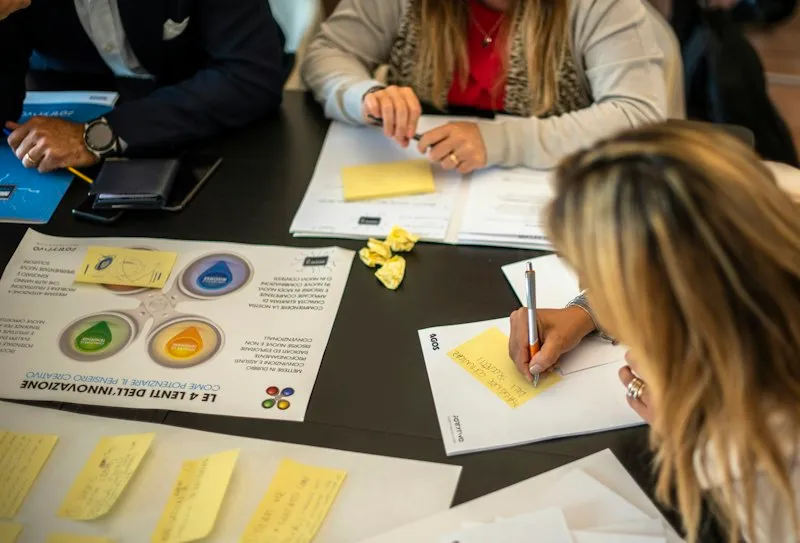
Team emotion management involves both recognizing dysfunctional emotional patterns and developing intervention strategies. For instance, in design teamwork, students can learn to recognize hostile affect patterns such as contempt, criticism, defensiveness, and stonewalling. These patterns are harmful because they can escalate conflict and damage team relationships.
Once these patterns are identified, teams can develop repair strategies to prevent negative behaviors from intensifying. This two-part skill-recognition and intervention-forms the basis of building a team's capacity to manage emotions during conflict. By being aware of emotional responses, group members can prevent minor disagreements from turning into relationship conflicts.
Take it further
Discuss with a Colleague
Have you ever seen a team disagreement escalate into a personal conflict, and what might have helped prevent it?
Reflect in Mneno
How Does Team Emotion Management Affect Team Outcomes?

Teams that are less able to manage their emotions report increased task conflict, relationship conflict, and conflict intensity. This suggests that effective emotion management is directly related to lower levels of conflict and a more harmonious team environment. Emotion management also influences information seeking behavior: teams that manage emotions well are better at inducing and sustaining positive emotions, which facilitates proactive communication and cooperative behaviors.
A study on team emotion management and information seeking found positive effects at both team and individual levels. Team-level emotion management interacted with relationship conflict to influence information seeking, although the pattern varied across time points, indicating that the effects may not be consistent over time. This highlights the complexity of emotional dynamics in teams.
How Can Emotion Management Prevent Conflict Escalation?

Teams with strong emotion regulation skills are better able to prevent task disagreements from escalating into damaging interpersonal conflict. Effective regulation allows teams to manage disagreements constructively, addressing the issue without letting emotions take over. This is critical because unresolved emotional tensions can transform minor conflicts into major relationship problems.
One way to prevent escalation is through the development of emotion regulation strategies. Managers of multi-team systems should actively encourage their teams to develop these strategies, as they minimize the risk that process conflict transforms into relationship conflict. Fostering collective emotional management helps maintain constructive conflict dynamics and prevents interpersonal escalation.
What Interventions Support Team Emotion Management?

Managers can use normative interventions to train teams in collective emotion regulation. These interventions are simple and effective in helping established groups develop collective emotional competencies. By training teams to regulate emotions collectively, managers can block the transformation of task and process conflicts into relationship conflict.
Such interventions are particularly useful in multi-team systems, where coordinating emotions across teams is essential. By actively encouraging teams to develop emotion regulation strategies, managers can minimize the risk of conflict escalation and maintain productive collaboration.
FAQ
Common questions
Each answer is linked to its research.
Why is recognizing hostile affect patterns important for team emotion management?
Recognizing hostile affect patterns such as contempt, criticism, defensiveness, and stonewalling is the first step in managing emotions effectively. These patterns are harmful because they can escalate conflict and damage team relationships. By learning to identify these signs, teams can intervene early and develop repair strategies to prevent negative behaviors from intensifying. This awareness is crucial for building a team's capacity to manage emotions during conflict, as it allows members to address issues before they become entrenched.
SourcesS3S12All sources
How does team emotion management relate to information seeking in teams?
Team emotion management positively influences information seeking behavior. High-performing teams in emotion management are better at inducing, displaying, and sustaining positive emotions, which creates a positive team climate. This climate facilitates proactive communication and cooperative behaviors, leading to more effective sharing of information. A study found that emotion management at both team and individual levels had positive effects on information seeking, although the interaction with relationship conflict varied across time points. This suggests that while emotion management generally supports information seeking, the dynamics can be complex and time-dependent.
SourcesS1S4All sources
Can normative interventions really help teams develop emotion management skills?
Yes, research indicates that simple normative interventions are effective in helping established groups develop collective emotional competencies. These interventions train teams in collective emotion regulation, which can block the transformation of task and process conflicts into relationship conflict. By using normative interventions, managers can guide teams to adopt new norms for handling emotions, thereby reducing conflict intensity and improving overall team dynamics. This approach is practical and can be implemented in various team settings, including multi-team systems, to foster healthier emotional climates.
SourcesS8S10All sources
Next read
Keep reading
Nearby guides picked by the editors of this article.
 MomentsI try to fix my mood before starting workYou try to feel better before starting work because your brain prioritizes short-term mood repair.3 min read
 DecisionWhy Do I Reach for a Quick Fix When I'm in a Bad Mood?Understanding the pull of short-term mood repair and making a deliberate choice between three evidence-supported strategies.3 min read
 How-toRecognizing Low Distress Tolerance When Stress HitsWhen stress hits, learning to notice low distress tolerance can help you pause before reaching for junk food. Simple awareness is a first step.3 min read
 TechniquesFeeling Down After Certain Coworkers: Comparing Three PracticesExplore three ways to respond when you feel down after being around certain coworkers: widening your focus, brief emotion regulation, and team-based training.3 min read
 TechniquesUnderstanding and Working with Hidden FeelingsCompare practices for exploring hidden emotions, such as recognizing unlabeled feelings, attending to bodily sensations, and seeking supportive relationships.4 min read
- TechniquesComparing Practices to Stay Focused While StudyingCompare three evidence-based practices for managing distraction while studying: stimulus control, self-regulation training, and emotion regulation skills.3 min read
References
Sources & evidence
4 research papers informed this article. The numbers beside each section link here, and each DOI opens the original paper.
Source 1:The Roles and Interplay of Intragroup Conflict and Team Emotion Management on Information Seeking Behaviors in Team Contexts
Meng, Jingbo, Fulk, Janet, Yuan, Y. Connie (2013). The Roles and Interplay of Intragroup Conflict and Team Emotion Management on Information Seeking Behaviors in Team Contexts. DOI 10.1177/0093650213476294
articleSource 2:The Influence of Team Emotional Intelligence Climate on Conflict and Team Members' Reactions to Conflict
Ayoko, Oluremi B., Callan, Victor J., Härtel, Charmine E. J. (2008). The Influence of Team Emotional Intelligence Climate on Conflict and Team Members' Reactions to Conflict. DOI 10.1177/1046496407304921
articleSource 3:Coupling Interactions and Performance: Predicting Team Performance from Thin Slices of Conflict
Jung, Malte F. (2016). Coupling Interactions and Performance: Predicting Team Performance from Thin Slices of Conflict. DOI 10.1145/2753767
articleSource 4:Emotion regulation and conflict transformation in multi-team systems
van den Berg, Walter, L. Curseu, Petru, T.H. Meeus, Marius (2014). Emotion regulation and conflict transformation in multi-team systems. DOI 10.1108/ijcma-05-2012-0038