
Why You Keep Underestimating Task Time
Learn why you often think tasks will take less time than they do and compare practical ways to make your time estimates more realistic.
The question
Why do I always think I can finish a task faster than I actually can?
Overview
You tend to think you can finish a task faster than you actually can because of a well-documented bias called the planning fallacy - the tendency to be overly optimistic about how much time a task will take, often by neglecting past experiences and likely barriers. The excerpts describe several practices that can help you make more accurate estimates, though the evidence does not establish which approach fits everyone best.
The practices below are drawn from research on procrastination and time estimation. Each one offers a different way to adjust the way you plan, but none is guaranteed to fix the bias entirely.
Base Estimates on Past Experience
When you start a task, you might guess how long it will take based on how long you hope it will take. This practice asks you to instead check your memory: remember a similar task you did before, how long it actually took, and what got in the way. You then use that actual time, not your wishful estimate, as your starting point.
Research suggests that people who deliberately base their time estimates on prior experience and include likely distractions or barriers can make more realistic predictions. This practice directly targets the planning fallacy, though studies have not tested it as a standalone intervention or confirmed how well it works across different kinds of tasks.
Add a Time Buffer
You can counter the tendency to underestimate by simply adding extra time to whatever you first think a task will take. For example, if you guess a report will take two hours, budget three hours instead. The buffer accounts for interruptions, transitions, and the fact that your initial estimate is likely too short.
This practice is described as a direct response to the underestimation tendency, with the aim of reducing the chance that you start a task too late. It is a straightforward adjustment that requires no special tools, though its effectiveness depends on how honestly you set the buffer and whether you actually stick to the new deadline.
Break Distant Goals Into Subgoals
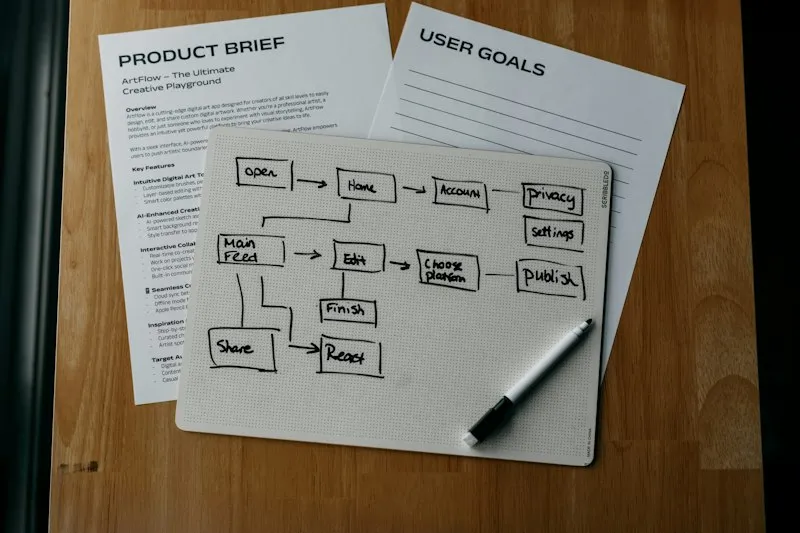
If a task has a far-off deadline, you may feel you have plenty of time and underestimate the effort each step requires. This practice involves splitting the overall goal into smaller, nearer subgoals with their own mini-deadlines. By treating each subgoal as a separate task, you reduce the distance between action and reward and make the overall time demand easier to judge.
Research indicates that students with stronger self-management skills can handle long deadlines by breaking them into nearer subgoals, which can make starting feel easier. The practice is suggested as a strategy for people who already have some planning skills, so it may require initial effort to learn how to identify and sequence subgoals effectively.
Take it further
Your Planning Habits
When you think back to a recent task you underestimated, what specific part of your planning process might have been off?
Talk it out
Talk About Time
Do you ever notice that a task takes longer than you expected, and how do you usually handle that?
References
Sources & evidence
4 research papers informed this article. The numbers beside each section link here, and each DOI opens the original paper.
Source 1:Procrastination: Self‐regulation in Initiating Aversive Goals
Van Eerde, Wendelien (2000). Procrastination: Self‐regulation in Initiating Aversive Goals. DOI 10.1111/1464-0597.00021
DOI 10.1111/1464-0597.00021articleSource 2:Why Students Procrastinate: A Qualitative Approach
Klingsieck, Katrin B., Grund, Axel, Schmid, Sebastian, Fries, Stefan (2013). Why Students Procrastinate: A Qualitative Approach. DOI 10.1353/csd.2013.0060
DOI 10.1353/csd.2013.0060articleSource 3:How Study Environments Foster Academic Procrastination: Overview and Recommendations
Svartdal, Frode, Dahl, Tove I., Gamst-Klaussen, Thor, Koppenborg, Markus, et., al. (2020). How Study Environments Foster Academic Procrastination: Overview and Recommendations. DOI 10.3389/fpsyg.2020.540910
Source 4:An experimental study of some hypothesized behaviors and personality variables of college student procrastinators
McCown, William, Petzel, Thomas, Rupert, Patricia (1987). An experimental study of some hypothesized behaviors and personality variables of college student procrastinators. DOI 10.1016/0191-8869(87)90130-9