

Procrastination correlates refer to the psychological traits, beliefs, and behaviors that are consistently associated with putting off tasks. Research identifies several key correlates, including personality traits such as low conscientiousness and high neuroticism, as well as self-beliefs like low self-efficacy and a tendency to self-handicap.
Understanding these correlates helps clarify why people procrastinate. For instance, procrastination is not simply a time-management problem; it is linked to how people regulate their emotions and cope with aversive feelings. These findings come from meta-analyses and large-scale studies that measure how strongly different factors relate to procrastination.
Personality Traits: Conscientiousness and Neuroticism

The strongest and most consistent personality correlate of procrastination is low conscientiousness. A major meta-analysis of 121 studies found that conscientiousness has the largest negative correlation with procrastination, with an average correlation of about -0.62. This means that people who score low on conscientiousness-those who are less organized, disciplined, and reliable-tend to procrastinate more. When conscientiousness is statistically controlled, other major personality traits contribute very little, indicating its central role.
Neuroticism also shows a positive but more modest correlation with procrastination (meta-analytic estimate of about r = 0.26). Individuals high in neuroticism are more prone to emotional instability and negative emotions, which can trigger task avoidance. However, the link is weaker than for conscientiousness. One study found that general procrastination is characterized most strongly by low conscientiousness with only a modest correlation to neuroticism, while another type-decisional procrastination, or difficulty making decisions-shows a different pattern, being more associated with neuroticism and extraversion.
Take it further
Talking About Correlates
Have you noticed any traits or feelings that seem to go along with procrastination for you or someone you know?
Reflect in Mneno
Self-Beliefs: Self-Efficacy and Self-Handicapping
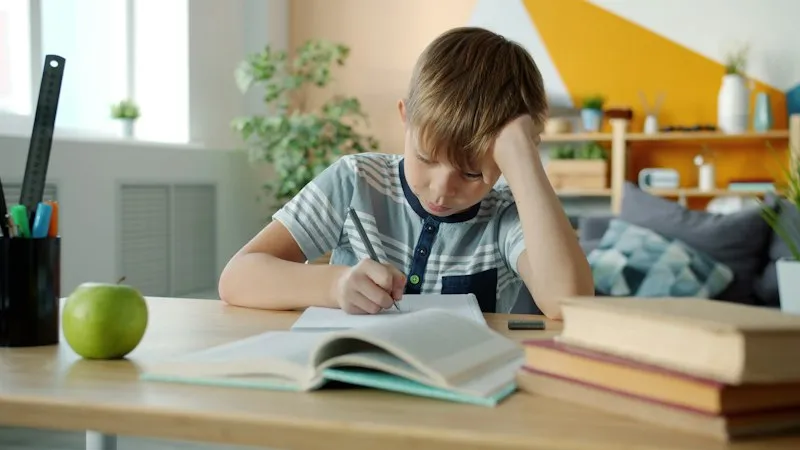
Alongside personality traits, self-beliefs are strong correlates of procrastination. Meta-analytic evidence shows that low self-efficacy-the belief in one's ability to complete tasks-has one of the largest negative correlations with procrastination. People who doubt their capacity to succeed are more likely to delay, possibly because they anticipate failure or feel overwhelmed.
Self-handicapping, in contrast, has a large positive correlation with procrastination. Self-handicapping involves creating obstacles or excuses (such as delaying until the last minute) to protect self-esteem if performance is poor. Procrastination can serve this emotional-protection function: if someone fails, they can attribute it to lack of time rather than lack of ability. This highlights that procrastination is not just irrational behavior but can be a strategy to manage self-worth.
Emotion Regulation and Affect

Procrastination is increasingly understood as a dysfunctional response to undesired affective states. Adaptive emotion regulation-the ability to tolerate, modify, and cope with aversive emotions-appears to reduce procrastination, while poor handling of unpleasant feelings can increase it. This means that when people struggle to manage negative emotions like anxiety, boredom, or frustration, they may turn to task delay as a short-term escape.
One study found that emotion regulation skills were associated with procrastination across all subscales. In regression analyses including all emotion regulation facets, only resilience-the ability to tolerate aversive emotions-remained a significant predictor. This suggests that the shared variance among emotion regulation components is largely carried by tolerance of distressing feelings. In other words, the capacity to stay with discomfort without giving in to avoidance is key.
Distinct Patterns: General vs. Decisional Procrastination

Not all procrastination looks the same. Research distinguishes between general procrastination-the tendency to delay tasks in daily life-and decisional procrastination, which is the difficulty making decisions in a timely manner. These two forms have different personality patterns. General procrastination is strongly associated with low conscientiousness and only weakly with neuroticism, suggesting a core issue with self-regulation and organization.
In contrast, decisional procrastination is characterized more by neuroticism and extraversion. This means that people who indecisively delay choices tend to be more emotionally unstable and possibly more socially oriented. Indecision itself is most strongly linked to neuroticism and moderately linked to introversion, according to one study. These differences imply that a person who procrastinates on filing taxes may have a different underlying profile than someone who avoids choosing a career path.
FAQ
Common questions
Each answer is linked to its research.
Is procrastination always linked to laziness?
No. Research shows procrastination is more strongly related to low conscientiousness (a personality trait involving organization and self-discipline) and emotion regulation difficulties than to laziness. It can also serve as a form of self-handicapping to protect self-esteem, not simply a lack of effort. The meta-analytic evidence highlights self-efficacy and emotional tolerance as key correlates, suggesting that procrastination often stems from how people manage negative feelings or doubts about their abilities, not from a simple lack of motivation.
Can improving emotion regulation really reduce procrastination?
Evidence suggests that adaptive emotion regulation skills are associated with lower procrastination. One study found that resilience-the ability to tolerate aversive emotions-was a significant predictor of less procrastination when other emotion regulation facets were considered together. However, this is correlational, so it does not prove that improving regulation causes reduced procrastination. Experimental studies would be needed to test causal effects. Nonetheless, the link is plausible: if people can better handle unpleasant feelings, they may be less inclined to avoid tasks.
SourcesS5S6S7All sources
How strong is the link between conscientiousness and procrastination?
The link is large. A meta-analysis of 121 studies found a negative correlation of about -0.62 between conscientiousness and procrastination, meaning that lower conscientiousness strongly predicts higher procrastination. When conscientiousness is statistically controlled, other Big Five personality traits contribute very little. This makes low conscientiousness the strongest personality correlate of procrastination, far outweighing neuroticism (which has a correlation of about 0.26).
SourcesS4S10S12All sources
Next read
Keep reading
Nearby guides picked by the editors of this article.
 MomentsWhy do I always underestimate how long tasks will take?If you underestimate tasks, you're not alone. Learn why this happens and a quick tool to improve time estimates.3 min read
 DecisionWhat Are the Real Risks of Delaying Tasks?Explore the trade-offs of procrastination: academic risks, time pressure, and how to choose a response based on your current capacity.4 min read
 How-toHow can I tell if my procrastination is normal or a serious problem?Learn how to distinguish between typical delay and problematic procrastination using simple context-based questions about the pattern's impact and your4 min read
 TechniquesUnderstanding Why You Avoid Math Homework Despite Knowing the ConsequencesThis article explores why you avoid math homework even when you know it will cause later regret, focusing on mood repair and short-term emotion regulation.3 min read
 TechniquesWhy You Procrastinate on What MattersExplore why you put off important tasks: understanding avoidance patterns, self-handicapping, and mood repair. Compare evidence-based perspectives.3 min read
- TechniquesComparing Practices to Stay Focused While StudyingCompare three evidence-based practices for managing distraction while studying: stimulus control, self-regulation training, and emotion regulation skills.3 min read
References
Sources & evidence
4 research papers informed this article. The numbers beside each section link here, and each DOI opens the original paper.
Source 1:A meta-analytically derived nomological network of procrastination
van Eerde, Wendelien (2003). A meta-analytically derived nomological network of procrastination. DOI 10.1016/s0191-8869(02)00358-6
Source 2:The portrait of the procrastinator: Risk factors and results of an indecisive personality
Tibbett, Thomas P., Ferrari, Joseph R. (2015). The portrait of the procrastinator: Risk factors and results of an indecisive personality. DOI 10.1016/j.paid.2015.03.014
Source 3:The nature of procrastination: A meta-analytic and theoretical review of quintessential self-regulatory failure.
Steel, Piers (2007). The nature of procrastination: A meta-analytic and theoretical review of quintessential self-regulatory failure.. DOI 10.1037/0033-2909.133.1.65
Source 4:Overcome procrastination: Enhancing emotion regulation skills reduce procrastination
Eckert, Marcus, Ebert, David D, Lehr, Dirk, Sieland, Bernhard, et., al. (2016). Overcome procrastination: Enhancing emotion regulation skills reduce procrastination. DOI 10.1016/j.lindif.2016.10.001