

The Procrastination Assessment Scale-Students (PASS) is a self-report questionnaire designed to measure academic procrastination. It asks students how often they delay on specific academic tasks and how much that delay is a problem. The measure is based on the assumption that academic procrastination is dysfunctional, not simply a harmless delay.
The PASS assesses procrastination across six academic areas: writing a term paper, studying for an exam, keeping up with weekly reading, administrative tasks, attending meetings, and academic tasks in general. For each area, respondents rate the frequency of procrastination and the degree to which it is a problem on 5-point Likert scales. The total procrastination score ranges from 12 to 60, with higher scores indicating greater problematic procrastination.
What the PASS Measures
The PASS captures two related but distinct aspects of procrastination: the frequency of delay and the perceived problem that delay causes. By combining these two subscales into a single score, the measure aims to identify cases where procrastination is not just common but also harmful. The PASS does not include the desire-to-decrease item (a third question about wanting to reduce procrastination) in the overall score, focusing instead on frequency and problem severity.
The scale covers a range of academic situations, from major tasks like writing term papers to routine ones like attending meetings. This breadth allows researchers to capture procrastination across different domains rather than relying on a single task. The assumption is that procrastination that affects multiple areas is more likely to reflect a general tendency rather than a situational response to one task.
Take it further
Talking About Procrastination
Have you ever used a self-report questionnaire to reflect on your own academic habits, or would you prefer to rely on your own observations?
Reflect in Mneno
Reliability and Validity of the PASS

The PASS has shown acceptable internal consistency in various studies, with reliability estimates for subscales ranging from .69 to .80. This suggests that the items within each subscale are reasonably consistent with one another. The measure has also been validated through its relationships with other relevant variables: higher PASS scores have been linked to lower student grades and to increased depression, anxiety, and low self-esteem.
However, the relationship between PASS scores and academic performance is not always straightforward. One study found that the association between procrastination and performance depended on which procrastination scale was used. For the PASS, that association was not significant, even though other scales showed a significant link. This finding highlights that different measures may capture different aspects of procrastination, and the PASS may be measuring a dimension that does not directly predict grade point average.
How the PASS Relates to Other Variables
Researchers have examined how the PASS relates to students' goal orientations and learning strategies. In one study, four goal orientations (mastery-approach, mastery-avoidance, performance-approach, performance-avoidance) together explained only 8% of the variance in PASS scores. Among these, mastery-avoidance (focusing on avoiding failure in learning) positively predicted procrastination, while mastery-approach (striving for learning) negatively predicted it. Performance goal orientations did not show consistent links with PASS scores.
When learning-strategy variables were added to the analysis, cognitive strategies (such as elaboration and organization) negatively predicted PASS scores, while disorganization positively predicted them. This suggests that students who report more procrastination on the PASS also tend to report less use of effective learning strategies and more disorganized approaches to studying. The PASS thus appears to capture not just delay but also broader patterns of academic engagement.
Limitations and Considerations for Use
The PASS is a self-report measure, which means it relies on students' own perceptions of their procrastination and its impact. Self-report can be influenced by memory, social desirability, and how individuals define delay for themselves. The measure also assumes that procrastination is inherently dysfunctional, which may not capture cases where delay is strategic or benign. Some researchers have noted that performance-oriented delay might appear harmless when measured as delay itself, but not when the harmful impact is assessed.
Future studies could benefit from measuring specific deadlines and workload to better understand how academic demands affect procrastination and psychological health. The PASS broadly asks about procrastination over tasks without tying responses to particular assignments or timeframes. Alternative measures, such as the Academic Procrastination State Inventory, focus on recent situational procrastination within the past week, capturing a different temporal scope. Researchers should choose a measure that aligns with their specific research question and the aspect of procrastination they wish to examine.
FAQ
Common questions
Each answer is linked to its research.
How is the PASS different from other academic procrastination measures?
The PASS measures both how often students procrastinate and how much that delay is a problem across six common academic areas. Unlike the Academic Procrastination State Inventory, which captures recent situational procrastination within the past week, the PASS assesses a broader, more general pattern. Additionally, the procrastination-performance association has been found to be significant for some scales (like the API and TPS) but not for the PASS, suggesting that different measures may capture different dimensions of procrastination.
SourcesS1S7S9All sources
What do the scores on the PASS mean?
PASS scores range from 12 to 60, with higher scores indicating greater problematic academic procrastination. The total is the sum of two subscales: frequency of delay and how much that delay is a problem. The desire-to-decrease item is not included in the overall score. A higher score means a student reports more frequent procrastination across academic tasks and perceives it as more of a problem.
SourcesS1S6All sources
What factors are associated with higher PASS scores?
Higher PASS scores have been associated with lower student grades and with increased depression, anxiety, and low self-esteem. In terms of academic motivation, mastery-avoidance goal orientation positively predicts PASS scores, while mastery-approach orientation negatively predicts them. Among learning strategies, disorganization is a positive predictor and cognitive strategies (like elaboration and organization) are negative predictors. Performance goal orientations show no consistent link with PASS scores.
SourcesS8S11S12All sources
Next read
Keep reading
Nearby guides picked by the editors of this article.
 MomentsWhy do I keep putting off important tasks until the last minute?If you're delaying a task right now, you're not lazy. This is about avoiding anxiety. Use a simple 2-minute start to break the cycle.2 min read
 DecisionWhat Are the Real Risks of Delaying Tasks?Explore the trade-offs of procrastination: academic risks, time pressure, and how to choose a response based on your current capacity.4 min read
 How-toHow to Measure How Much Procrastination Affects Your SchoolworkUse the Procrastination Assessment Scale-Students (PASS) to rate how often you delay academic tasks and how much it is a problem.4 min read
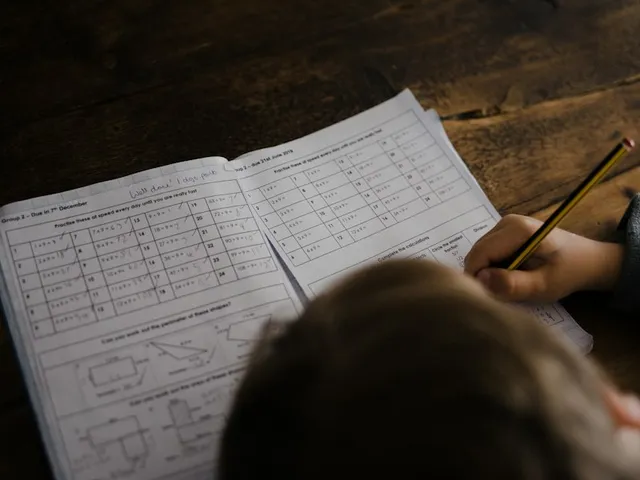 TechniquesUnderstanding Why You Avoid Math Homework Despite Knowing the ConsequencesThis article explores why you avoid math homework even when you know it will cause later regret, focusing on mood repair and short-term emotion regulation.3 min read
 TechniquesRepetitive Thoughts While ProcrastinatingCompare three practices for managing repetitive negative thoughts that arise during procrastination.3 min read
 How-toHow to Break a Big Goal Into Smaller StepsBreak a large goal into attainable starting steps and near-term targets, and make a first action smaller if it still feels too difficult.2 min read
References
Sources & evidence
4 research papers informed this article. The numbers beside each section link here, and each DOI opens the original paper.
Source 1:Perfectionism, procrastination, and psychological distress.
Rice, Kenneth G., Richardson, Clarissa M. E., Clark, Dustin (2012). Perfectionism, procrastination, and psychological distress.. DOI 10.1037/a0026643
articleSource 2:From psychological distress to academic procrastination: Exploring the role of psychological inflexibility
Eisenbeck, Nikolett, Carreno, David F., Uclés-Juárez, Rubén (2019). From psychological distress to academic procrastination: Exploring the role of psychological inflexibility. DOI 10.1016/j.jcbs.2019.07.007
Source 3:Procrastination: Associations with achievement goal orientation and learning strategies
Howell, Andrew J., Watson, David C. (2007). Procrastination: Associations with achievement goal orientation and learning strategies. DOI 10.1016/j.paid.2006.11.017
Source 4:The relationship between procrastination and academic performance: A meta-analysis
Kim, Kyung Ryung, Seo, Eun Hee (2015). The relationship between procrastination and academic performance: A meta-analysis. DOI 10.1016/j.paid.2015.02.038