

Mental models are internal representations that help you understand how a system works, why it behaves a certain way, and what might happen next. They are the mental pictures or frameworks you use to make sense of your environment and choose what actions to take.
These models aren't just personal-they also operate in teams. When team members develop compatible mental models, they can coordinate their actions without constant communication, leading to smoother performance. Research distinguishes between shared mental models (overlap in knowledge) and cognitive integration (incorporating others' perspectives), which have different effects on team dynamics.
What Mental Models Are and How They Work
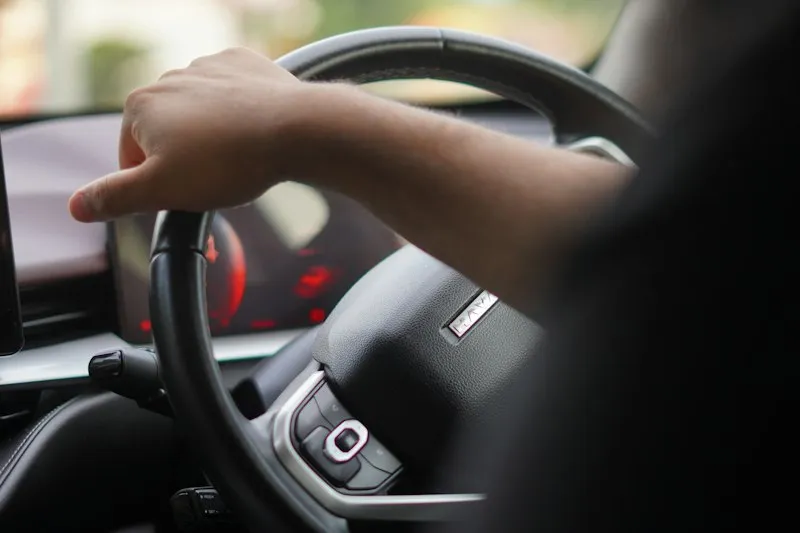
Mental models are essentially your brain's way of building a working theory of a situation. They allow you to describe the purpose and shape of a system, explain how it functions, and predict its future states. For instance, your mental model of a car includes how the steering wheel turns the wheels, why the engine revs when you press the gas, and what will happen if you brake suddenly. This understanding enables you to drive effectively without consciously analyzing every component.
These models are not static-they evolve as you gain new information and experience. The more accurate your mental model, the better you can anticipate outcomes and adapt your behavior. They are distinct from innate traits like the need for cognition, which is a motivation to engage in effortful thinking, not a measure of the models themselves.
Take it further
Discussing Mental Models
Have you ever noticed that you and a colleague or family member seem to have very different mental pictures of the same task or situation?
Reflect in Mneno
Shared Mental Models in Teams

In team settings, shared mental models (SMMs) refer to the overlap in understanding among members about the task, team, and environment. When team members hold similar mental models, they can anticipate each other's needs and actions, coordinate implicitly, and respond to changing demands without explicit discussion. This similarity has been linked to better team performance in various settings, including decision-making teams and sports squads.
Researchers measure shared mental models using tools like the Team Mental Models Scale, which captures task-related cognitions (e.g., understanding goals and strategy) and team-related cognitions (e.g., communication and trust). Studies show that higher SMM similarity correlates with fewer coordination breakdowns and faster problem-solving. However, the positive relationship holds when models are accurate and relevant to the task at hand.
Cognitive Integration vs. Agreement

While shared mental models emphasize agreement or similarity, recent research highlights a distinct process called cognitive integration. Cognitive integration is the ability to comprehend and incorporate other team members' knowledge and perspectives, even if you don't fully agree. It goes beyond mere overlap-it involves actively weaving diverse viewpoints into your own understanding.
A key finding is that when team members have strong shared task mental models but lack cognitive integration, conflict can actually increase. This suggests that simply agreeing on the task isn't enough; teams also need to effectively integrate each other's unique priorities and insights. The transactive memory literature similarly emphasizes that the patterned emergence of knowledge sharing-not just shared formal knowledge-impacts behavior and performance.
How Mental Models Are Studied and Measured

Researchers assess mental models using a variety of methods. One common approach is pairwise comparison scales, where team members rate the similarity between concepts related to the task or team. For example, the Team Mental Models Scale asks respondents to judge how closely aspects like 'identify key aspects of decision-making' relate to 'ensure everyone understands goals' and other dimensions. These ratings are then used to calculate the degree of overlap or consensus within a team.
Other studies use diagram-based techniques, interviews, or scenario-based tests to elicit individual mental models. The challenge is that mental models are internal and not directly observable, so researchers rely on proxies like verbal explanations or structured questionnaires. The need for cognition measure, for instance, assesses a person's tendency to engage in complex thinking, but it is not a measure of their mental model quality. These methodological details are important when interpreting study results-what is measured is the expressed similarity, not the model itself.
FAQ
Common questions
Each answer is linked to its research.
Can mental models be changed or improved?
Yes, mental models are not fixed. They develop and update as you learn new information or gain experience. In teams, improving shared mental models often involves deliberate communication, debriefing, and cross-training-activities that help align team members' understanding of tasks and roles. Research shows that teams with higher shared mental model similarity tend to perform better, suggesting that interventions aimed at building common ground can be effective. However, the evidence comes from specific team contexts, and the degree of change depends on factors like team size, task complexity, and the willingness of members to adjust their perspectives.
SourcesS6S9All sources
How do mental models differ from cognitive styles like need for cognition?
Mental models are content-specific representations of how a system works, whereas need for cognition is a personality trait reflecting enjoyment of effortful thinking. A person with high need for cognition may be more inclined to build detailed and accurate mental models, but the two concepts are distinct: mental models concern what you know and how you organize that knowledge, while need for cognition concerns your motivation to engage in complex thought. For example, someone with low need for cognition might still develop effective mental models for familiar routine tasks, while someone with high need for cognition might actively seek to refine their models even for simple situations.
SourcesS2S3S4All sources
What does the Team Mental Models Scale measure?
The Team Mental Models Scale assesses the similarity of team members' cognitive representations in two dimensions: task and team. The task dimension includes items about identifying key aspects of decision-making, understanding goals, basing decisions on strategy, and perceived team effectiveness. The team dimension includes items about working well together, open communication, trust, and effectiveness. Respondents rate the similarity between pairs of these concepts, and the results indicate the degree of shared mental model within the team. The scale does not measure the accuracy of the models-only how much team members' mental models overlap.
SourcesS1S8All sources
Next read
Keep reading
Nearby guides picked by the editors of this article.
 MomentsWhy Do I Often Misunderstand What Others Are Thinking or Expecting?Understand the mental habit behind misunderstandings and a quick tool to get back on the same page.2 min read
 DecisionWhy Can't My Team and I Agree on the Same Mental Picture?Understand why your team lacks a shared mental picture and choose a strategy to align understanding based on your current capacity.3 min read
- How-toRegain a Sense of Autonomy When You Feel You Have No SayFeeling stuck and unmotivated when you have no say? This article shows one way to identify and support your psychological need for autonomy.2 min read
 TechniquesWhy Don't My Teammates See Things the Same Way?Explore practices for understanding and bridging differences in perspectives within teams, supported by research on trust, communication, and conflict.3 min read
 TechniquesWays to Rebuild a Sense of Control and SupportExplore practical ways to reconnect with autonomy and connection when you feel unmotivated, based on self-determination theory.3 min read
 TechniquesPractices to Reduce Personal Attacks in Team ConflictCompare three team practices that help conflict stay constructive rather than turning personal: open communication, shared mental models, and recognizing3 min read
References
Sources & evidence
4 research papers informed this article. The numbers beside each section link here, and each DOI opens the original paper.
Source 1:Team mental models, relationship conflict and effectiveness over time
Marques Santos, Catarina, Margarida Passos, Ana (2013). Team mental models, relationship conflict and effectiveness over time. DOI 10.1108/tpm-01-2013-0003
articleSource 2:Understanding the relationship between mental models, conflict and conflict asymmetry
Bergiel, Erich B., Gainey, Thomas W., Bergiel, Blaise J. (2015). Understanding the relationship between mental models, conflict and conflict asymmetry. DOI 10.1108/tpm-02-2015-0009
articleSource 3:The role of personality traits and need for cognition in active procrastination
Zhou, Mingming (2019). The role of personality traits and need for cognition in active procrastination. DOI 10.1016/j.actpsy.2019.102883
Source 4:The cognitive underpinnings of effective teamwork: A meta-analysis.
DeChurch, Leslie A., Mesmer-Magnus, Jessica R. (2010). The cognitive underpinnings of effective teamwork: A meta-analysis.. DOI 10.1037/a0017328
article